

Resident marine life in Sabah
Green turtle
They graze on the reef top and rest on the wall ledges, on almost every dive. They are a constant presence on Sipadan and the focus of conservation efforts across the islands.
Highlights
- Resident populations live at Sipadan and are seen on almost every dive.
- You can watch them at shallow cleaning stations or resting on deep wall ledges.
- Resorts on Mabul, Mataking, Pom Pom and Lankayan operate protective hatcheries.
- Photographers get excellent wide-angle opportunities using natural ambient light.
- Diving with them requires good buoyancy control to avoid disturbing their environment.
- Sabah Parks requires an Advanced Open Water certification to dive Sipadan.
Overview
Green turtles are the animals you will meet most often when you dive Sipadan. They graze on the reef top, rest on a ledge with a batfish for company or rise past you to breathe. They are also the turtles whose eggs are protected in hatcheries on Mabul, Mataking, Pom Pom and Lankayan.
If you dive the east coast of Sabah you will share the water with them. They tolerate divers well. A day's diving at Sipadan will bring you close to dozens of individuals.
What it is
The green turtle (Chelonia mydas) gets its name from the colour of its fat rather than its shell. It has a smooth carapace and a short snout compared to the sharp beak of a Hawksbill turtle. They are large marine reptiles.
Where you see it in Sabah
You will find resident populations at Sipadan and around the islands of the Sulu Sea. They are a constant presence on Sipadan. You can expect to see them on almost every dive.
The islands around Semporna offer different ways to see them. Sipadan's deep walls are busy with resident turtles. Mataking and Pom Pom islands offer shallower reefs. They also nest on Lankayan in the north.
When
The green turtle is a resident species in Sabah. You can see them year-round. Mid-February to mid-November offers good diving with the best visibility falling between March and October. Read the guide on when to dive Sabah to plan your dates. Diving continues all year but Sipadan closes for the entire month of November to give the marine environment a rest.
The nesting peak on Pom Pom Island runs from June to September. Hatcheries operate on biological timing rather than a human schedule.
What it does
Green turtles are herbivores. You can often watch them grazing on algae in the shallows. They use the shallow coral plateaus as dedicated cleaning stations. Small reef fish pick parasites from their shells.
They also use the steep drop-offs to rest. You will often see them sleeping on the deeper ledges. They use the vertical walls like a highway to travel between the deep ocean and the shallow reef top. Overhead-trained divers with guides can see the skeletal remains of green turtles that became disoriented in the dark and drowned inside Turtle Cavern at Sipadan.
Photographing it
Sipadan is an excellent environment for wide-angle photography. The turtles are highly habituated to divers. You can use a fisheye or wide-angle lens to capture them silhouetted against the surface.
The shallow depth at some sites provides excellent ambient light for wide-angle shots without strobes. A sunny afternoon lights up the shallow coral gardens beautifully. Capturing a turtle resting on the reef structure makes an excellent subject.
Good habits around them
The rules include a strict no-touch and no-feed policy. Diving gloves are banned for recreational divers to discourage touching the reef.
Use reef-safe sunscreen to protect the corals. Be sure to check your buoyancy when hovering near a cleaning station. Get low in the water column and remain static. Chasing a turtle is counterproductive and will end the encounter quickly.
Conservation
Marine turtles receive total legal protection in Sabah under the Wildlife Conservation Enactment 1997. Possession or trafficking of marine turtles and their eggs carries severe penalties.
Resort staff and local community members train to become Honorary Wildlife Wardens. These wardens enforce the laws within private resorts and marine protected areas. They learn how to collect evidence and protect turtles under Sabah's wildlife laws.
Resorts operate protective hatcheries under the supervision of the Sabah Wildlife Department to secure eggs from poaching and predation.
Borneo Divers Mabul Resort runs a small hatchery in collaboration with Universiti Malaysia Sabah. Scuba Junkie's Mabul Beach Resort has the larger hatchery on Mabul and rewards locals for reporting nests so the eggs can be protected.
Mataking Island Resort has managed a hatchery since 2006. A May 2026 conservation agreement with WWF-Malaysia and the Sabah Wildlife Department integrates Mataking Island into a DNA traceability programme. Pom Pom Island Resort hosts 2 hatcheries to handle the summer nesting peak.
The Sugud Islands Marine Conservation Area protects Lankayan. The strict no-take zone managed by Reef Guardian has led to a major recovery. The IUCN Green List reports that average annual green turtle nesting on Lankayan increased from 51.8 nests in 2000–2003 to 357.5 nests in 2004–2019.
Because incubation follows biological timing rather than a schedule you should ask about the current programme when you arrive. You can read more about these efforts on the conservation page.
Where to dive with them
The Drop-Off
Skill level: Newly Qualified AOW | Depth range: 5–40 m This vertical wall drops 600 m into the open ocean right off the island's historical wooden jetty. Green turtles use the wall like a vertical highway and rest on the deep ledges. The Drop-Off allows you to frame them silhouetted against the sunlit surface.
Turtle Patch
Skill level: Newly Qualified AOW | Depth range: 5–12 m This shallow reef plateau features an unmatched density of resting and grazing green turtles. The shallow depth makes it perfect for long dives and ambient-light photography.
Coral Gardens
Skill level: Newly Qualified AOW | Depth range: 10–23 m This site consists of a sheer wall that crests into a shallow hard-coral plateau. Dozens of turtles use the shallows as dedicated cleaning stations.
Hanging Gardens
Skill level: Newly Qualified AOW | Depth range: 5–40 m This vertical drop is heavily terraced with overhangs and ledges. Turtles often pass massive barrel sponges and colourful soft corals here.
Other major Sipadan sites like Barracuda Point and South Point also feature regular turtle sightings alongside the larger pelagic action.
Remember that Sabah Parks issues 254 Sipadan permits a day. You need an Advanced Open Water certification to dive the island. The Sipadan permits guide explains how to secure your dates. The team recommends a Sipadan classic package to maximise your time in the water. The team can also arrange trips for families and non-divers.
Nearby places / alternatives
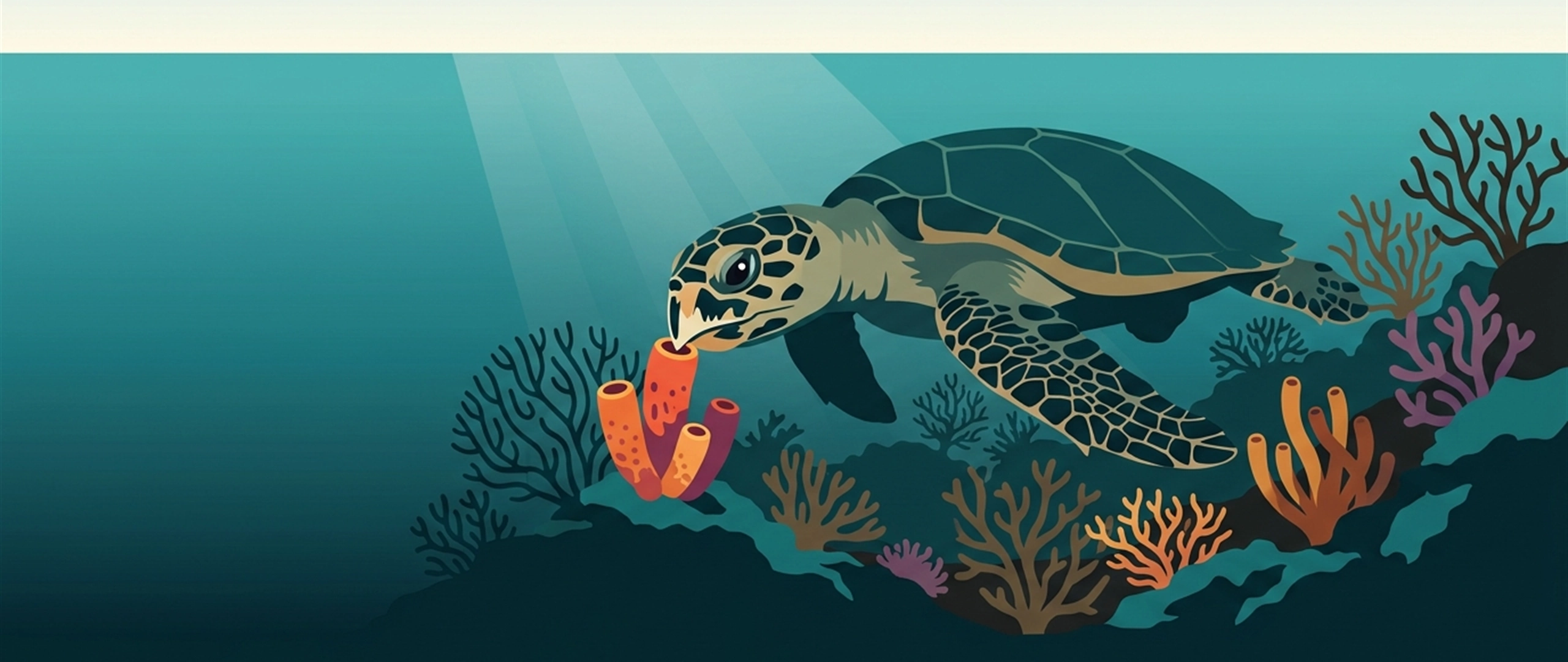
Hawksbill turtle
Learn how to identify hawksbill turtles in Sabah and find the best dive sites to see them around Sipadan, Mataking and Lankayan.
More details →
Sipadan
Guide to diving Sipadan Island in Sabah.
More details →
Mataking Island
Dive Mataking Island for gentle house reefs, an underwater post office and turtle hatcheries.
More details →
Pom Pom Island
Plan your family holiday to Pom Pom Island in Sabah.
More details →
Conservation in the Semporna islands
Learn how marine parks, strict Sipadan permit limits, turtle hatcheries and active coral restoration protect the reefs of Semporna for visiting divers.
More details →Plan your dives
Send your dates, the names of everyone coming and your certification levels. The team will come back with a plan that matches your experience and secures your time in the water.