

Semporna's famous macro sites
Macro & Muck
A week on Mabul or Kapalai spent on the sand and rubble slopes finding frogfish, blue-ringed octopus, flamboyant cuttlefish and mandarinfish. Long shallow dives suit Open Water divers and photographers looking for Semporna's famous small stuff.
Highlights
- A week diving the famous macro sites around Mabul and Kapalai.
- Long shallow dives over sand and rubble suit Open Water divers well.
- Guides find resident frogfish alongside frequent ornate ghost pipefish.
- Dusk and night diving bring out mandarinfish to mate.
- Resort options range from clear shallow reefs to deep unlimited house reefs.
- Semporna sits around an hour from the airport before a short boat ride to your resort.
Overview
A week on Mabul or Kapalai spent on the sand and rubble slopes where the guides find frogfish, blue-ringed octopus, flamboyant cuttlefish and mandarinfish. It brings long shallow dives, dusk dives and night dives from the jetty. Sipadan is an optional day you can add to see the big pelagic life. This is the week for people who like to look closely. It works well for Open Water divers because the depths remain shallow. The currents stay mild across most of the famous sites. You spend your bottom time hovering over fine volcanic silt or hunting through coral rubble to find the tiny animals that make Semporna famous. You learn to control your buoyancy cleanly to avoid kicking up the fine sand. The focus remains entirely on the small marine life that uses the debris and natural reef structure to hide.
Who it is for
This package suits photographers hunting for rare critters. It also works for divers who have already done Sipadan and want to concentrate entirely on the small stuff. Because the critters of Semporna live in shallow water you do not need advanced certifications to see them. You just need good buoyancy control to hover without kicking up the silt. Standard flutter kicks blind the site instantly so you employ frog-kicking techniques instead. A standard macro lens or a compact camera on its macro setting captures the detail well.
What you look for
The marine life here adapts to hide in plain sight. Guides spot resident giant frogfish hiding on artificial reef structures. The painted frogfish exhibit a colour burst when fully mature. You wait patiently for them to yawn to capture their full profile. The flamboyant cuttlefish patrol the open sand flats frequently. They display bright warning colours during hunting strikes. You approach low and slow to watch their unique walking behaviour across the volcanic sand.
Blue-ringed octopus shelter in discarded shells occasionally. They use the sandy substrate to camouflage their lethally venomous bodies. You look for tiny crustaceans hiding in barrel sponges or crinoids. The orangutan crabs live exclusively within the sweeping arms of bubble corals. Hairy squat lobsters take refuge in the deep crevices of the large barrel sponges. The frogfish use their modified pectoral fins to grip the rubble while they wait for prey. You can spot the giant frogfish and the painted frogfish on most dives. They rely entirely on their camouflage to ambush small fish.
A sample week
A macro week gives you 3 boat dives a day on the local reefs plus the option to dive the house reefs. The specific sites depend on the tide and the operator schedule. Be sure to book your night dives early because the dusk slots fill up fast.
Paradise 1 and 2
Skill level: All levels | Max depth: 21 m These sites sit near the Sipadan Water Village and SMART resorts. Paradise 1 and 2 feature a sandy bottom leading to staghorn coral gardens. You dive here at dusk to watch resident mandarinfish rise from the coral to mate. Paradise 2 features a 12-metre sunken wooden boat heavily encrusted with feather stars. You find ornate ghost pipefish frequently among the crinoids. The water column above the wreck attracts dense schools of batfish and fusiliers.
Froggy Lair
Skill level: All levels | Max depth: 10 m Located off the Mabul jetty this quintessential muck dive relies on artificial debris. Discarded tyres act as nurseries for resident frogfish in many colours. You fin slowly over the silt to spot flamboyant cuttlefish. The suspended particulate matter demands slow deliberate visual searching. Visibility often drops to 5 metres. Be sure to exercise strict fin discipline to avoid blinding the site with silt.
Awas Reef
Skill level: All levels | Ave depth: 9 m | Max depth: 15 m This sandy slope features small weed patches and random structures that provide refuge for resting turtles. An old broken rope lies on the seabed acting as a navigational line. You fin slowly to spot flamboyant cuttlefish and fingered dragonets. The bare sand provides a great background for snoot photography. Over 200 species inhabit this small area.
Eel Garden
Skill level: All levels | Max depth: 25 m This southern Mabul site features a rocky reef transitioning into a barren sand flat. Massive colonies of resident garden eels emerge at the sand-reef interface. They sway like grass in the gentle current. You approach slowly to stop them shrinking into their burrows instantly. You manage your exhalations carefully because sudden bursts of bubbles cause the entire colony to retreat underground.
Crocodile Avenue
Skill level: All levels | Max depth: 20 m This northern site presents a sprawling sandy slope peppered with small weed patches. The resident crocodilefish employs excellent camouflage to ambush prey on the sand. You use a macro lens to capture tight facial portraits. Passing eagle rays glide over the slope occasionally. The stringy weed patches host clinging seahorses often.
Ribbon Valley
Skill level: All levels | Max depth: 30 m Located off the southern tip of Mabul this site features terraced slopes dropping gradually down to 30 metres. Isolated coral bommies and colourful waving gorgonian fans decorate the slope. The resident ribbon eels pop their heads from the sand to dance in the current. You frequently spot bubble coral shrimp and dense collections of nudibranchs here.
Panglima Reef
Skill level: All levels | Max depth: approximately 20 m Positioned at the northern corner of Mabul this steeply sloping coral reef contains large barrel sponges and fields of bubble coral. Orangutan crabs reside exclusively within the sweeping arms of the bubble corals. Hairy squat lobsters take refuge in the deep crevices of the barrel sponges. It acts as a superb super-macro site.
Kapalai House Reef
Skill level: All levels | Max depth: 18 m The Kapalai house reef sits directly under the resort walkways. You step off the pier to dive over sand flats hosting frequent flamboyant cuttlefish. The artificial structures create a haven for macro photography.
Mandarin Valley
Skill level: All levels This site at Kapalai offers clearer visibility than Mabul often reaching 15 to 30 metres. Mandarin Valley is a famous spot to watch the colourful fish mate at dusk. You need a red-light focus lamp because standard white light causes the fish to retreat into the staghorn coral.
Seaventures Platform
Skill level: All levels | Max depth: 18 m The Seaventures rig features sunken metal structures. Pygmy seahorses reside frequently in the sea fans growing on the steel pylons. It makes a premier night dive to see hunting moray eels. Frogfish hide in the steel crevices.
Where you stay
You choose your base depending on how you like to dive. The transfer involves a 70 to 90-minute road trip from Tawau airport followed by a 30 to 45-minute boat ride to the islands. The island boats do not run after dark.
Kapalai Dive Resort: The Sipadan-Kapalai Dive Resort stands on stilts over a reef flat with a sandbank exposed only at low tide. It offers a clear shallow reef you can dive without needing a boat. It suits couples and underwater photographers well. You dive unlimited times during the day from the walkways. The resort does not offer nitrox.
Mabul Resorts: Staying on Mabul gives you more choices and access to nitrox. The premium water bungalows sit over the sea while the beach resorts offer pools and sand. Sipadan Water Village runs boats carrying up to 12 divers to local sites. Sipadan-Mabul Resort features a beach and diver-focused amenities. Mabul Water Bungalows provides luxurious suites over the water alongside the Ka'andaman spa. The Mabul house reef structures give you hours of shallow critter hunting directly from the dive centres.
Seaventures Dive Rig: This decommissioned oil platform caters entirely to divers. You take a hydraulic lift straight into the sea for unlimited house reef diving during daylight hours. Children under ten require strict supervision. The platform offers nitrox to extend your bottom time.
What is included
The standard package includes your accommodation and your meals. It covers your boat dives around Mabul and Kapalai alongside unlimited daytime house reef diving depending on your resort. The dive centre provides tanks and weights and a guide. The packages give photographers room and time to work.
The guides play a crucial role because micro species remain virtually invisible to the untrained eye. Your success requires absolute trust in their spotting skills. You spend an entire 60-minute dive moving no more than 10 metres across the sand. The guides know where the resident frogfish live.
Adding Sipadan
You can add Sipadan to your week to see the big pelagic fish. Sabah Parks issues 254 Sipadan permits a day. You need an Advanced Open Water certification or equivalent to dive the island. The rangers check passports at the jetty to ensure they match the full name on the permit. Permits cannot be transferred or resold.
A guaranteed Sipadan permit comes with the right combination of resort, dive package and minimum number of nights. The team steers you to the combination that fits your dates. The specific dates depend on the resort you choose. A day's diving at Sipadan gives you a break from the macro hunting to see pelagic life. Sipadan closes every November to let the reef rest. The local Mabul and Kapalai sites remain open all year.
When to go
You can dive the muck sites all year. The water stays between 26 and 30 degrees Celsius. March to October brings the best visibility. Mid-February to mid-November is good diving with softer visibility at the ends. Mid-November to mid-February is a mix of cloud and rain and sun. Nudibranch populations fluctuate depending on sudden algal blooms and spawning seasons.
Related packages

Underwater Photography
Photograph Sipadan's wide-angle pelagics and Mabul's macro critters in one week.
More details →
Sipadan Classic
A week on Mabul or Kapalai built around your Sipadan permit days.
More details →
Learn to Dive: Open Water to Sipadan
Learn to dive in the warm shallow waters of Mabul or Kapalai and finish your week diving Sipadan.
More details →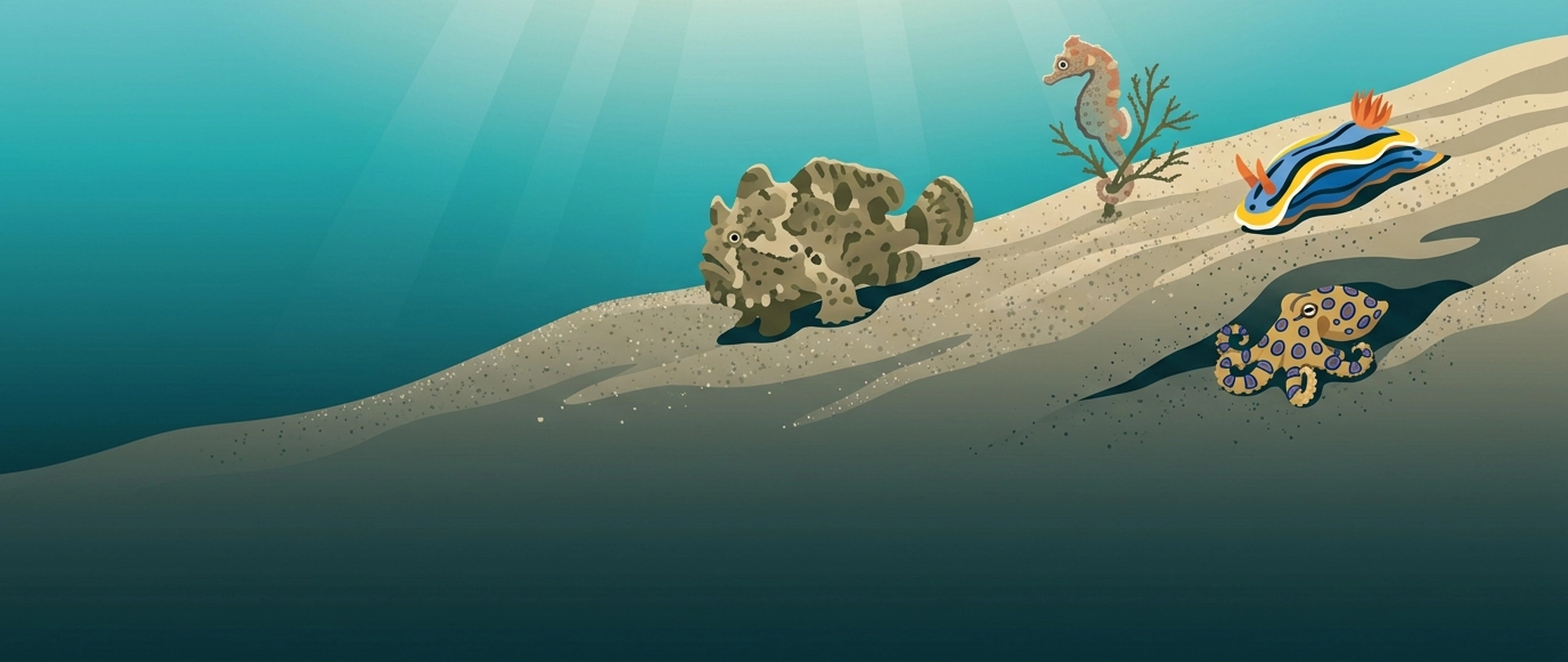
The critters of Semporna
Plan your macro diving week around Mabul, Kapalai and the Semporna mainland.
More details →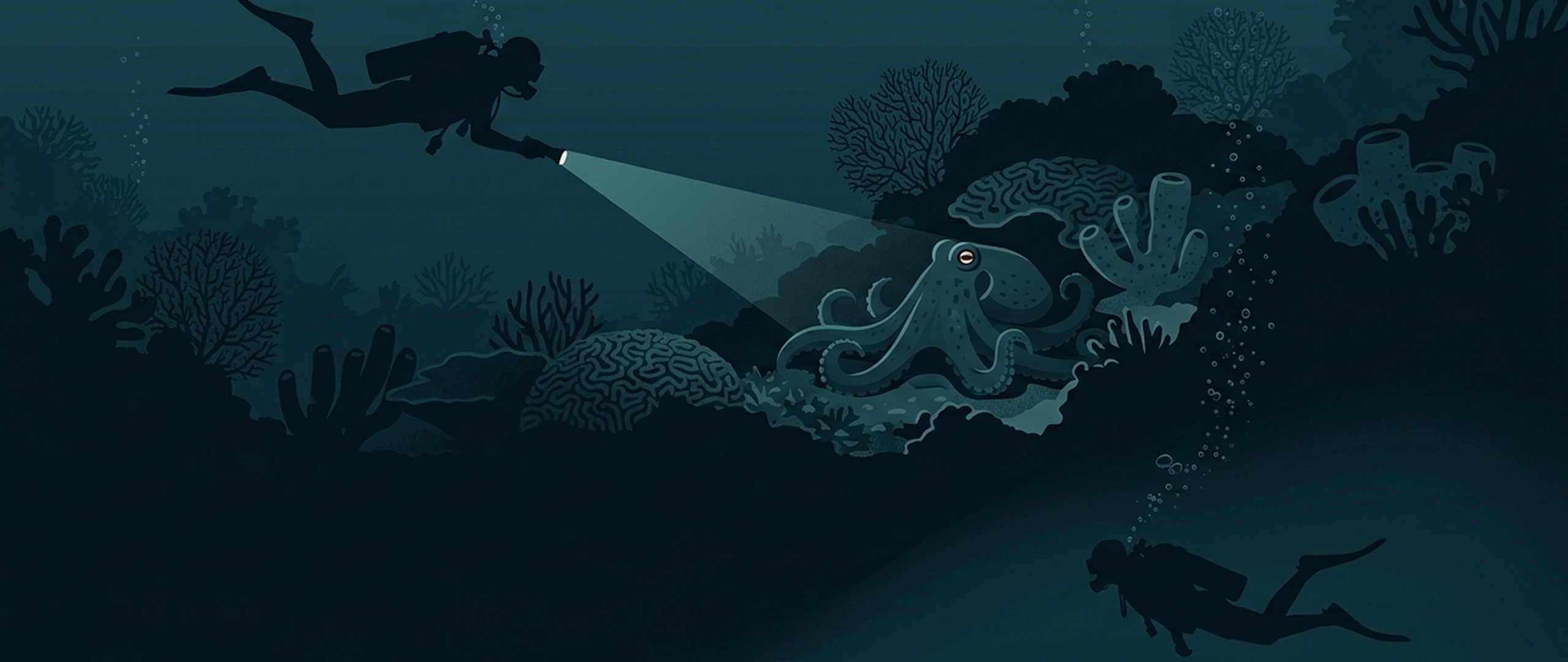
Night diving in the Semporna islands
Everything you need to know about night diving in the Semporna islands from dusk mandarinfish dives to the Seaventures rig.
More details →Send your preferred dates and the names of everyone coming alongside your current certification levels. The team comes back with the options that can be arranged for your macro week.