
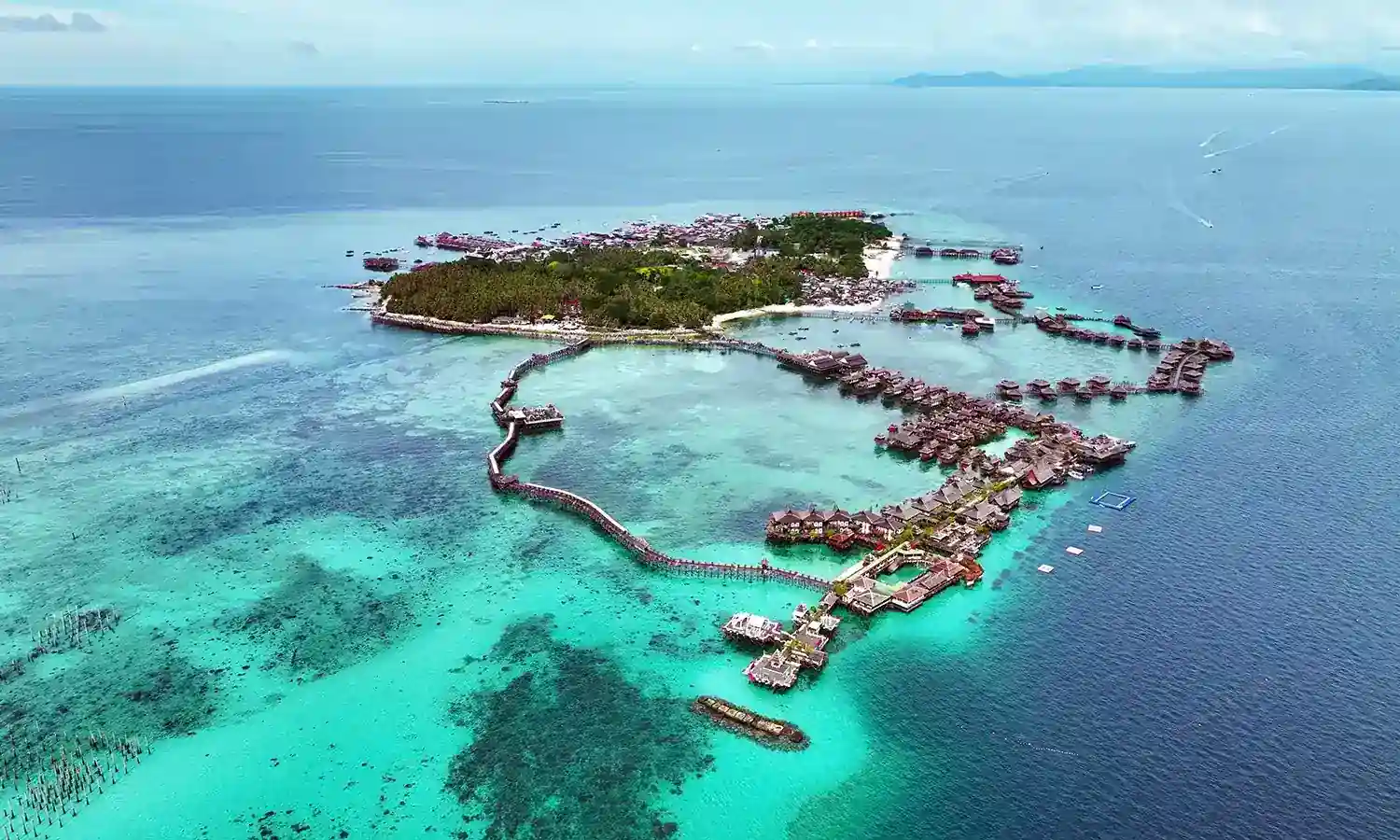
Manta ray and turtle nesting island
Sangalaki
A small sand island in the Derawan group known for its manta ray feeding stations and green turtle rookery, dived as a day trip from Derawan or Maratua.
Highlights
- Dive shallow coral gardens and historic manta feeding stations
- One of the most active green sea turtle rookeries in Southeast Asia
- No overnight accommodation on the island
- Dived exclusively as a day trip from Derawan or Maratua
- Combines well with Sabah dive itineraries for a multi-week expedition
- Accessible via a complex maritime route crossing from Tawau
Sangalaki is a small turtle-nesting island in the Derawan group known for the manta rays that feed around it. Nobody stays on the island today so you dive it as a day trip from Derawan or Maratua. The manta rays are the reason most people come to this part of East Kalimantan. The picture today is different from the historical stories you might read. You dive the shallow coral corridors where they feed and any manta that passes is a bonus for the day. On the right tide they still hover over the reef. The island itself is a vital conservation success. The beaches host one of the most active green turtle rookeries in the region. Between the turtle hatcheries and the shallow coral gardens a day trip here is a fascinating part of any Derawan itinerary.
Why Sangalaki
The island covers just 15.9 hectares of sand cay surrounded by a shallow fringing reef. It sits in the path of the Indonesian Throughflow moving pelagic water from the Pacific Ocean into the Indian Ocean via the Makassar Strait. This constant hydraulic pressure drives nutrient upwellings against the reef slopes to fuel dense phytoplankton and zooplankton blooms. The eastern dive sites operate as feeding grounds and cleaning stations for a highly mobile population of reef manta rays (Mobula alfredi). Tracking data from a multi-year satellite telemetry study shows these animals roam a home range of 9,205 square kilometres across East Kalimantan. They exhibit area-restricted search behaviours indicating the island serves as a critical localised habitat for pelagic foraging. They remain strongly anchored to the Sangalaki shallows when oceanographic conditions are right. They often spend days hovering over the coral heads while cleaner wrasses attend to them removing parasites from their gills and epidermal layers.
Diver logs and independent reviews report a sharp shift in recent years. Encounters happen when you get lucky with the tides and the plankton density. A manta encounter is a welcome bonus on your day around Sangalaki. Environmental shifts and regional pressures like historical blast fishing on nearby reefs mean the highly mobile population spends more time in undisturbed sectors of their vast home range. When they do appear you must follow strict interaction protocols. You maintain a minimum distance of 3 metres from the animal at all times. You must never swim directly over a designated cleaning station. Divers hold their position neutrally buoyant at the base of the station so the mantas have a clear approach path. Active pursuit is forbidden. You wait for the animal to dictate the interaction. Flash photography directed at the eyes is banned but you can take non-intrusive belly shots to aid global photo-identification databases like Manta Matcher.
Turtle sanctuary
Sangalaki is an essential rookery for the green turtle (Chelonia mydas) alongside smaller numbers of hawksbill turtles (Eretmochelys imbricata). The island is a Taman Wisata Alam nature park managed by the East Kalimantan Natural Resources Conservation Agency (BKSDA Kaltim). Rangers run a 24-hour patrol system to protect the beaches preventing ecological disturbance during the nocturnal hours when female turtles ascend the sand. Research shows an average of 3,717 new nests formed here annually. Only 58.2 percent of landings result in successful nests. Females often abort the process in the peak dry months because the dehydrated powdery sand lacks the structural moisture needed to excavate a viable egg chamber. Rangers leave roughly 80 percent of successful nests entirely untouched on the beach to achieve an 85.1 percent hatching success rate. They move a small percentage to fenced hatcheries to protect them from natural terrestrial predators like the ubiquitous Asian water monitor lizards that predate on buried eggs and emergent hatchlings.
The dive sites
Coral Gardens
Skill level: All levels | Ave depth: Confirm at enquiry | Max depth: 30 m | Current: Mild | Visibility: 10–30 m Located off the western coast with a flat sandy bottom rising into a gentle incline. The plateau starts around 4 m before dropping to a localised wall at roughly 30 m. The site holds extensive hard and soft coral assemblages including mosaic and Acropora formations. This is a primary macro site where you often see flamboyant cuttlefish, blue-ribbon eels, dwarf lionfish and various species of frogfish hiding within the coral matrix.
Manta Avenue
Skill level: All levels | Ave depth: Confirm at enquiry | Max depth: Confirm at enquiry | Current: Moderate | Visibility: 10–30 m This site sits on the eastern flank exposed to the prevailing currents from the Makassar Strait. It functions predominantly as a drift dive over interconnected underwater hills and shallow plateaus. Small caverns and overhangs host gorgonian sea fans and tube sponges. Angelfish, snapper and triggerfish gather here. You drift along the coral terraces hoping for a manta encounter.
Turtle Town
Skill level: Beginner | Ave depth: Confirm at enquiry | Max depth: Confirm at enquiry | Current: Mild | Visibility: 10–30 m Positioned near the southwestern side of the island over a shallow sandy substrate rich in seagrass meadows. These meadows feature Halophila ovalis and Thalassia hemprichii serving as vital foraging grounds for the resident turtle population. It provides a calm guided dive ideal for photographers looking for green turtles resting on the bottom.
When to go
Diving happens year-round in water temperatures of 28 to 30 °C. Visibility fluctuates between 10 and 30 m depending on tidal exchanges and seasonal plankton blooms. Green turtle nesting happens all year with distinct seasonal peaks during the dry months from June through October. The lowest nesting frequencies occur in January and February.
Getting there from Tawau
The transit route crosses the maritime border from Sabah into North Kalimantan. Direct commercial flights between Tawau and Tarakan or Berau do not exist. Flying takes you via Kuala Lumpur to Balikpapan then on a domestic flight to Berau with connections often taking more than 24 hours. Most divers take the sea route.
Allow 36 to 48 hours for the maritime journey. You leave your Semporna resort in the afternoon to take a taxi to Tawau city. You spend the night in Tawau because the ferries depart early the next morning. You head to the Tawau Ferry Terminal for the international crossing to Tarakan Port. Direct ferries like the Indomaya Express depart mid-morning. The crossing takes 3 to 5 hours depending on the sea state. An alternative route goes via Nunukan on a two-hour ferry followed by a domestic speedboat to Tarakan. There are no direct ferries operating between Tawau and Tarakan on Sundays. You clear Customs and Immigration at your Indonesian entry port and spend a second night in Tarakan because coastal speedboats strictly prohibit open-water crossings after dark. Charter speedboats collect you the next morning for an approximately three-hour open-water crossing to Derawan depending on sea conditions. Be sure to pack sensitive electronics in marine-grade dry bags and keep light rain shells accessible because the coastal swell exposure on the Sulawesi Sea can be rough.
Entry and paperwork
Entry and visa requirements vary by nationality and crossing point so they are confirmed at enquiry. An Electronic Visa on Arrival is highly recommended to speed up port processing. You apply online at least 48 hours before the border crossing. Returning to Sabah requires a valid Malaysian Multiple Entry Visa for certain nationalities.
Where you stay
The Sangalaki Dive Lodge is abandoned and there is no currently working commercial dive resort on the island. The local conservation agency enforces stringent landing restrictions setting the physical daily cap for scuba diving at just 44 individuals per day. You experience Sangalaki exclusively as a day trip from the neighbouring islands. The fast twin-engine fibreglass boats depart after a 7am breakfast for a 45-minute run from Derawan or a 60 to 90-minute journey from Maratua. A standard day involves 3 dives with a surface interval for lunch on the boat or a deserted stretch of beach. Decompression diving is not permitted and dive groups are kept small under a certified guide. You return to your base resort by 4pm. Derawan serves as the macro and muck-diving hub where you look for frogfish and ghost pipefish. Maratua appeals to divers looking for high-adrenaline current diving along steep pelagic drop-offs. Outgoing tides often funnel pelagic life including massive barracuda tornados, grey reef sharks and spotted eagle rays into the atoll mouth. Kakaban is often integrated into these itineraries for its steep walls and its unique inland marine lake harbouring non-stinging jellyfish.
Combining it with Sabah
A combined itinerary pairs the pelagic density of Sipadan with the macro life and unique ecosystems of the Derawan group. You finish your diving in Sabah and begin your surface interval before the overland transit to Tawau. The two transit days give you time out of the water as you cross into Indonesia and continue to the islands. If you have only a short break, stay in the Semporna islands because the border logistics take around 2 days each way. The team steers you toward a realistic schedule allowing enough time to dive both regions properly. You must factor in a 24-hour no-fly interval before scheduling any departing flights from Tarakan or Berau at the end of your trip.
Nearby places
Send your dates, the names of everyone coming and your certification levels. The team comes back with a combined itinerary and what can be arranged for the border crossing.
FAQ
Is there a resort on Sangalaki?
Will I see manta rays at Sangalaki?
How many dives do you do on a day trip?
Can I fly directly from Tawau to Derawan?
Do I need cash for the Derawan islands?
Plan a Sabah and Kalimantan trip
Sources referenced on this page: East Kalimantan Natural Resources Conservation Agency (BKSDA Kaltim) TWA Sangalaki data; MDPI Fishes telemetry study; Turtle Foundation longitudinal study (2002–2010); Sabah Parks official pages. Facts verified 6 Sep 2026.