

Artificial reefs in the Sulu Sea
The Lankayan wrecks
Lankayan Island offers a cluster of small wrecks sunk deliberately or lost to history in the Sulu Sea. Resting on flat sand they act as magnets for macro life, schooling fish and seasonal pelagic visitors.
Highlights
- What they are: Four main artificial reefs and historic vessels resting on a sandy continental shelf.
- The diving: Easy descents down mooring lines to heavily colonised structures.
- What lives here: Giant groupers, ghost pipefish, frogfish and schools of jacks.
- Pelagic encounters: Whale sharks visit the Sulu Sea in season between March and September.
- Who it suits: Open Water divers through to macro photographers seeking relaxed bottom times.
- Getting there: A 90-minute speedboat ride from Sandakan to Lankayan Island Dive Resort.
About The Lankayan wrecks
Lankayan Island sits in the shallow Sulu Sea. The seabed here features flat sand rather than deep ocean walls. To encourage coral growth and stop trawlers the local team sank several vessels over the years. These join historic losses to form a small network of wrecks a few minutes by boat from the resort jetty. They have been submerged long enough to be covered in marine growth. Today they attract mouth-brooding jawfish, nudibranchs, dense schools of baitfish and the occasional surprise passing in the blue water above. The diving pace is slow and relaxed. You drop down a line and spend your dive inspecting the hull for small subjects.
Skill level: All levels | Ave depth: 15 m | Max depth: 25 m | Current: Mild | Visibility: 3–20 m
The wrecks
The Lankayan Wreck
Skill level: Advanced Beginner | Depth: 15–24 m This site consists of two confiscated illegal fishing vessels sunk deliberately by Reef Guardian. A series of navigation ropes connects the two hulls. The wooden structures are deteriorating rapidly so you cannot penetrate them safely. They hold heavy fish life inside and out. Giant groupers retreat into the dark spaces when divers approach while yellow sea perch swarm the exterior. Macro photographers find harlequin ghost pipefish and painted frogfish hiding among the structural debris. Look out for giant marbled stingrays and bamboo sharks resting nearby. Seasonal whale sharks pass through between March and September and are seen occasionally in the blue water above this site. No-decompression limits restrict your bottom time to roughly 45 minutes here.
The Mosquito Wreck
Skill level: Intermediate to Advanced Wreck | Depth: 15–25 m This authentic Second World War Japanese ship lies on its side and provides a dose of wartime history. The bow gun remains remarkably intact and provides an excellent focal point for wide-angle photography. Dense schools of jacks and barracuda patrol the perimeter in the mild currents while large tropical groupers shelter in the twisted metal. Divers looking upward occasionally spot manta rays or whale sharks. Due to the extreme risk of collapsing bulkheads penetration is strictly prohibited. You must maintain good buoyancy to observe the exterior without touching the degraded hull.
The Jetty Wreck
Skill level: Beginner and Open Water | Depth: 15–20 m A small local fishing boat sits right beneath the resort jetty. Ropes and wooden pyramid structures connect the wreck to the surrounding sandy bottom to accelerate coral recruitment. This site is highly accessible and serves as Lankayan's premier night dive. The isolated structure makes it easy to spot painted frogfish clinging to ropes and ghost pipefish hiding against the hull. You might also see cuttlefish and blue-spotted stingrays using the hull for cover. Minor swim-throughs are possible for careful divers who can control their fins.
A note on the Cement Wreck
You might hear rumours of a famous Cement Wreck in these waters. The large and well-known Cement Wreck is the 92-metre MV Tung Hwang lying 34 metres deep off Labuan on Sabah's west coast. Any structure called a cement wreck at Lankayan is a minor fish aggregation device built from concrete breeze blocks.
The surrounding patch reefs
The artificial reefs sit close to several thriving natural dive sites.
Jawfish Lair
Skill level: Beginner and Open Water | Depth: 15–28 m This healthy hard coral garden slopes down to a sandy bottom. The site takes its name from the yellow jawfish that construct burrows in the sand. Macro photographers love this spot for the chance to capture a male jawfish mouth-brooding a clutch of eggs. You might also spot mimic octopus and resting leopard sharks on the deeper sand flats.
Froggy Fort
Skill level: Beginner and Open Water | Depth: 10–16 m Froggy Fort offers a shallow patch reef covered in healthy hard coral. The site is famous for its dense nudibranch populations and highly camouflaged frogfish. You need a slow swimming pace and a keen eye to spot them resting against the encrusting sponges.
How the dive is run
Boat journeys to the wrecks take fewer than 10 minutes from the Lankayan Island Dive Resort jetty. The Jetty Wreck requires zero transit time. You can stride directly from the lower sun deck and follow a permanently affixed guide rope down to the structure. For boat dives the guide usually ties off to a mooring line. You descend down the line to the top of the wreck to avoid spatial disorientation in silty water. Bottom times stretch to 45 minutes depending on your air consumption and depth. You spend the dive circling the exterior slowly to hunt for macro subjects. The guide leads you back to the mooring line for a controlled ascent.
What you look for
Marine life on these artificial reefs distributes itself in clear layers. On the sandy bottom surrounding the wrecks you can spot blue-spotted stingrays and bamboo sharks resting quietly. The lower hulls and dark crevices shelter giant groupers and moray eels. Along the ropes and upper deck structures you look for tiny residents like painted frogfish, nudibranchs and harlequin ghost pipefish clinging to the encrusting sponges. The water column directly above the wrecks holds schools of batfish, yellow sea perch and hunting jacks. Between March and September seasonal whale sharks pass through the Sugud Islands Marine Conservation Area and are seen occasionally. These encounters are a great bonus for divers looking up into the blue.
Photography
The Sulu Sea receives heavy sediment loads from mainland river systems. The sediment creates persistent backscatter that photographers often describe as a soup of fine snowy particles. Wide-angle photography requires flawless strobe positioning to avoid illuminating the silt. The Mosquito Wreck bow gun is the classic wide-angle shot if the visibility clears. The conditions strongly favour macro photography. The wrecks provide excellent contrast for isolating subjects like frogfish against dark backgrounds. Be sure to approach slowly to avoid stirring up the sandy bottom with your fins. For details on protecting your camera gear see the travel information guide.
The level it asks for
The mild currents and shallow depths make these wrecks welcoming for beginners and Open Water divers. The main challenge comes from the fine silt on the seabed. You need good buoyancy control to hover near the sand without kicking up a cloud of sediment. The wrecks themselves are old and fragile. You must maintain a safe distance and resist the urge to hold onto the structures. Penetration is unsafe on the larger wooden wrecks due to structural decay.
Marine conservation in SIMCA
Lankayan sits inside the 46,317-hectare Sugud Islands Marine Conservation Area. The non-profit organisation Reef Guardian manages this strict no-take zone with advanced radar tracking and high-speed sea patrols. Under their protection, average annual green turtle nesting on Lankayan Island rose nearly seven-fold between the 2000–2003 baseline and the 2004–2019 monitoring period. SIMCA became the first marine site in Malaysia to achieve IUCN Green List status in 2022. The wrecks were sunk deliberately to block illegal bottom-trawling nets and to provide complex habitats for marine life to colonise. Your conservation fee directly funds this successful enforcement operation and promotes regional conservation.
When it is best
You can dive Lankayan from March to December; the resort closes annually in January and February. The water temperature stays between 26 and 30 degrees Celsius. The best visibility generally runs from March to October. Whale sharks pass through between March and September and are seen occasionally. You might spot these pelagic giants from the boat or during safety stops. Green and hawksbill turtles nest on the island year-round with peak hatching occurring between June and September.
How to dive it
The only base for diving these wrecks is the Lankayan Island Dive Resort with stays available outside its annual January and February closure. You reach the island via a 90-minute speedboat transfer from Sandakan on the east coast of Sabah. The boat schedule depends entirely on the sea state. The island is isolated so it pairs very well with a trip to the Celebes Sea. Lankayan’s wrecks offer macro diving. This gives you the best of Sabah's muck diving and pelagic encounters in a single itinerary.
Nearby sites and alternatives

Lankayan
Dive Lankayan Island in Sabah's Sulu Sea.
More details →
Lankayan Island Dive Resort
Discover Lankayan Island Dive Resort in Sabah's Sulu Sea.
More details →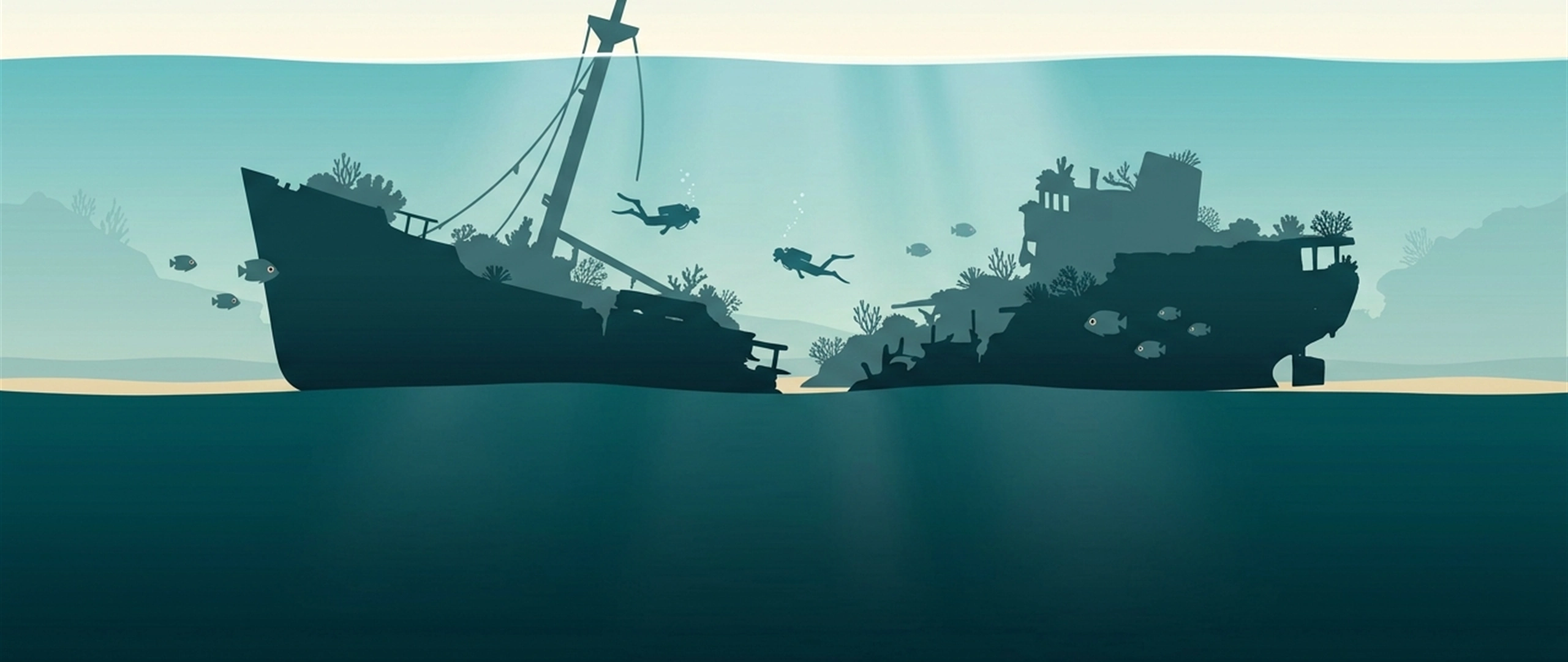
Labuan
Explore Labuan's four major shipwrecks off Sabah's west coast.
More details →
Two Coasts: Sipadan and Lankayan
Combine the deep walls of Sipadan with the macro wrecks of Lankayan on a two-week Sabah itinerary.
More details →
Sipadan
Guide to diving Sipadan Island in Sabah.
More details →Plan your dives
Send the team your preferred dates, the names of everyone travelling and your current certification levels. The team comes back to you with resort availability and a schedule that fits.