

Gentle eastern slope at Sipadan
Mid Reef
Located on Sipadan's eastern perimeter, Mid Reef is a gently sloping coral shelf teeming with turtles and macro life. It offers a calm and colourful retreat from the heavy currents of the island's northern points.
Highlights
- Eastern perimeter site along a gradual sloping coral shelf
- Massive Acropora table corals alongside deep-water black coral formations
- Dense populations of resident green turtles on almost every dive
- Calm and sheltered alternative to the high-energy northern walls
- Ideal for mixed macro and wide-angle underwater photography
- Reached via daily permit boat trips from Mabul, Kapalai or Semporna
About Mid Reef
Around an hour by boat from Semporna, Sipadan offers some of the most intense drift diving in the Celebes Sea. Mid Reef sits on the eastern side of the island and provides a welcome change of pace. It is a gently sloping coral shelf heavily decorated with massive table corals and black corals. Guides often choose this site when the current is running hard on the northern points. You find dense populations of green turtles resting among the hard corals along with boxfish, puffers and leaf fish moving across the reef. It is a calm alternative after two demanding current dives. The gentle slope means you have constant visual reference to the bottom. If you dive Sipadan on a day with heavy tides you will appreciate the shelter this eastern flank provides.
Skill level: Newly Qualified AOW | Ave depth: 15m | Max depth: 40m | Current: Variable | Visibility: 10–25m The gradual slope and visual bottom reference make this a highly forgiving site. Biological action concentrates heavily in the 10 to 25-metre band. You find rich coral cover and steady turtle traffic without the severe vertical drop of the western walls.
The slope
Mid Reef is located on the eastern perimeter of Sipadan. The topography features a gradual reef that slopes gently into deeper water. It lacks the severe and immediate verticality that defines the island's western and northern walls. The profile drops from 5 metres down to 40 metres. This gentler angle allows a wider variety of hard corals to take hold across the shelf. The substrate provides a stable base for massive table corals to grow across the shallower sections. The transition from the shallows into the deeper blue is gradual. This layout gives you plenty of time to explore the different depth bands without worrying about sudden drop-offs. The coral structure here creates a continuous rolling landscape rather than a sheer cliff face. You can follow the reef contours as they step down towards the ocean floor.
How the dive is run
Guides typically plan Mid Reef as the second or third dive of a permit day. This eastern slope serves as a calm and sheltered alternative when severe tides blow out high-energy locations like Barracuda Point or North Point. The current is variable. It can sometimes pull hard but it often presents as a relaxed drift. The pace is slow and forgiving. You spend most of your bottom time exploring the 10 to 25-metre band where reef life is concentrated. Your boat will drop you above the shallowest part of the reef. You descend onto the coral shelf and let the current carry you along the slope. The dive master will keep the group shallow enough to maximise bottom time. The boat tracks your bubbles and picks you up whenever you surface.
What you look for
The site offers exceptional hard coral formations. Huge Acropora table corals dominate the shallows and deep-water black corals grow further down the slope. The reef is teeming with smaller fish life. You look out for boxfish, puffers and well-camouflaged leaf fish hiding among the coral branches. Green turtles are present in very high densities. They rest on the coral shelves and swim slowly along the reef edge. The area occasionally shows patches of older coral damage but the macro life remains highly active. Be sure to check the black coral bushes closely to spot smaller critters hiding in the branches. The slower pace allows you to search the nooks and crannies for nudibranchs. You often see schools of smaller reef fish swarming above the coral heads.
Photography
This is an ideal location for mixed underwater photography. The relaxed conditions and varied substrate allow you to shoot both macro and wide-angle subjects on the same dive. You can capture wide shots of turtles over the table corals and switch easily to macro to photograph leaf fish and puffers. The sloping terrain means the water holds more particulate than the sheer walls. Careful strobe positioning helps to avoid backscatter. Mid Reef is often at its best in the mid-morning when the eastern exposure catches the early sun and lights up the shallows. The ambient light in the shallows is usually strong enough for natural-light wide-angle shots. Photographers appreciate the lack of severe current because it makes holding a steady position much easier.
The level it asks for
Sabah Parks mandates a minimum of Advanced Open Water or equivalent to dive anywhere at Sipadan. Mid Reef is highly suitable for newly qualified AOW divers. The gentle slope and lack of a bottomless drop make buoyancy control straightforward. The main requirement is good trim to avoid dragging your fins or equipment on the sloping coral. The relaxed nature of the site makes it a good place to off-gas after a deep morning dive. You still need to monitor your depth gauge because the bottom does slope away to 40 metres. Your guide will ensure you stay within the optimal depths for the best sightings.
When it is best
Sipadan offers diving all year. The water temperature sits comfortably between 26 and 30 °C. The best visibility runs from March to October. Mid-February to mid-November is good diving with softer visibility at the ends of the season. Mid-November to mid-February brings a mix of cloud, rain and sun. Read the guide on when to dive Sabah for more seasonal details. Sipadan is closed to all visitors every November to allow the reef a recuperative window. Mabul, Kapalai, Mataking and Pom Pom islands stay open during this time. The morning light hits the eastern side of the island first so mid-morning dives offer excellent illumination across the coral shelf.
How to dive it
Every diver at Sipadan is there on a permit issued for that day in their name. Sabah Parks issues 254 Sipadan permits a day. You secure a guaranteed Sipadan permit by booking the right combination of resort, dive package and minimum nights. Which dates can be guaranteed depends on the resort you choose. A Sipadan permit day gives 3 dives if you stay on Mabul or Kapalai. A Sipadan permit day gives 2 dives if you stay further away at Mataking or Pom Pom islands. A Sipadan permit day also gives 3 dives if you stay aboard the MV Celebes Explorer liveaboard. Read the Sipadan permits guide to see how the system works. The Sipadan Classic package is a popular way to organise this. The team steers you to the combination that fits your trip.
Nearby sites

Coral Garden
A complete guide to diving Coral Garden at Sipadan Island.
More details →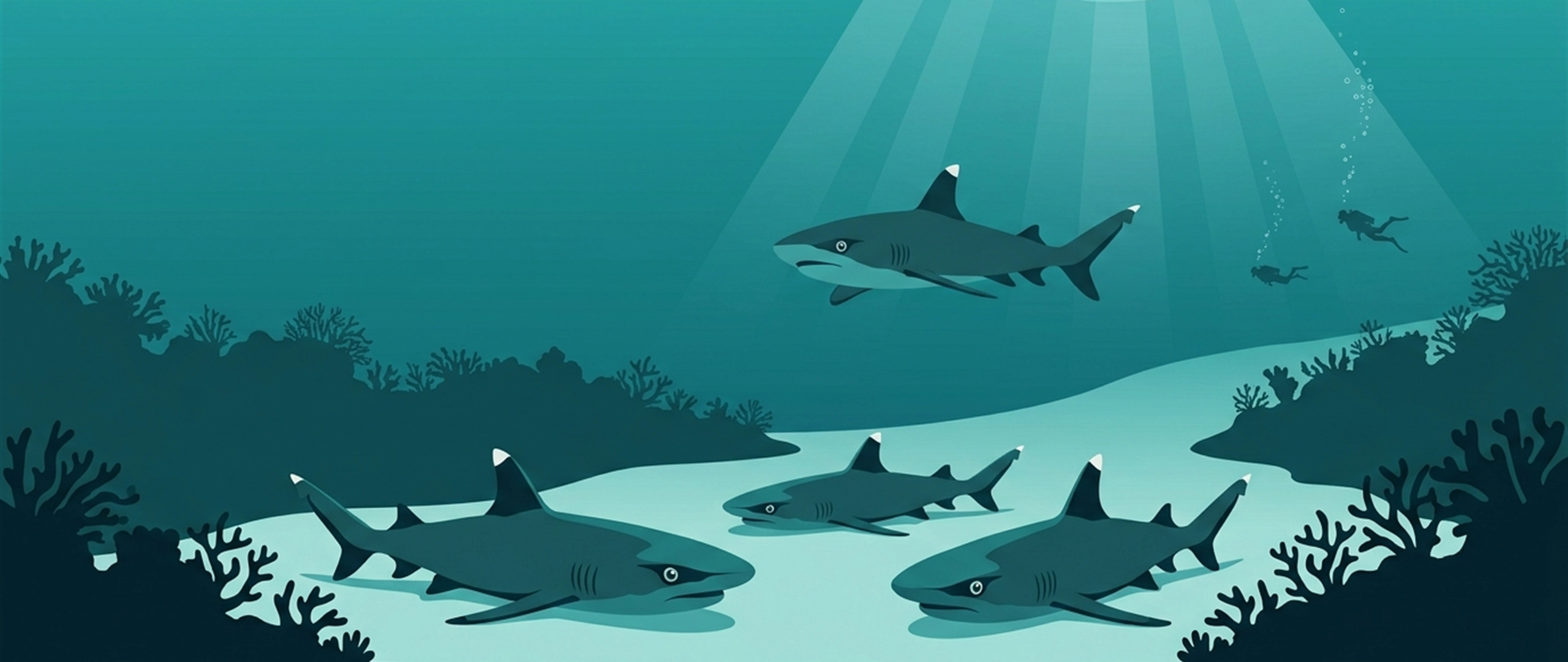
Whitetip Avenue
Dive Whitetip Avenue at Sipadan to see resting whitetip reef sharks and cruising grey reef sharks on a deep terraced wall.
More details →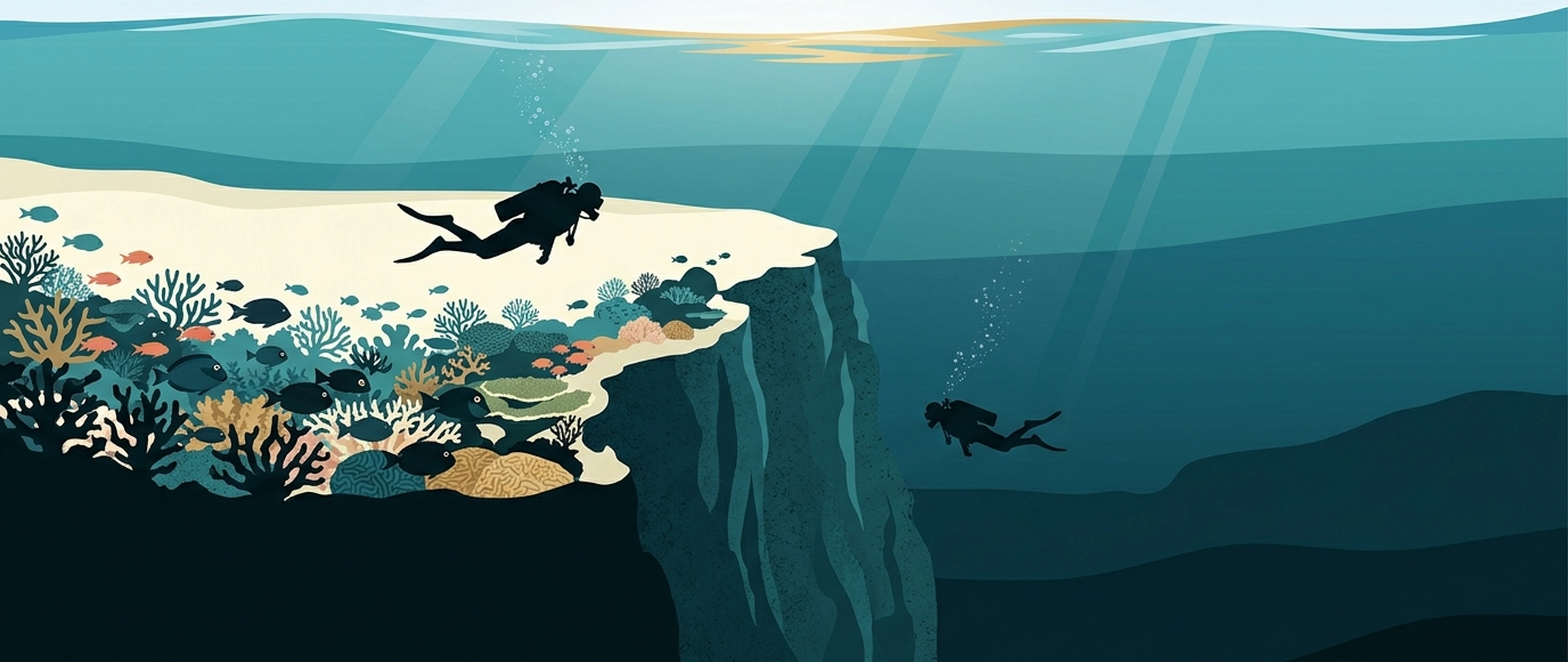
Dive sites of Sabah and Malaysia
A complete index of dive sites across Sabah and Malaysia.
More details →
The Drop-Off
Dive The Drop-Off at Sipadan.
More details →
Sipadan
Guide to diving Sipadan Island in Sabah.
More details →Send your planned dates, the names of everyone coming and your current certification levels. The team comes back with what can be arranged for your time in Sabah.