

Sabah's most famous reef resident
Anemonefish
The orange-and-white fish everyone recognises. They defend their host anemones on the shallow reefs of Sabah.
Highlights
- Resident across the shallow reefs of Sabah.
- Found in the Semporna islands on almost every dive.
- Endearing behaviour as they defend their host anemones.
- A very good subject for your first underwater photograph.
- Accessible to snorkellers in 3 metres of water.
- Reachable easily by boat from Mabul, Kapalai and Semporna.
Overview
You know this one before you even put your mask on. It is the orange-and-white fish everyone recognises from the film. You will find them living in an anemone that would sting any other fish on the reef. They are fiercely territorial and they defend their home against divers ten thousand times their size. The aggression is endearing rather than dangerous. You will often see them darting out from the tentacles to inspect your mask before retreating to safety.
Their biology is just as fascinating as their bravery. They live in a strict hierarchy. They change sex when the female of the group dies. The largest male takes her place to ensure the colony survives. Because they live in shallow water they are a highlight for snorkellers as well as divers. You will find them resident on the reefs across the Semporna islands.
What it is
Sabah is home to several species. You will regularly find false clownfish (Amphiprion ocellaris), Clark's anemonefish (Amphiprion clarkii) and pink skunk clownfish (Amphiprion perideraion) across the region. Once you recognise the shape you will spot them easily. They rely on a thick layer of mucus that protects them from the stings of their host anemone. This allows them to hide where predators cannot follow. Their hosts include the magnificent sea anemone (Heteractis magnifica) and their global conservation status is Not Evaluated.
Where you find it in Sabah
They are resident on almost every reef in the area. They favour the sunlit shallows where their host anemones thrive. This makes them highly accessible. Snorkellers exploring the Tun Sakaran Marine Park regularly find them in the shallows. Divers find them on the house reefs at Mabul and Kapalai.
Because they do not migrate a colony stays in the same anemone for years. The guides know where the active anemones are located. The local divemasters check the familiar coral heads for resident families.
What it does
The behaviour divers watch is a constant cycle of foraging and defence. They rarely leave the immediate radius of their host. If a predator approaches they retreat into the tentacles. If a diver gets too close the largest fish often swims out to issue a warning. It is a brilliant display of attitude from a fish that is only a few centimetres long. Be sure to watch how they nestle into the anemone at night. They use the stinging tentacles as a safe bed.
Photographing it
Anemonefish are a very good subject for a first underwater photograph. They stay in one place and their bright colours stand out against the reef. The skill is buoyancy, lighting and patience. You need to hold your position in the water without touching the coral. Wait for the fish to turn and face the camera. They move constantly among the tentacles so a fast shutter speed helps freeze the action. You do not need expensive macro equipment to get a good shot. A simple compact camera works very well in the bright shallow water.
Good habits around them
The ethical rules for diving with them are strict. You must never touch an anemone or its fish. Never move an animal out of its host or habitat for a photograph. Never try prodding or unearthing anything on the reef. A subject moved from its camouflage or its host is exposed immediately to predation. The guides enforce these rules to protect the marine life. Respecting their space ensures the colony remains healthy for the next divers to see.
Where to dive with them
You can reach them from any of the island resorts. The packages for learning to dive use these shallow reefs heavily.
Kapalai House Reef
Skill level: All levels | Depth: 5–18 m Sipadan-Kapalai Dive Resort stands on stilts over a sandbank. The house reef sits between 5 and 18 metres deep. It is packed with anemones and their resident fish. You can dive the house reef right from the walkway. This is an ideal site for a slow afternoon dive.
Paradise 1, Mabul
Skill level: All levels This site sits about 300 metres from the Sipadan Water Village jetty. The shallow sandy slope is covered in coral patches. Anemonefish share the reef with ghost pipefish and crocodilefish. It is a staple site for anyone staying on Mabul.
Coral Garden, Mataking
Skill level: All levels Mataking Island Resort offers gentle diving on a reef that drops down to sites like Coral Garden. The island sits northeast of Semporna. The shallows are filled with sunlight and healthy anemones. This island is an excellent base for families and non-divers who want to snorkel directly from the beach.
Tun Sakaran Marine Park
Skill level: Snorkellers and beginners The 8 islands of the Tun Sakaran Marine Park offer some of the best shallow water in Sabah. The park covers 350 square kilometres. Snorkellers see anemonefish clearly from the surface at islands like Sibuan and Mantabuan. The reefs are recovering well and the fish life is dense.
Nearby places
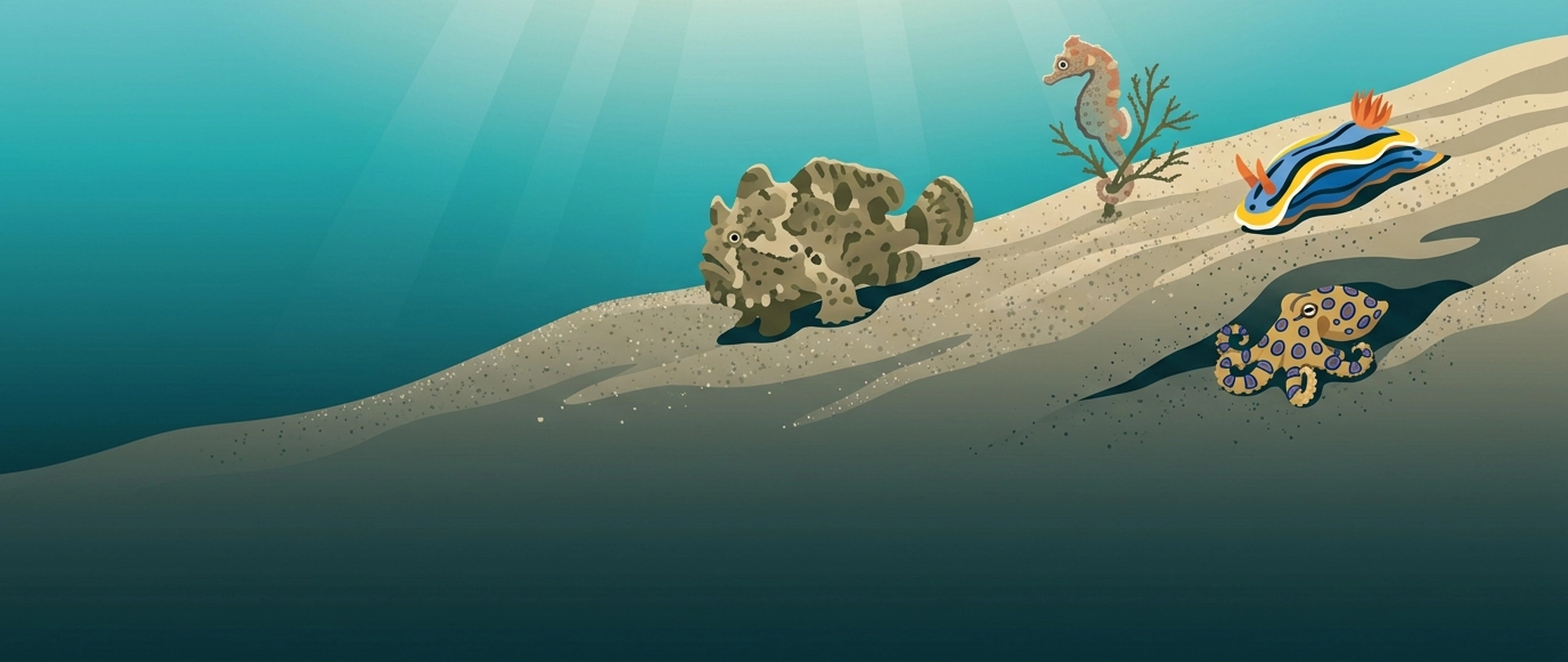
The critters of Semporna
Plan your macro diving week around Mabul, Kapalai and the Semporna mainland.
More details →
Family & Non-divers
Plan a family dive week in Semporna where the divers visit Sipadan and the non-divers enjoy beaches, snorkelling and turtle hatcheries.
More details →
Snorkelling & Island Hopping
Explore Sabah's island-hopping routes and snorkelling sites.
More details →
Kapalai
Stay at a water village built on a submerged sandbank off Mabul.
More details →
Learn to Dive: Open Water to Sipadan
Learn to dive in the warm shallow waters of Mabul or Kapalai and finish your week diving Sipadan.
More details →Plan your dives
Send your dates along with the names of everyone coming and your certification levels. The team will come back with what can be arranged for your trip.