

Sabah marine life guide
Banded sea krait
The banded sea krait is a resident of Sabah's reefs. It hunts in the crevices of Sipadan and Mabul before surfacing to breathe.
Highlights
- A black-and-silver sea snake found on almost every dive around Sabah's eastern islands
- Easily recognised by its distinct bands and a paddle-like tail used for swimming
- Famous for its placid nature despite carrying highly potent venom
- Breathes atmospheric oxygen and swims to the surface regularly
- Often seen hunting small eels in the coral rubble of Mabul and Kapalai
- A frequent photographic subject against the sunburst of the Celebes Sea
Overview
The banded sea krait is a black-and-silver banded sea snake that hunts in the reefs around Sabah. You see them on almost every dive here. They spend their time probing the coral for small eels and gobies. They have to swim to the surface to breathe because they have lungs rather than gills. Divers often watch them trace the contours of a wall before heading straight upward.
They are famously placid animals. They carry a highly potent venom to subdue their prey but they ignore divers entirely. They move past you with complete indifference. You can appreciate those two facts together once you understand the animal. Getting a close look at one heading for the surface is a regular highlight of diving Sipadan and Mabul.
What it is
The banded sea krait (Laticauda colubrina) belongs to a group of sea snakes found from Sabah through the Philippines to Taiwan. It is easy to recognise underwater. It has a slender body patterned with alternating black and silver-grey bands. Its tail is flattened into a wide paddle shape to increase its swimming speed. It also has a distinct yellow tinge on its face.
This sea snake divides its life between the ocean and the land. It retains broad belly scales to move on solid ground. Its physical adaptations for the water increased its swimming speed by roughly 60 percent but drastically reduced its terrestrial mobility compared to land snakes.
Where you see it in Sabah
They are found across almost all the major dive hubs in Sabah. They are a resident species and you can expect to see them year-round. They are abundant at Sipadan, Mabul and Kapalai. You have a very high chance of spotting one on a standard multi-day dive trip to the eastern islands. They are also seen occasionally in the Tunku Abdul Rahman Park near Kota Kinabalu and in the Tun Sakaran Marine Park.
The absolute epicentre for the species in Sabah is Pulau Tiga off the west coast. A limestone formation there known as Snake Island acts as a primary breeding and sloughing ground. Researchers have recorded extraordinary population densities reaching up to 76 snakes per square kilometre in that specific habitat. They haul out onto the rocks there to digest prey and mate.
What it does
Divers usually watch kraits hunting along the reef. Their small heads let them probe narrow crevices. Divers often see them investigating the plunging walls of Sipadan and the coral rubble of Mabul. They hunt for hidden prey like small eels and gobies.
They require atmospheric oxygen because they possess a single functional lung. They trace the reef contours searching for food until they need a breath. Then they abandon the hunt and ascend directly to the surface.
They return to land to breed. These egg-laying snakes also haul out onto rocks or beaches to digest heavy meals. They also return to land to shed their skin and lay their eggs.
Good habits around them
The advice for diving with banded sea kraits is clear. Their venom is highly potent. It contains toxins that affect nerves and muscles and can cause paralysis and muscle breakdown. Yet bites to scuba divers are exceedingly rare. They effectively only happen if the animal is handled, crushed or intentionally provoked. The rule for divers is to observe them without touching.
The strict etiquette enforced by Sabah dive operators focuses on their need to breathe. You must never position yourself between a hunting krait and the surface. It can trigger a defensive reaction if you obstruct its path for air. A krait heading upward is going for oxygen rather than at anyone. Distinguish a defensive reaction from aggression and give them clear vertical space. Keep your distance and observe passively. Specific sea snake antivenom can be difficult to source quickly in remote rural clinics or island locations so passive observation is essential.
Chinese divers know the krait well and often feature it in their trip reports. Its potent venom and placid nature fascinate divers.
Photographing it
You need the right setup when capturing this behaviour on camera. Wide-angle lenses are ideal. The shot most photographers want is framed mid-water against the sunburst during the animal's ascent or descent.
Be sure to maintain a respectful distance. Never corner the animal or block its route to the surface for the sake of a photograph. Let the krait dictate the proximity. They are placid animals and sometimes swim quite close as you hover in the water column.
Conservation
Banded sea kraits remain abundant in Sabah despite concerns about the skin trade and accidental catches in trawl nets affecting sea snakes across the region. The global population was assessed by the IUCN Red List in 2010 and published in 2023. It is currently categorised as Least Concern. They are not listed on CITES and their numbers in Sabah remain abundant.
Where to dive with them
You should look at packages based around the Semporna islands to see banded sea kraits. Mabul and Kapalai are excellent bases for encounters.
Sipadan-Kapalai Dive Resort sits on stilts over a sandbank with a house reef just below the walkways. It gives you easy access to the rubble habitats kraits favour. You can dive the house reef unguided by day from the dive-centre pier. You are around 15 minutes by boat from Sipadan from there.
Staying on Mabul also puts you right in their territory. Resorts like Mabul Water Bungalows and Sipadan-Mabul Resort run daily boats to the local reef slopes where kraits hunt. You will also find excellent macro diving there for critters of Semporna like moray eels and frogfish.
Guaranteed Sipadan permits come with the right combination of resort, dive package and minimum number of nights. The dates that can be guaranteed depend on your chosen resort and the team steers you to the combination that fits. Sabah Parks issues 254 Sipadan permits a day. A Sipadan permit day gives you 3 dives when staying on Mabul or Kapalai or aboard the Celebes Explorer and two when staying on Pom Pom or Mataking. Sipadan is closed to all visitors every November.
Nearby places and alternatives

Sipadan
Guide to diving Sipadan Island in Sabah.
More details →
Mabul
Mabul is the main island base for Sipadan.
More details →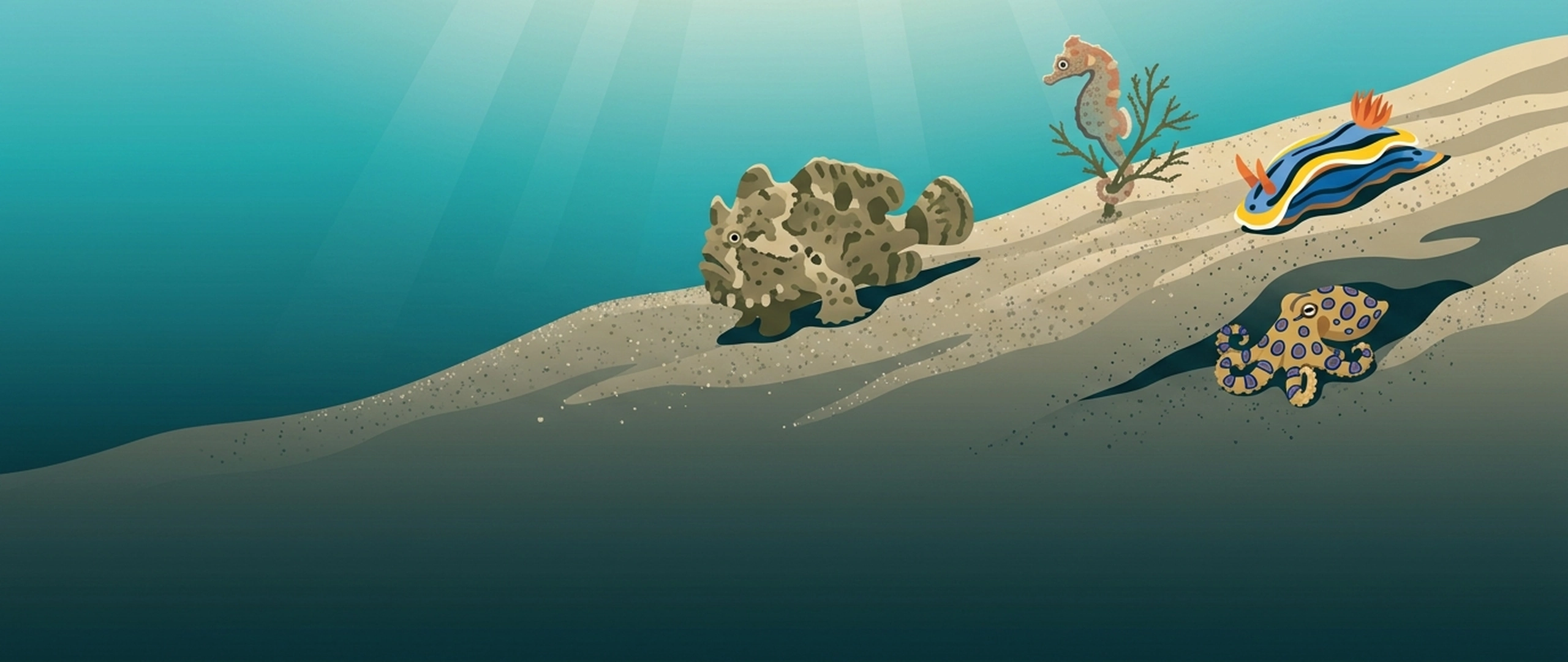
The critters of Semporna
Plan your macro diving week around Mabul, Kapalai and the Semporna mainland.
More details →
Your first dive trip after certification
The Semporna islands are an ideal first dive trip after your Open Water course.
More details →
Tun Sakaran Marine Park
Plan a day trip to Tun Sakaran Marine Park.
More details →Send your dates, the names of everyone coming and your certification levels. The team will come back to you with the resort options and permit availability that can be arranged.