

Resident schooling fish of Sipadan
Bigeye trevally
Dive with the silver wall of fish that parts around you at Sipadan and closes again behind. Thousands of bigeye trevally hold station over the reef edge through the middle of the day.
Highlights
- Thousands of resident schooling fish holding station above the drop-offs.
- Encounter the silver wall that parts around divers and closes smoothly behind.
- Sightings happen on almost every dive at specific northern sites.
- Exceptional wide-angle photography opportunities exist in the sunlit shallows.
- Reach the island via a 15-minute boat ride from Mabul or Kapalai.
- Access requires an Advanced Open Water certification and a daily permit.
Overview
The silver wall of fish parts around you at Sipadan and closes again behind. Thousands of bigeye trevally hold station over the reef edge through the middle of the day. You drop into the water and the sheer volume of silver bodies dominates the view. They are one of the defining sights of Malaysia's only oceanic island. The school moves as a single fluid shape above the drop-offs. It is an encounter divers travel across the world to see.
You find them most mornings near the northern points. They form dense clouds in the sunlit shallows. A gentle approach lets you swim directly into the centre of the school. You hang suspended while thousands of fish circle you in the current.
What it is
Bigeye trevally (Caranx sexfasciatus) belong to the jack family. You recognise them by their silver bodies and prominent eyes. They often display a small dark spot on the upper edge of their gills. They form massive aggregations above the reef during the day. The school moves as a single fluid entity to confuse predators. Grey reef sharks constantly patrol the blue water outside the school.
The bigeye trevally behave differently from the resident chevron barracuda. The barracuda tighten into a swirling column when the current runs. The trevally form a broad silver cloud. The school often parts to let you swim right into the centre. The fish then close the gap behind you. You find yourself completely surrounded by moving silver bodies. They are a protected species within the gazetted Sabah Parks boundaries established in 2009.
Where you see it in Sabah
They are resident at Sipadan. The island rises 600 m from the Celebes Sea floor on an extinct volcanic seamount. Sipadan features no continental shelf. The reef flat extends only metres from the beach before plunging vertically into the dark water. This geology allows open-ocean pelagic species to aggregate remarkably close to the shore. It explains why strict depth discipline matters on every dive.
The trevally gather where the oceanic currents strike the reef. They favour the northern edge of the island near the old jetty structure. You also see them heavily surrounding the blue entrance to Turtle Cavern.
When
The trevally hold station on almost every dive during Sipadan's open months. Sipadan offers diving all year. The best visibility runs from March to October. The period from mid-February to mid-November provides good diving with softer visibility at the ends. The months from mid-November to mid-February bring a mix of cloud, rain and sun. Water temperatures remain a highly stable 26 to 30 °C year-round. You only need a 3mm tropical wetsuit for thermal protection. Sabah Parks enforces an environmental closure every November. Sipadan is closed to all visitors from November 1 to 30.
What it does
The fish spend the daylight hours resting in the currents. They face into the flow to breathe with minimal effort. A large school can stretch along the wall. They react to divers calmly if you move slowly. Fast or erratic finning scatters them instantly. They regroup further down the reef.
Their behaviour relies on mass confusion. A predator finds it difficult to isolate a single fish when thousands of identical silver bodies move together. This is why they stay close to the reef edge during the day before moving to deeper water at night.
Photographing it
The shallow reef top provides excellent ambient light for underwater photography. Fisheye lenses capture the scale of the massive schools. The fish congregate in the brightly lit 10 to 15-metre band. Many professionals rely on custom white balance instead of heavy strobe arms in the current. You need fast shutter speeds to freeze the rapid pelagic motion when the current is strong.
Be sure to inspect the shallow reef top after photographing the school. The sunlight highlights the hard corals beautifully. Shooting upwards towards the surface gives you striking silhouettes of the school against the sun.
Good habits around them
Approach the school slowly. Control your breathing to glide smoothly into the mass. You must maintain strict depth discipline over the drop-offs. The walls fall away into deep water so you must watch your computer constantly.
Currents dictate the dive plans. You often drift rapidly along the walls. Reef hooks help you hold position to watch the fish. You must attach hooks exclusively to dead rock to prevent structural damage to the reef. Ensure your buoyancy remains neutral to avoid crushing the fragile corals below. Be sure to settle low in the water column and remain static if the school approaches you.
Where to dive with them
Barracuda Point
Skill level: Confident AOW | Published depth range: 5–40 m+
Currents sweep you along a bottomless wall toward a sloping plateau on the northeast corner. The trevally congregate in the 15 to 25-metre band alongside the famous barracuda vortex. Grey reef sharks patrol the outside lanes. You need instinctual buoyancy control to manage the rapid current shifts.
The Drop-Off
Skill level: Newly Qualified AOW | Published depth range: 5–40 m
The sheer wall begins just 5 steps from the shoreline sand. You drop straight down beside a vertical drop-off extending 600 m down. Massive schools of trevally congregate in the shallows under the old jetty structure. Resident turtles use the wall like a vertical highway. Keep a constant visual reference on the reef to avoid blue-water disorientation.
Turtle Cavern
Skill level: AOW for the entrance; overhead training for the interior | Entrance depth: 18–20 m
A large bell-shaped tunnel opens directly off the vertical wall at 18 m. Schooling trevally and fusiliers heavily surround the blue entrance. Recreational divers view the entrance from open water; entering the cavern to see the turtle skeletons requires overhead training and a qualified guide. Access is strictly guided. You must possess excellent buoyancy to avoid silting the environment.
North Point
Skill level: Confident AOW | Published depth range: 25–40 m+
Ocean currents bring open-water fish to the deep wall on the northernmost tip of the island. A continuous procession of grey reef sharks and schooling jacks moves through the strong currents. You need to be confident drifting in strong currents and comfortable in open blue water to dive this site safely.
South Point
Skill level: Confident AOW | Published depth range: 20–40 m+
South Point anchors the southern tip of the island. Strong variable currents make this a lively drift dive that attracts large predators. The shallow reef top offers excellent macro relief toward the end of the dive.
Plan your dives
Sabah Parks issues 254 Sipadan permits a day. You need an Advanced Open Water certification to dive the island. Diving runs from early morning until the afternoon.
A guaranteed Sipadan permit comes with the right combination of resort, dive package and minimum number of nights. Exact dates depend on the resort you choose. The team steers you to the combination that fits. A standard Sipadan classic package secures your accommodation and your permit days.
Sipadan-Kapalai Dive Resort stands on stilts over a sandbank about 15 minutes from Sipadan by boat. It features twin and triple water chalets with unlimited house-reef diving by day. Mabul Water Bungalows sits on the east side of Mabul. It offers standard water bungalows and villa suites. SMART shares the estate and provides a beach resort alternative. Mataking Island Resort is an 80-minute boat run across the Alice Channel. It offers gentler local diving and has its own sea-turtle hatchery.
From Mabul and Kapalai a Sipadan permit day gives 3 dives. From Mataking or Pom Pom islands a Sipadan permit day gives 2 dives. Departure times depend on the operator's schedule, the tide and the sea.
FAQ
Do I need an Advanced Open Water certification to see them? Yes. Sabah Parks mandates an Advanced Open Water certification or equivalent to dive anywhere at Sipadan.
Are the trevally always there? The bigeye trevally are resident all year. You see them on almost every dive at the northern sites.
What is the best time of year to photograph them? The best visibility runs from March to October. Sipadan is closed to all visitors every November.
Can I touch the fish? No. You must maintain neutral buoyancy and avoid any contact with marine life. Fast movements scatter the school.
Can snorkelers see the school? Snorkellers are permitted at Sipadan. They draw from the same daily permit quota as divers. The trevally often congregate in the shallows where snorkellers can see them clearly.
Nearby places / alternatives
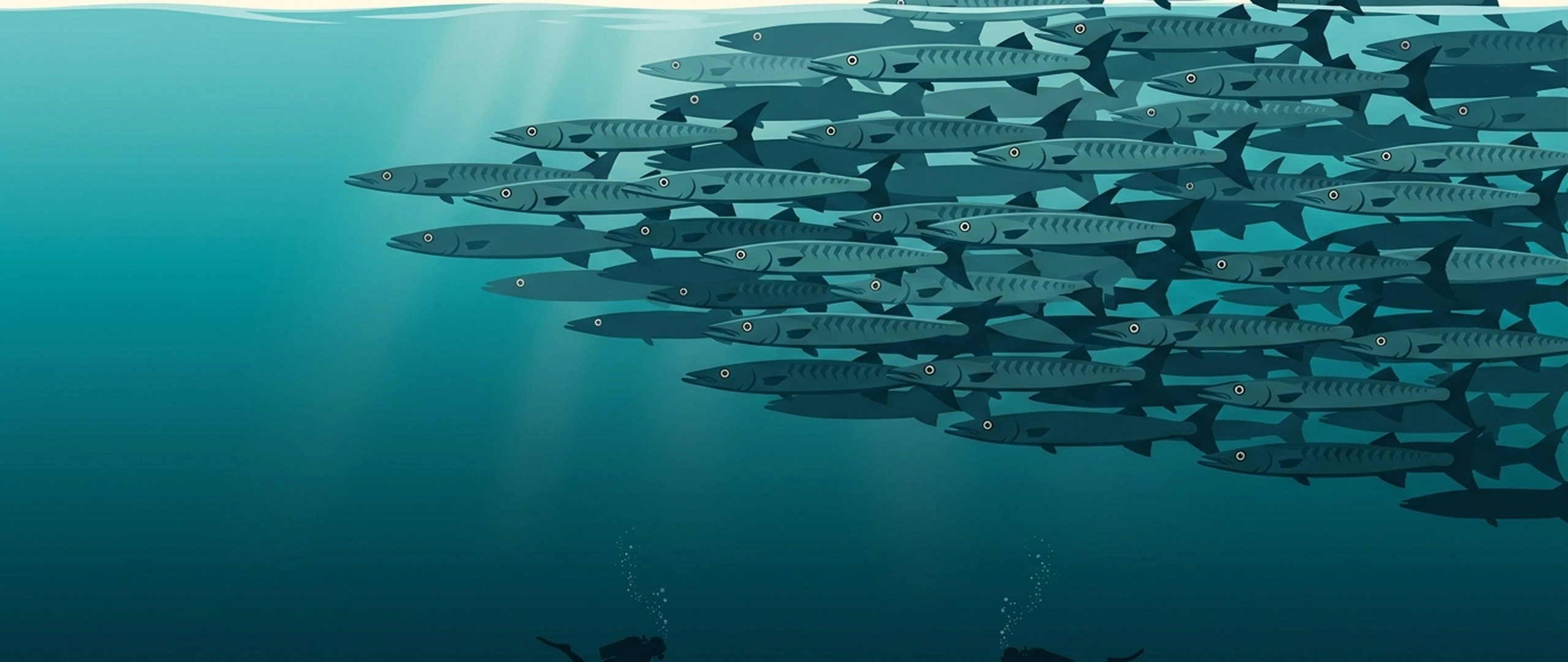
Chevron barracuda
The resident school of chevron barracuda is the dive Sipadan is famous for.
More details →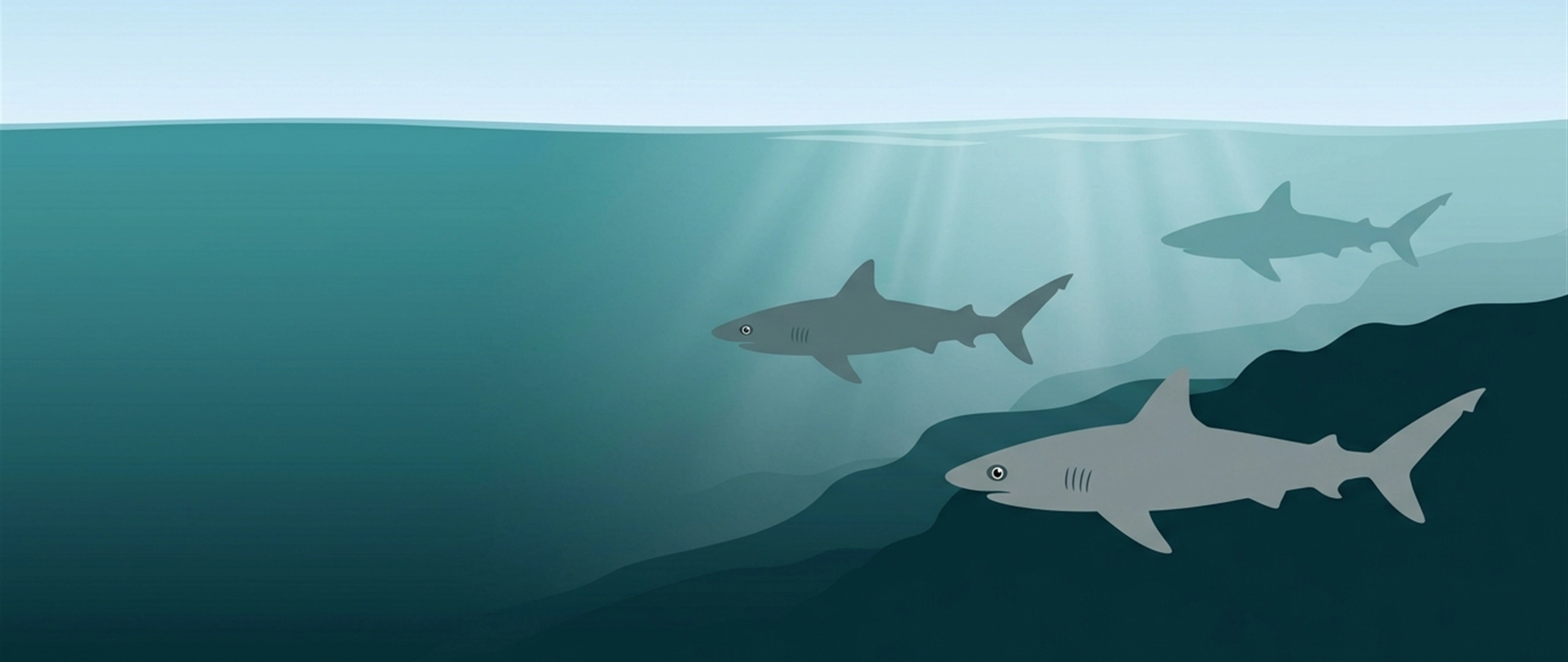
Grey reef shark
Learn where to dive with resident grey reef sharks in Sabah.
More details →
Barracuda Point
Everything you need to know about diving Barracuda Point at Sipadan.
More details →
Sipadan
Guide to diving Sipadan Island in Sabah.
More details →
Underwater Photography
Photograph Sipadan's wide-angle pelagics and Mabul's macro critters in one week.
More details →Arrange your trip
Send your preferred dates, the names of everyone coming and your certification levels. The team comes back with the permit options and resort availability that can be arranged.