

Sabah's resident pelagic shark
Grey reef shark
The grey reef shark is a fixture of Sipadan's high-energy points. Watch them patrol the blue water while you drift along the wall.
Highlights
- Resident species seen on almost every Sipadan dive.
- Found consistently at Barracuda Point and South Point.
- Most active in the blue water off the vertical wall.
- Calm and entirely uninterested in passing scuba divers.
- Best photographed with wide-angle lenses in good morning light.
- Encounters require an Advanced Open Water certification.
Overview
The grey reef shark (Carcharhinus amblyrhynchos) is the shark patrolling the blue at Sipadan's points on most dives there. They are a metre and a half of muscle holding easily into the current. If you have not dived with sharks before the first encounter often surprises people. They are entirely uninterested in the divers watching them from the wall. They cruise in the open ocean off the reef edge and keep their distance. They move smoothly through the water while you hang in the drift.
What it is
The grey reef shark is a medium-sized requiem shark. It has a blunt snout and a dark margin on its tail fin. It looks the way most people draw a shark. They are fast swimmers and they thrive in the currents that hit oceanic pinnacles. At Sipadan they act as the resident apex predators alongside the whitetip reef shark. You can recognise a grey reef shark by its active behaviour. Whitetips sleep openly on sand patches or under ledges during the day. The greys keep moving.
Where you see it in Sabah
Sipadan is the primary location in Sabah for consistent encounters. The island rises 600 m from the Celebes Sea floor. The island's steep sides create the deep walls and strong currents these sharks favour. They are seen on almost every dive at the main points. While sites like The Drop-Off plunge vertically from the shallows to offer excellent macro life on the wall itself, the grey reef sharks ride the outside lanes where the ocean currents strike the reef.
North Point
Skill level: Confident AOW | Depth range: 25–40 m+
North Point catches the incoming tide and draws sharks in from the blue. Massive grey reef sharks patrol the blue water here constantly. The current sweeps you past the action and you watch them holding their position.
Barracuda Point
Skill level: Confident AOW | Depth range: 5–40 m+
The current here draws in the schooling fish and sharks. While most divers look for the chevron barracuda vortex at Barracuda Point, grey reef sharks consistently patrol the periphery of the school. They often stay a little deeper or further out in the blue.
Whitetip Avenue
Skill level: Confident AOW | Depth range: 16–40 m
Below 30 m the grey reef sharks are highly active and numerous. The Whitetip Avenue site features a steep terraced wall. Dropping down to this level gives you an excellent vantage point to watch small packs cruising the drop-off.
South Point
Skill level: Confident AOW | Depth range: 20–40 m+
The southern tip features a ledge at 20 m before a vertical drop into the open ocean. Large aggregations of grey reef sharks ride the strong currents off the wall. The shallow reef top is highly productive but the primary action happens deeper. Early light at South Point also brings occasional scalloped hammerhead sightings deep in the thermoclines.
When to see them
Grey reef sharks are resident all year. Sabah Parks issues 254 Sipadan permits a day. You have an excellent chance of seeing them whenever you secure a Sipadan permit. Diving in Sipadan happens all year. The best visibility runs from March to October. Mid-February to mid-November offers good diving with softer visibility at the ends of that window. The island is closed to all visitors every November to give the reef a rest. Mabul, Kapalai, Mataking and Pom Pom islands stay open during this month.
Diving at Sipadan runs from early morning until the afternoon. The early morning dives often provide the best encounters at South Point or North Point. Read the guide on when to dive Sabah for detailed weather patterns.
What it does
Divers watch them patrolling the deep blue water away from the main reef structure. They do not approach divers. They maintain a steady distance and cruise along the thermal layers. If you hang quietly in the current they will often pass close enough for a good look. They are social animals and you will often see them in small packs at deeper sites. Encounters rely on diver discipline. Erratic finning or chasing pushes them deeper.
Photographing it
Shooting grey reef sharks takes patience and the right equipment. They rarely come close enough for macro setups. You need a wide-angle lens to capture them against the open ocean.
The main challenge is the depth and the light. At South Point they are often seen in deeper water off the wall. Blue-water photography at this depth requires substantial strobe power to combat the loss of colour. If you rely on ambient light you need a camera with excellent high-ISO performance. Fast shutter speeds are required to freeze their rapid motion in the strong drift.
Be sure to watch your depth gauge rather than the viewfinder. It is easy to sink while framing a shark below you.
Good habits around them
The first rule is to stay calm and enjoy the encounter. They are not a threat to divers. The biggest safety factor is the environment they live in. To see them you need to be comfortable in blue water and strong currents. Sabah Parks mandates a minimum of Advanced Open Water certification for all Sipadan diving.
Maintain immaculate buoyancy over the deep drop. Do not chase them out into the blue. If you swim after a grey reef shark it will swim faster and you will burn through your air. Stay close to the wall and let them pass you. If the current is strong your guide might use a reef hook. You must anchor exclusively to dead rock to prevent damage to the reef.
Conservation
Grey reef sharks are heavily protected within Sipadan Island Park. The marine park was gazetted in 2009 under the Sabah Parks Enactment 1984 and expanded in 2015 to cover 16,860 hectares. The removal of all on-island resorts by 31 Dec 2004 halted ecological degradation and created a safe haven for apex predators. The conservation status for the species globally is confirmed at enquiry. Inside the park boundaries they thrive as a protected resident population. The daily permit cap and the strict November closure keep the ecosystem healthy. You can read more about local efforts on the conservation page.
Where to dive with them
You dive Sipadan from the surrounding islands. Sipadan-Kapalai Dive Resort is a stilted village over a sandbank roughly 15 minutes away by boat. Mabul Water Bungalows sits on the east side of Mabul and offers premium water villas. Sipadan-Mabul Resort provides a diver-first beach setting right next door. If you stay further away at Mataking Island Resort the boat ride takes about 80 minutes across the Alice Channel.
From Mabul and Kapalai a Sipadan day gives 3 dives. Mataking and Pom Pom islands offer two. The team steers you to a Sipadan classic dive package that gives you the best chance of securing a permit. A guaranteed Sipadan permit comes with the right combination of resort, dive package and minimum number of nights. Which dates can be guaranteed depends on the resort you choose.
Nearby places and alternatives

Whitetip reef shark
Learn where to dive with resident whitetip reef sharks in Sabah.
More details →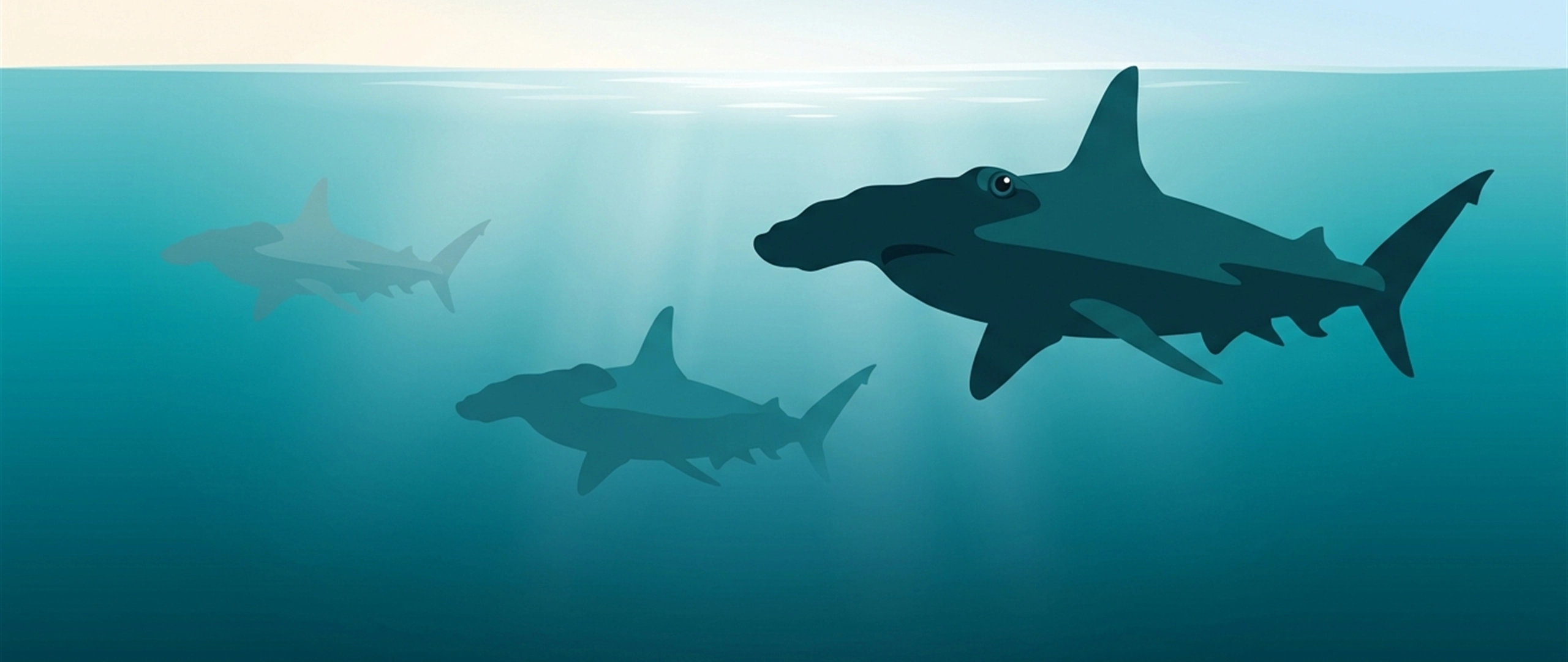
Scalloped hammerhead
Dive with schooling scalloped hammerheads in Sabah.
More details →
South Point
A deep wall dive at the southern tip of Sipadan.
More details →
Sipadan
Guide to diving Sipadan Island in Sabah.
More details →
Conservation in the Semporna islands
Learn how marine parks, strict Sipadan permit limits, turtle hatcheries and active coral restoration protect the reefs of Semporna for visiting divers.
More details →Plan your dives
Send the team your planned travel dates, the names of everyone coming and your current dive certification levels. The team comes back with the resort packages and permit combinations that can be arranged for your trip.