

Schooling shark of the deep reefs
Scalloped hammerhead
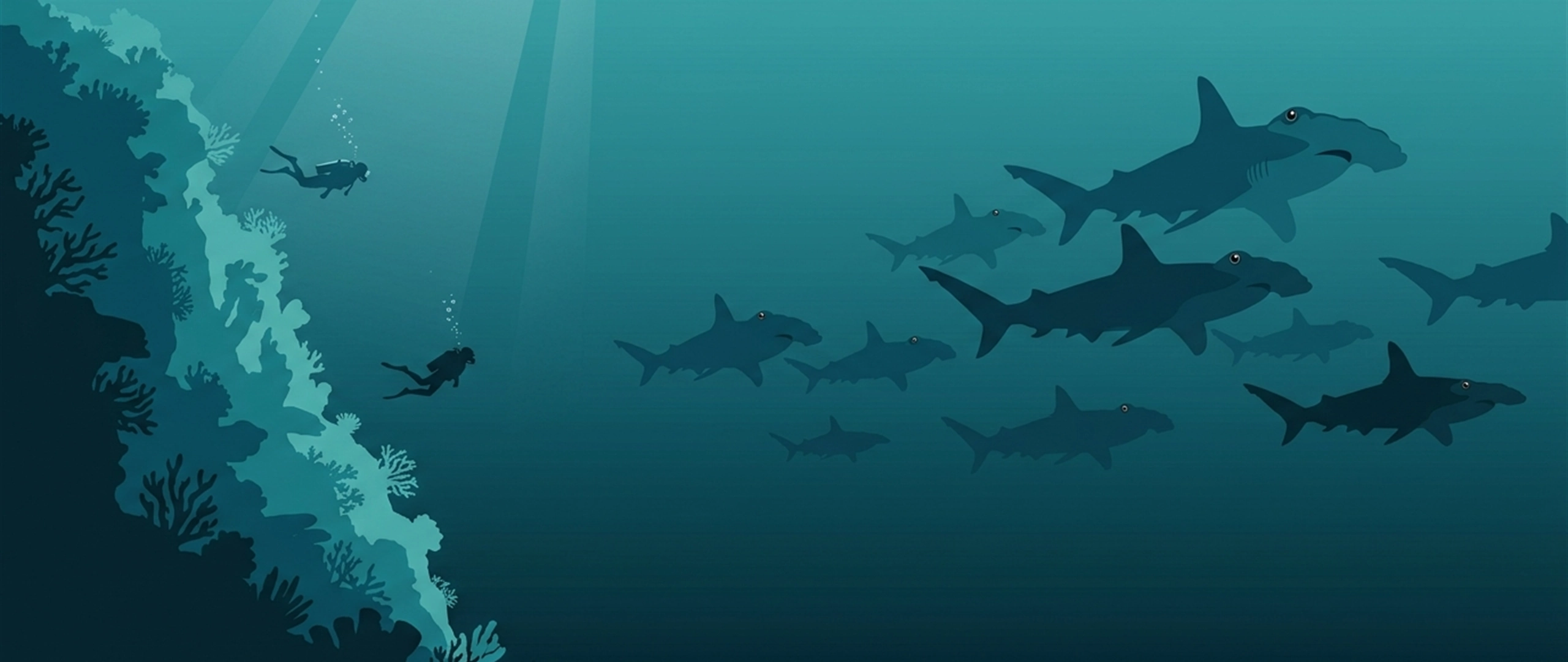
The scalloped hammerhead gathers in deep water along steep walls. Sabah offers advanced divers the chance to watch these schools cruise the cold thermoclines off Sipadan and the Layang Layang atoll.
Highlights
- Watch graceful schools cruise the deep thermoclines on early-morning dives.
- Encounter them off Sipadan's South Point between July and November.
- Plan a seasonal trip to the deep walls of the Layang Layang atoll.
- Bring your Advanced Open Water certification for the depths these animals prefer.
- Learn how the flat head acts as a natural metal detector over the seabed.
- Observe female-dominated groups using the seamounts as a daytime refuge.
Overview
The scalloped hammerhead is the shark most experienced divers travel to see. Unlike curious shallow-water species these animals gather in deep water along steep walls. They prefer the cooler ocean currents. In Sabah you can encounter them off South Point in the early morning or along the sheer drop-offs of Layang Layang during its season.
Seeing them in their natural environment requires discipline. You drop into the blue water away from the reef wall to wait by the cold thermoclines. When the conditions align a school will glide past in a tight formation. It is a quiet spectacle that rewards patience and good buoyancy control. If you pre-book a Sipadan package your permits are sorted in advance so you can focus on the diving.
What it is
The scalloped hammerhead (Sphyrna lewini) is easily identified by the distinct central notch on the leading edge of its wide flat head. This central dip separates it from the smooth hammerhead and the great hammerhead. The smooth hammerhead lacks the central notch entirely. The great hammerhead has a nearly straight front edge.
The flattened head is called a cephalofoil. Popular media often claims hammerheads possess a sixth sense stronger than other sharks. The truth is their wide cephalofoil functions like an organic metal detector. It spreads their electro-sensitive pores over a larger surface area to sweep the seabed for hidden prey. The pores are called the ampullae of Lorenzini. This wide search swath increases their chances of finding buried stingrays. The eye placement at the extreme edges of the hammer also gives them exceptional binocular vision and near 360-degree vertical sight. They grow slowly. The mature adults you see in schooling aggregations range from 2.5 to 3.0 metres long.
Life cycle and growth
These animals have a slow reproductive cycle. Females give birth to live young after a gestation period of 9 to 10 months. The young are born in shallow turbid coastal nursery grounds like those in Sabah's Tun Mustapha Park. They spend their early life feeding on bottom-dwelling crustaceans and small fish.
As they mature into sub-adults they migrate to offshore seamounts and transition to a pelagic diet of oceanic squid and larger fish. The early offshore migration happens sooner for females. They must attain a large body mass quickly to support large litters later in life.
Where you see it in Sabah
Sabah has two main locations for deep-water encounters. Sipadan is an extinct volcanic cone rising 600 metres from the Celebes Sea floor. A decade of dive logs tracking over 13,000 individual dives helped Sipadan gain recognition from the Important Shark and Ray Areas project. Scalloped hammerheads are an occasional early-morning bonus at the deep current-swept dive sites of South Point and Hanging Gardens.
The other location is Layang Layang. This remote oceanic atoll sits roughly 300 kilometres northwest of Kota Kinabalu. Its coral walls plunge vertically into the South China Sea to depths exceeding 2,000 metres. The deep-ocean upwellings sustain dense pelagic marine life. Layang Layang is an isolated atoll far offshore. Seasonal diving enquiries are arranged on request. The team confirms the current status of the island at enquiry.
When
The seasons depend entirely on where you dive. Historic Sipadan sightings peaked from July to November but the island now closes to visitors throughout November. At Layang Layang the optimum window is March to September. March to May brings the best chance of seeing the schools there. This window coincides with the dry season and calm surface conditions.
What it does
These sharks gather in large schools around seamounts during the day. Telemetry tracking shows these daytime gatherings serve as a refuge for social interaction and predator avoidance. The schools are frequently dominated by females.
As daylight fades the schools disband. The individuals migrate out into the open ocean to hunt squid and fish in deep water before returning to the seamount by dawn. Be sure to look out into the blue water during early morning dives when the sharks return from their nightly feeding.
Good habits around them
Scalloped hammerheads are skittish. They are highly sensitive to acoustic and visual disturbances. The mechanical noise of scuba exhaust bubbles or sudden movements will often cause a school to descend rapidly into the deep water.
Give the sharks space and keep your movements calm. Divers usually execute negative entries and descend quickly to depths between 25 and 40 metres into the blue water. You hover motionless in the current to allow the school to pass on its own terms. If anyone swims toward the group the animals retreat immediately.
Photographing it
Taking a good photograph requires letting the subject come to you. Bright flashes from underwater strobes startle them easily. Ambient light works best for capturing the silhouette of a passing school against the blue background. Maintain neutral buoyancy and keep your breathing slow to minimise exhaust noise. A wide-angle lens is essential for conveying the scale of the aggregation in the deep water.
Conservation
The species is highly vulnerable to overfishing. The IUCN assessed scalloped hammerheads as Critically Endangered globally in 2019. They suffer from heavy exploitation for the global fin trade. Their schooling behaviour and low reproductive rates make population recovery slow.
Their international trade is heavily restricted under CITES Appendix II with the listing effective from 2014. They are fully protected in Malaysian waters under the 2019 amendments to the Fisheries Regulations. In Sabah it is illegal to catch and keep these sharks deliberately. You can read more about how operators protect these environments on the conservation page.
Where to dive with them
South Point
Skill level: Advanced | Dive profile: Deep wall and blue water South Point sits on the southern edge of Sipadan where strong currents sweep the wall. Advanced divers drop into the blue early in the morning to watch for scalloped hammerheads and thresher sharks riding the cold thermoclines. It requires comfort in deep water away from the visual reference of the reef.
Hanging Gardens
Skill level: Advanced | Dive profile: Wall with deep undercuts Located along the southern wall of Sipadan this site features deep undercuts covered in sea fans. It is another location where deep pelagic encounters happen. Keep an eye on the blue water away from the reef while you drift along the wall.
Nearby places and alternatives
Layang Layang
Explore Layang Layang atoll for scalloped hammerhead season.
More details →
South Point
A deep wall dive at the southern tip of Sipadan.
More details →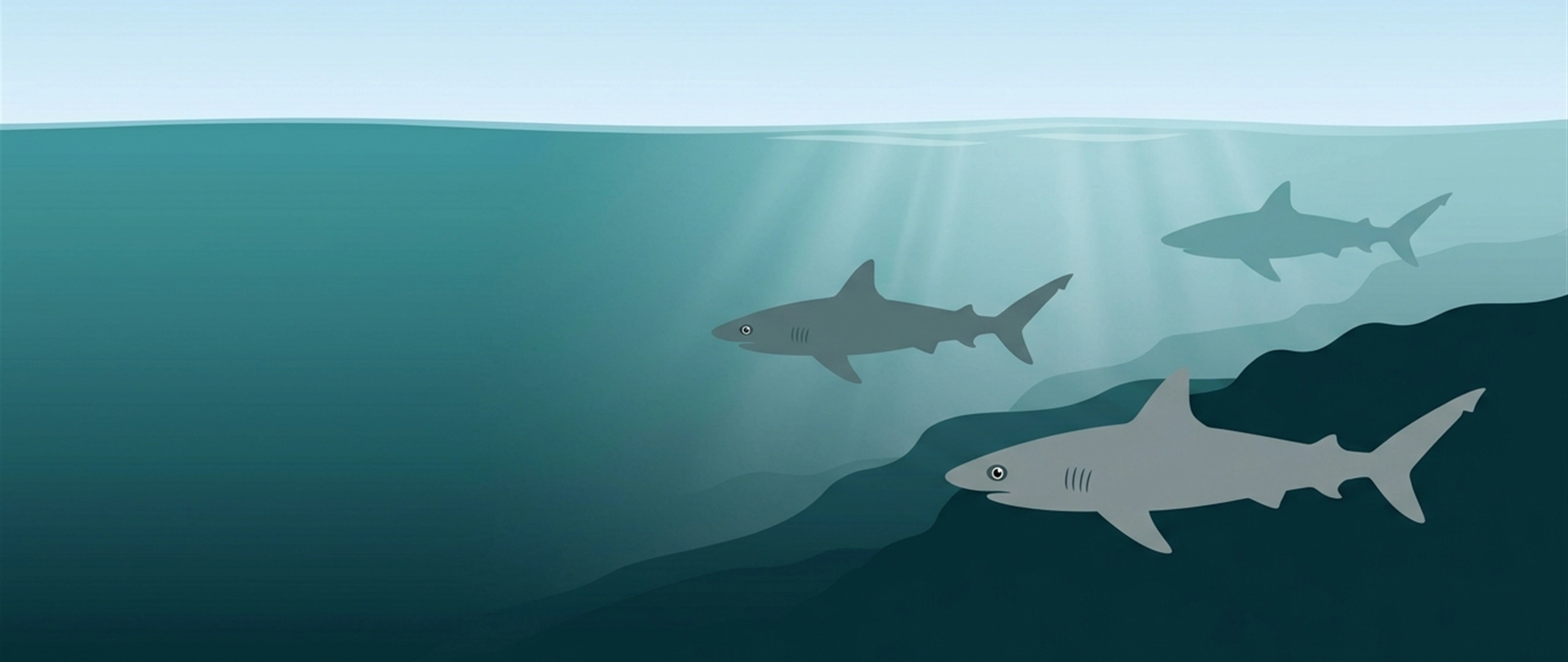
Grey reef shark
Learn where to dive with resident grey reef sharks in Sabah.
More details →
Sipadan
Guide to diving Sipadan Island in Sabah.
More details →
When to dive Sabah
Find out the best months to dive Sabah.
More details →Plan your dives
Tell the team your dates along with the names and certification levels of everyone coming. A guaranteed Sipadan permit comes with the right combination of resort and dive package. The team comes back with the options that give you the best chance to see Sabah's deep-water marine life.