

Real encounters over magazine hype
The 10 best dive sites in the world
The diving industry runs on top-ten lists determined by popular vote. This page ranks ten famous dive sites on the ecological reality you actually find underwater.
Highlights
- Barracuda Point takes first place: Turtles on almost every dive alongside the resident chevron barracuda school.
- The criteria matter: Ranked on reliable marine life and reef health rather than marketing budgets.
- Advanced diving required: Extreme currents define the best sites in Palau, Komodo and Costa Rica.
- Honest caveats included: Why some famous Red Sea and Thai sites fall short of their reputations and why.
- Protection status: Strong marine park enforcement sets Sipadan and Tubbataha apart from unregulated reefs.
- Getting there: Practical access models from day boats to remote open-ocean liveaboards.
Overview
The diving industry runs on top-ten lists determined by popular vote. Readers vote for their favourite destinations so the resulting lists tell you where the most people went on holiday. Those polls measure popularity and marketing reach rather than reef condition.
This page does something different. It lists ten famous dive sites and ranks them on what a diver actually gets in the water. The sites at the top offer marine encounters that justify crossing the world. The ones further down remain heavily marketed but suffer from structural damage or missing wildlife.
This list is published by a licensed Sabah dive-travel agency. The team arranges trips to Sipadan so Barracuda Point is a site the agency sells. The case for its position at number one relies on independent marine park data and biological metrics. The same standards apply to nine other famous global sites so you can see how they compare.
How this list was made
These 10 sites are ranked strictly on four criteria.
- Reliability of the signature encounter. The assessment covers what you see on a normal trip rather than on a lucky day.
- Biomass and reef condition. Independent survey data and park records measure the health of the coral and the density of the fish.
- Accessibility. The ranking judges how easily an ordinary certified diver can reach and dive the site safely.
- Strength of protection. The final metric evaluates marine park rules and how strictly the authorities enforce them to prevent overfishing and anchor damage.
1. Barracuda Point, Sipadan
Country: Malaysia | Access: Day boat (Quota) | Level: Advanced | Best months: March to October | Signature encounter: Barracuda tornadoes
Barracuda Point sits on the north-eastern edge of Pulau Sipadan in the Celebes Sea. The island is Malaysia's only oceanic island. It rises roughly 600 metres from the seabed on an extinct volcanic seamount. The dive operates as an intense open-ocean wall drift dropping from a shallow 5-metre coral shelf down to a maximum recreational limit of 40 metres. Currents dictate the pace here. They can accelerate from still water to a heavy drift within an hour depending on lunar tides. You drop in negatively to 20 metres and drift along the wall before off-gassing on the shallower Staghorn Crest or Coral Garden.
The signature encounter is the resident school of chevron barracuda (Sphyraena qenie). The school tolerates divers and often tightens into a swirling column when the current runs. Get level with it and the photographs take themselves. The supporting life is equally heavy. You see green and hawksbill turtles (Chelonia mydas and Eretmochelys imbricata) on almost every dive and bumphead parrotfish (Bolbometopon muricatum) herds most reliably at dawn. Resident whitetip reef sharks (Triaenodon obesus) rest on sandy ledges. Scalloped hammerheads (Sphyrna lewini) are occasionally reported deep off South Point.
This site ranks first because its protection is exceptionally strong. Sabah Parks issues 254 Sipadan permits a day to control diver numbers. The government removed all resorts from the island by the end of 2004 to halt coral damage. The park enforces an annual closure for the full month of November to allow uninterrupted reef recovery. The minimum certification level is strictly Advanced Open Water or equivalent. Sabah Parks has enforced this rule since October 2022 to keep inexperienced divers out of unpredictable updrafts. Access is by boat from nearby islands like Mabul and Kapalai or from the licensed Sipadan liveaboard. The only caveat is that guides dictate the dive plan based on tidal safety. You cannot demand Barracuda Point if the current is wrong.
2. Blue Corner Wall, Palau
Country: Palau | Access: Boat / Liveaboard | Level: Advanced | Best months: December to April | Signature encounter: Grey reef sharks
Blue Corner sits off the northwest tip of Ngemelis Island in Micronesia roughly 40 kilometres from Koror. The site is a shallow coral plateau that drops vertically into the Philippine Plate to depths exceeding 300 metres. The topography acts as a natural funnel for oceanic currents reaching 3 knots during spring tides. Visibility averages 16 metres on an outgoing tide and expands past 28 metres on an incoming tide. You make a negative descent to the plateau between 15 and 25 metres. You find a dead section of coral to attach a reef hook to your buoyancy compensator. You hang stationary in the current for 20 minutes before an unhooked drift to off-gas.
The reliable shark action places Blue Corner near the top. You routinely see grey reef sharks (Carcharhinus amblyrhynchos) surfing the upwelling just metres away. The Palauan government established the world's first national shark sanctuary in 2009. The policy bans all commercial shark fishing across its Exclusive Economic Zone. That legislation directly protects the massive shark populations you see today. Bigeye trevally (Caranx sexfasciatus) and Napoleon wrasse often swim right past the hooked-in divers.
The site demands a high skill level. Blue Corner strictly requires an Advanced Open Water certification alongside extensive drift-diving experience. The Palauan government mandates an environmental fee for foreign visitors to fund the Protected Areas Network. The honest caveat is that Blue Corner needs heavy water movement to function. The strongest pelagic action comes with a running current. The site reduces to a standard coral shelf.
3. Cape Kri, Dampier Strait, Indonesia
Country: Indonesia | Access: Boat / Liveaboard | Level: Advanced | Best months: October to April | Signature encounter: Biodiversity record
Cape Kri sits at the intersection of the Dampier Strait and the Pacific Ocean in Raja Ampat. The site lies just off the island of Mansuar. It is a leading site within the region's marine protected areas. You follow a sloping coral ridge intercepting massive volumes of oceanic water. The slope leads into a deeper channel down to 30 metres. The currents are notoriously strong and multidirectional. They frequently create localised updrafts and downdrafts. The dive is a fast-paced drift lasting 45 to 60 minutes where you frequently seek shelter behind large coral bommies.
The signature encounter is unprecedented scientific biodiversity. Marine biologist Dr Gerry Allen recorded an unbroken world record of 374 distinct fish species on a single tank dive at this specific site. You often swim through walls of sweetlips alongside aggregations of bumphead parrotfish. Blacktip and whitetip reef sharks patrol the blue water while wobbegong sharks rest under coral overhangs. The sheer volume of life beats Sipadan for density.
Logistics are demanding. You fly into Sorong before a two-hour public ferry ride to Waisai and a final private transfer. The local government heavily regulates access. All visitors must purchase the Raja Ampat Marine Park Entry Permit. The honest caveat is the water clarity. The Dampier Strait is a plankton soup so visibility rarely exceeds 20 metres. Visibility is lower than the Red Sea's; you come here for the density of life, not the clarity. The unpredictable currents also require high spatial awareness to prevent buddy teams from separating.
4. Darwin Island, Ecuador
Country: Ecuador | Access: Liveaboard only | Level: Adv/Tech | Best months: June to November | Signature encounter: Whale and hammerhead sharks
The site formerly marked by Darwin's Arch is now known as the Pillars of Darwin. It sits in the remote northern reaches of the Galápagos Archipelago. The dive takes place on a submerged volcanic platform averaging 15 to 30 metres deep. The topography is barren volcanic rock encrusted in barnacles rather than a colourful coral reef. You manage heavy ocean surge and severe multidirectional currents. Water temperatures vary drastically from 16 °C in the cold season up to 24 °C in the warm season. You make a rapid negative descent directly to the rock and cling on in the surge to watch the blue column.
The encounter is spectacular in season. In season, pregnant whale sharks (Rhincodon typus) migrate through the area alongside schools of scalloped hammerhead sharks. Galapagos sharks and silky sharks join the aggregations. The Galápagos National Park Directorate enforces strict vessel quotas and fixed itineraries.
The site falls to fourth because it is inaccessible to an ordinary diver. You face a brutal 12-hour open ocean crossing from the central islands. The combination of heavy surge and cold water requiring thick exposure suits makes this extremely taxing. The substrate is barren and visibility can be murky. Global shark populations also face immense pressure from illegal international fishing fleets waiting just outside the Exclusive Economic Zone.
5. Bajo Alcyone, Cocos Island, Costa Rica
Country: Costa Rica | Access: Liveaboard only | Level: Adv/Tech | Best months: June to November | Signature encounter: Scalloped hammerheads
Bajo Alcyone sits off uninhabited Cocos Island roughly 550 kilometres from mainland Costa Rica in the eastern Pacific Ocean. The dive takes place on a submerged seamount. The summit rests deep at 25 metres before plunging into the deep oceanic zone. You experience heavy currents accompanied by a massive oceanic swell felt even at depth. Visibility varies from 15 to 25 metres in water ranging from 24 °C to 28 °C. The profile requires a rapid negative descent directly to the summit followed by a mandatory blue-water ascent with no visual references.
The signature encounter is the schooling scalloped hammerheads. The rainy season between June and November triggers heavy nutrient upwelling to draw the densest concentrations. You frequently look up to see schools of hammerhead silhouettes overhead. Tiger sharks and Galapagos sharks circle the volcanic rock.
The physical toll pushes this site down the list. Access requires flying into San José before an overland transfer to Puntarenas and a notoriously rough 36-hour open-ocean crossing. The journey frequently causes severe seasickness. The 25-metre starting depth combined with cold thermoclines makes it highly hazardous for anyone lacking extensive open-ocean experience. Illegal long-line shark finning fleets constantly pressure the remote edges of the national park.
6. SS Thistlegorm, Egypt
Country: Egypt | Access: Boat / Liveaboard | Level: Advanced | Best months: September to November | Signature encounter: WW2 Wreck and Munitions
The SS Thistlegorm lies in the Straits of Gubal near the Sinai Peninsula in the Red Sea. The site is a massive 128-metre British armed Merchant Navy ship sunk by German bombers in 1941. The depth ranges from 16 metres at the upper superstructure down to 30 metres at the seabed. Currents across the exposed deck range from dead calm to ripping. Visibility is generally an excellent 20 to 30 metres provided it has not been stirred up. You typically survey the external perimeter and massive anti-aircraft guns before penetrating deep into the open cargo holds.
The holds contain an unparalleled World War II time capsule packed with Bedford trucks, BSA motorcycles, Lee-Enfield rifles and Wellington boots. The wreck acts as a thriving artificial reef supporting massive schools of batfish and crocodilefish (Cymbacephalus beauforti) camouflaged on the decks. Egypt's Chamber of Diving and Watersports enforces safety standards for the operators.
This list ranks the Thistlegorm lower because the protection has failed completely. The wreck suffers severe and irreversible degradation. Heavy dive boats moor irresponsibly and tear away sections of the superstructure. Trapped exhaled air from thousands of divers inside the holds accelerates rust and structural collapse. You will commonly see 20 dive boats moored simultaneously. By mid-morning the wreck is busy with day boats, so dive it early.
7. Shark and Yolanda Reef, Egypt
Country: Egypt | Access: Day boat | Level: Int/Adv | Best months: June to August | Signature encounter: Toilets and Spawning
Shark and Yolanda Reef sits at the southern tip of the Sinai Peninsula within Ras Mohammed National Park. The topography features twin coral pinnacles rising from a deep saddle. Depths range from 10 metres down past 30 metres. Visibility is often a clear 30 metres. The current is generally a moderate to strong drift pulling divers along the wall. You drop at Shark Reef and drift across the saddle to end the dive exploring the wreckage field at Yolanda Reef.
The site built its reputation on the Yolanda freighter's spilled cargo of porcelain toilet bowls and bathtubs spread across the reef. The summer months bring visually spectacular spawning aggregations of bohar snappers, batfish and barracuda.
This site is a textbook example of magazine hype failing to match ecological reality. The marketing severely overstates the pelagic action. The site is heavily congested with novice day-boat divers making the short trip from Sharm El-Sheikh. It is a busy tourist attraction rather than a wilderness encounter.
8. Richelieu Rock, Thailand
Country: Thailand | Access: Liveaboard | Level: Int/Adv | Best months: October to May | Signature encounter: Whale sharks and Macro
Richelieu Rock sits in the Andaman Sea. It falls under the jurisdiction of the Surin Marine National Park rather than the Similan Park. The rock is a horseshoe-shaped limestone pinnacle that barely breaks the surface at low tide. Dense purple soft corals and sea anemones cover the walls down to 35 metres. Currents are moderate to strong across the exposed rock. You circle the pinnacle and use the inside of the horseshoe for shelter.
The true stars are the macro subjects. Tigertail seahorses, harlequin shrimp, ghost pipefish (Solenostomus spp.) and mating pharaoh cuttlefish inhabit the coral crevices. The Thai Department of National Parks enforces a total closure of the site from mid-May to mid-October. This ensures monsoon safety and ecological recovery. The soft corals have recovered remarkably well from severe bleaching incidents in 2010 and 2016.
It ranks eighth because of the severe overcrowding during its short season. Whale shark sightings are an occasional bonus at Richelieu Rock. Finding yourself inside a chaotic cloud of bubbles from five simultaneous liveaboards is a common experience. Sabah diving seasons offer a longer window for comparison.
9. Batu Bolong, Komodo, Indonesia
Country: Indonesia | Access: Boat / Liveaboard | Level: Advanced | Best months: April to November | Signature encounter: Coral density and Anthias
Batu Bolong sits in the central region of Komodo National Park in Indonesia. The topography is a small rugged rock pinnacle that barely breaks the channel surface. You zigzag up and down the reef wall strictly in the sheltered lee of the rock. The depth runs from 5 metres down past 30 metres in cooler water ranging from 26 °C to 28 °C.
The currents are violent so the rock remains coated in healthy hard corals swarming with millions of orange anthias. You see green turtles, whitetip reef sharks and giant trevally hunting in the current margins on almost every dive. Park authorities cap access at 1,000 visitors a day via a strict booking platform to protect the ecology from rapid tourism spikes.
The currents keep this site out of the top five. Batu Bolong features notoriously deadly down-currents on the exposed sides of the rock. Disobeying the dive guide and swimming past the edge into the current line puts your life at risk. Fatalities have occurred when divers lost buoyancy control here. It is a geographically constrained dive where you ascend the same face rather than circumnavigating the rock.
10. Washing Machine, Tubbataha, Philippines
Country: Philippines | Access: Liveaboard only | Level: Advanced | Best months: March to June | Signature encounter: Mega-fauna and Untouched coral
The Washing Machine sits in the North Atoll of the Tubbataha Reefs Natural Park in the Sulu Sea. Depths average 15 to 30 metres along sheer atoll walls dropping into deep oceanic water. The current is severe, swirling and highly unpredictable. This gives the site its name. The dive operates as a high-speed drift along the precipice. Visibility routinely exceeds 30 metres.
You explore untouched coral ecosystems with frequent encounters with tiger sharks, manta rays and massive schools of jacks. The biomass represents what Southeast Asian reefs looked like a century ago. Tubbataha operates under the highest possible protection status. Marine park rangers stationed on an isolated sandbar guard the UNESCO World Heritage site year-round. They have successfully deterred poachers for decades. The Tubbataha Management Office strictly controls vessel permits.
The punishing logistics place it at number ten for an ordinary diver. You face a 12-hour overnight open-ocean sea crossing from Palawan. The park is only accessible during a tiny weather window from mid-March to mid-June. Liveaboards sell out up to 2 years in advance. The extreme currents combined with remote isolation demand complete self-reliance in the water. For an easier pelagic alternative you can read the comparison of Sipadan vs Similan, Komodo and Tubbataha.
The ten side by side
| Site | Country | Signature Encounter | Level | Best Months | Access Model | Protection Status |
|---|---|---|---|---|---|---|
| Barracuda Point | Malaysia | Barracuda tornadoes | Advanced | Mar–Oct | Day boat (Quota) | High (Nov closure) |
| Blue Corner | Palau | Grey reef sharks | Advanced | Dec–Apr | Boat / Liveaboard | High (Shark Sanctuary) |
| Cape Kri | Indonesia | Biodiversity record | Advanced | Oct–Apr | Boat / Liveaboard | High (MPA) |
| Darwin Island | Ecuador | Whale & Hammerhead sharks | Adv/Tech | Jun–Nov | Liveaboard only | High (GNPD Regulated) |
| Bajo Alcyone | Costa Rica | Scalloped hammerheads | Adv/Tech | Jun–Nov | Liveaboard only | Medium (Poaching issues) |
| SS Thistlegorm | Egypt | WW2 Wreck / Munitions | Advanced | Sep–Nov | Boat / Liveaboard | Low (Degrading) |
| Shark & Yolanda | Egypt | Toilets & Spawning | Int/Adv | Jun–Aug | Day boat | Medium (Heavy traffic) |
| Richelieu Rock | Thailand | Whale sharks & Macro | Int/Adv | Oct–May | Liveaboard | High (6-month closure) |
| Batu Bolong | Indonesia | Coral density & Anthias | Advanced | Apr–Nov | Boat / Liveaboard | High (Quota system) |
| Tubbataha (North) | Philippines | Mega-fauna & Untouched coral | Advanced | Mar–Jun | Liveaboard only | Highest (rangers on site) |
Why this list differs from the polls
Major publications run their awards on sheer volume. The Scuba Diving Magazine Readers Choice Awards aggregate thousands of votes to rank destinations. Those polls heavily favour places accessible to the North American market. Bonaire frequently wins overall categories while major operators in Mexico sweep multiple awards. The DIVE Magazine Travel Awards pull input from a UK readership leaning heavily on the Red Sea and Indonesia. Operators run organised marketing campaigns to win these awards based on customer volume.
When you see Shark and Yolanda Reef in a top ten list you are seeing the result of thousands of day-boat tourists voting for their holiday. You are not seeing a biological assessment of a reef. Marketing volume drives those rankings. This list strips away the hyperbole and looks at the ecological reality. The enforced 254-permit limit at Sipadan matters because it actually preserves the fish. The Thistlegorm drops down the rankings because unregulated mooring is physically destroying the wreck. True elite diving requires a healthy ecosystem.
How to dive the number one
Every diver on Sipadan is there on a permit issued for that day in their name. Sabah Parks issues a fixed number of permits to registered operators. You cannot buy a permit directly from the park gates. The team briefs every diver on emergency arrangements at booking.
If you pre-book a dive package with the right resort your Sipadan days can be guaranteed. A guaranteed Sipadan permit comes with the right combination of resort, dive package and minimum number of nights. Not every resort guarantees exact dates so the dates depend on the resort you choose. On a properly planned trip the chance of diving Sipadan is very high. The team steers you to the Sipadan Classic combination that fits your dates and diving level. You can learn more in the Sipadan permits guide.
Nearby places / alternatives
The 20 best dive sites in the world
A ranking of the world's twenty best dive sites based on reef condition, encounter reliability, protection and access, with Barracuda Point at the top.
More details →
The 50 best dive sites in the world
Fifty of the best dive sites globally ranked using independent marine data to help you plan the next ten years of diving.
More details →
The 100 best dive sites in the world
A hundred dive sites ranked on reef condition, encounter reliability and access.
More details →
Sipadan
Guide to diving Sipadan Island in Sabah.
More details →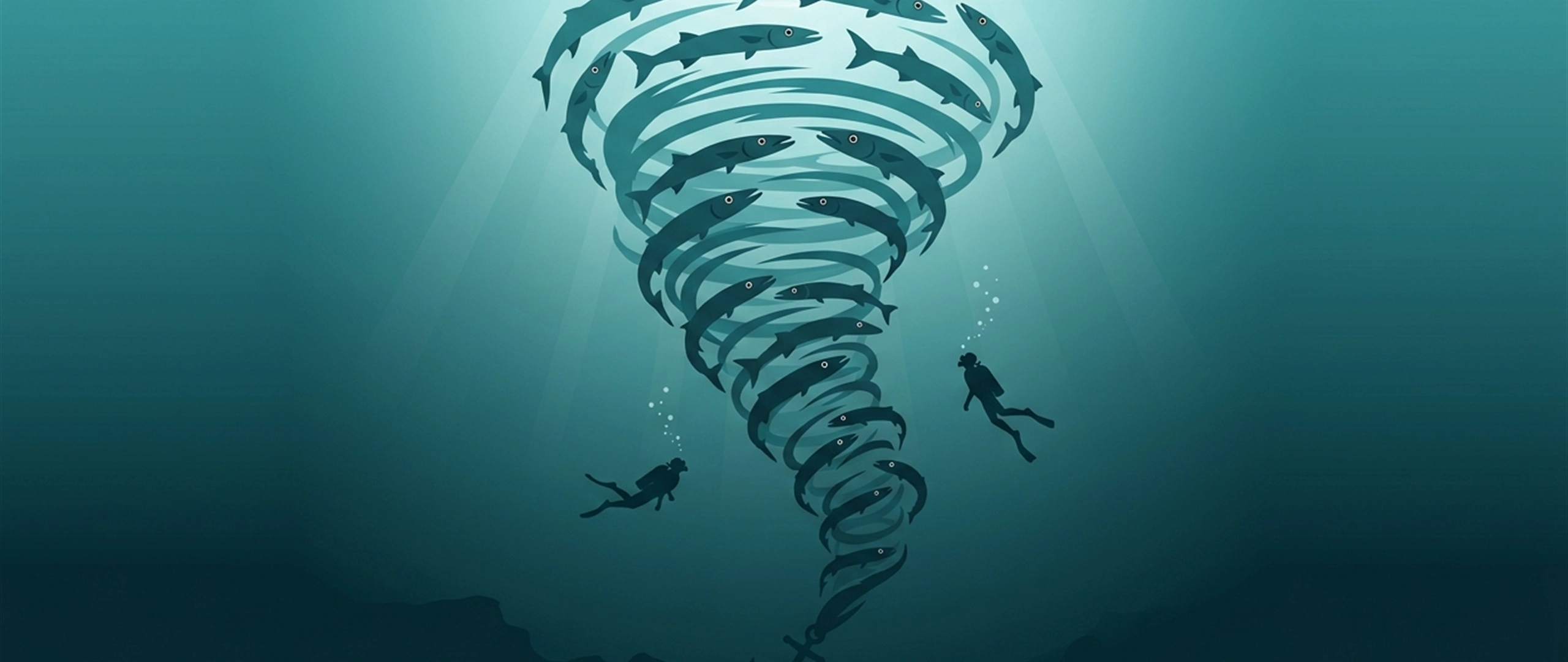
Barracuda Point
Everything you need to know about diving Barracuda Point at Sipadan.
More details →Send your planned dates, the names of everyone coming and your certification levels. The team comes back to you quickly with what can be arranged for a Sipadan trip. For other local options check the Best Sabah dive destinations.