

Sipadan's underwater cave system
Turtle Cavern and Turtle Tomb
A limestone cavern in the Sipadan wall opening into a dark tunnel system. The outer chamber is for experienced recreational divers; the tomb is strictly for the cave-trained.
Highlights
- Limestone cave system off the northern wall near The Drop-Off
- Entrance sits at 18 to 20 metres
- Outer cavern relies on ambient sunlight and needs careful buoyancy
- Inner tomb contains turtle and dolphin skeletons
- Tomb penetration strictly requires full cave certification and guides
- Guaranteed Sipadan permit available depending on your dive package
About Turtle Cavern and Turtle Tomb
The dive into Turtle Cavern begins along the northern wall near the Drop-Off. You descend the vertical reef face to a limestone cavern whose entrance opens at roughly 18 to 20 metres. Beyond the large opening lies a dark tunnel system where green turtles and hawksbill turtles that lost their way never found the surface again. Most divers look in from the daylight. Going further is exclusively for divers holding overhead training and a guide. The site divides clearly into two distinct sections. The outer cavern holds enough ambient sunlight to reveal the rock formations alongside the glowing blue ocean behind you. The inner tomb is a pitch-black branching cave system extending deep inside the island. Divers lacking specialised cave certification stay in the sunlit outer chamber. The dive asks for careful finning even in the sunlit zone. You drift near the entrance observing the cathedral-like space before continuing your dive along the outer wall.
Skill level: Overhead-trained with a guide (Cavern) / Full cave certification with a guide (Tomb) | Ave depth: Not specified | Max depth: 23m | Current: None inside | Visibility: 20–30m externally
The cavern and the tomb
Sipadan is Malaysia's only oceanic island. It rises roughly 600 metres from the Celebes Sea floor on an extinct volcanic seamount. The cavern entrance is a large bell-shaped tunnel positioned at 18 metres on this vertical wall. This outer chamber drops down to 23 metres. Sunlight penetrates this space. You can see the exit clearly.
Behind the outer chamber sits the Turtle Tomb itself. The cave system contains branching side tunnels. The floor is roughly 8 metres wide. A thick layer of white sand covers the bottom. Dozens of intact turtle skeletons lie scattered across the dust alongside the remains of a dolphin. They serve as a reminder of the site's permanent darkness. Recreational divers must never enter the tomb. The total loss of daylight poses a severe risk. Penetration requires continuous guidelines, redundant lighting systems and full cave diving protocols.
How the dive is run
Guides usually combine the cavern with a dive along the adjacent wall. It typically serves as the second dive of the day. You enter the water from the boat just off the northern beach. The reef flat extends only a few steps before dropping vertically into the deep. You drift along the wall until you reach the cavern mouth. External currents run past the entrance. You manage these before moving inside.
The current drops to zero once you enter the cavern. With overhead training, you can follow your guide into the sunlit sections. You spend a short time observing the space before returning to the open ocean. The boat picks you up further down the wall. The bottom time inside the cavern itself is brief to allow time on the external wall.
What you look for
The visual appeal begins outside the cavern. Resident green turtles and hawksbill turtles use the wall like a vertical highway. Schooling trevally and fusiliers often surround the blue entrance. Schools of batfish and mackerels often congregate in the shallows near the old jetty structure. The sponges on the wall outside the entrance shelter macro subjects. Look for nudibranchs and leaf scorpionfish hiding in the crevices.
You look back toward the ocean from inside the sunlit chamber. The contrast between the dark limestone roof and the bright blue exit creates a striking view. Jacques Cousteau brought international attention to this area in his 1989 film Borneo: The Ghost of the Sea Turtle. You can read more about the history of diving at Sipadan. Divers holding the right training enter the inner tomb to see the skeletal remains. You find intact turtle shells resting undisturbed on the white sand. The environment is entirely static.
Photography
This is a wide-angle environment. Capturing the silhouetted entrance looking out into the blue ocean is the signature shot. The cavern walls frame the bright water outside. You balance the dark foreground against the natural sunlight filtering down from the surface.
Cave photographers shooting the skeletons need highly specialised equipment. Off-camera strobes and powerful video lights are necessary to illuminate the remains without creating massive backscatter from suspended particulate. The thick dust on the floor rises instantly if disturbed. Wide-angle lenses capture the eerie scale of the dark chambers.
Be sure to lock your buoyancy before raising your camera to your eye. The fragile environment demands complete spatial awareness.
The level it asks for
Every diver at Sipadan needs at least Advanced Open Water certification or equivalent. Sabah Parks introduced this rule to protect the reef and ensure diver safety. The cavern dive asks for confident buoyancy control. It is an overhead environment. You must execute precise finning techniques like frog kicks to avoid silting the chamber. Steady buoyancy keeps the silt settled and the view clear for your group.
Entering the tomb requires full cave certification and a qualified local guide. Discuss your cave certifications alongside your logbook details at the enquiry stage so the team can arrange the right guide. Without overhead training, you view the entrance from open water.
When it is best
The cavern is at its best at midday. Overhead sunlight reaches through the blue entrance and lights the chamber. The inner tomb is entirely independent of surface conditions. It receives zero natural light.
Sipadan offers diving all year. The best visibility runs from March to October. Water temperatures remain a steady 26 to 30 degrees Celsius. Mid-February to mid-November gives good diving. Visibility softens at the ends of the season. Mid-November to mid-February brings a mix of cloud, rain and sun. Sabah Parks closes the entire island every November.
How to dive it
You dive the site by boat. Sabah Parks issues 254 Sipadan permits a day. You secure a guaranteed Sipadan permit by booking the right combination of resort, dive package and minimum nights. Which dates can be guaranteed depends on the resort you choose. The team steers you to the combination that fits.
The nearest resorts are on Mabul and Kapalai. The boat ride to Sipadan takes 15 to 25 minutes. From Mabul and Kapalai a Sipadan permit day gives 3 dives. Mataking and Pom Pom islands sit further away across the sea. From Mataking and Pom Pom islands a Sipadan permit day gives 2 dives. The MV Celebes Explorer is the only liveaboard operating here and gives you 3 dives per Sipadan permit day.
Tawau is the arrival airport. The road transfer to Semporna takes 70 to 90 minutes depending on traffic. Island boats run during daylight only. Late arrivals stay overnight in Tawau or Semporna.
Nearby places
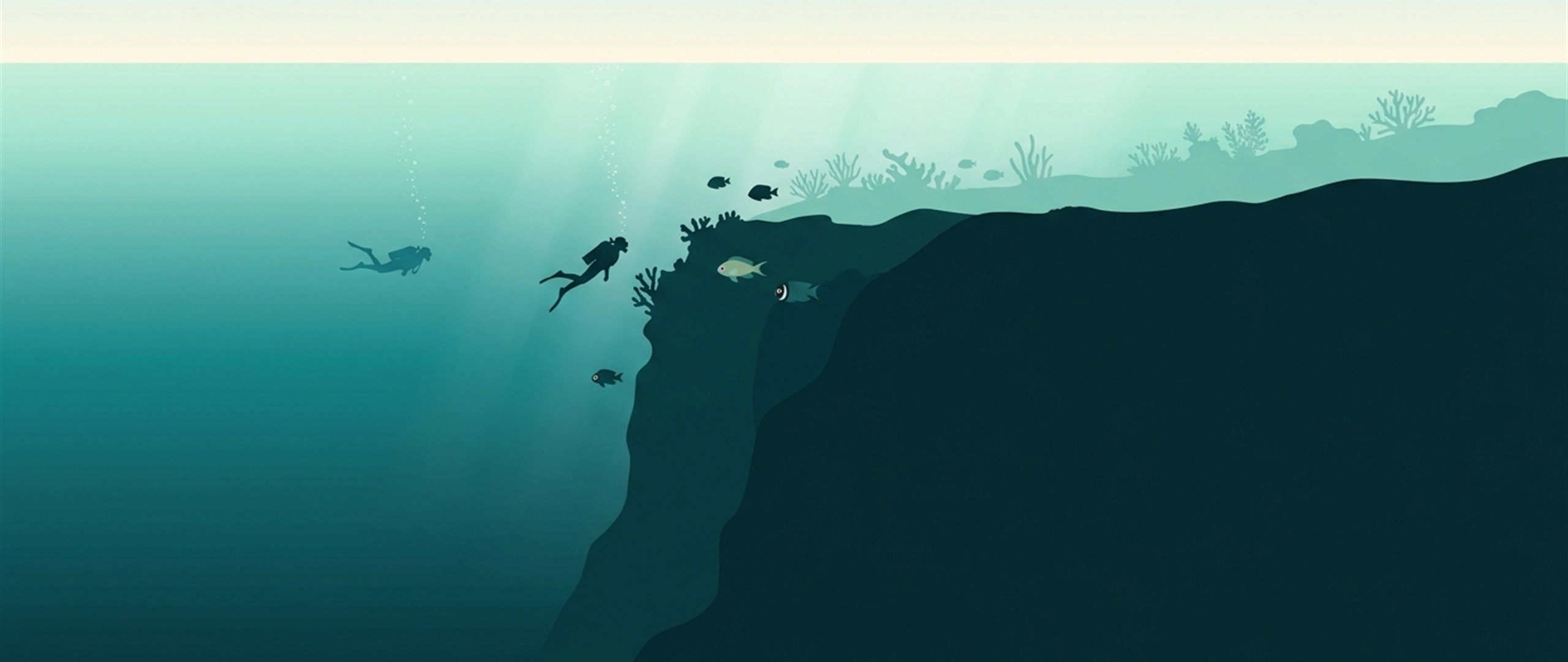
The Drop-Off
Dive The Drop-Off at Sipadan.
More details →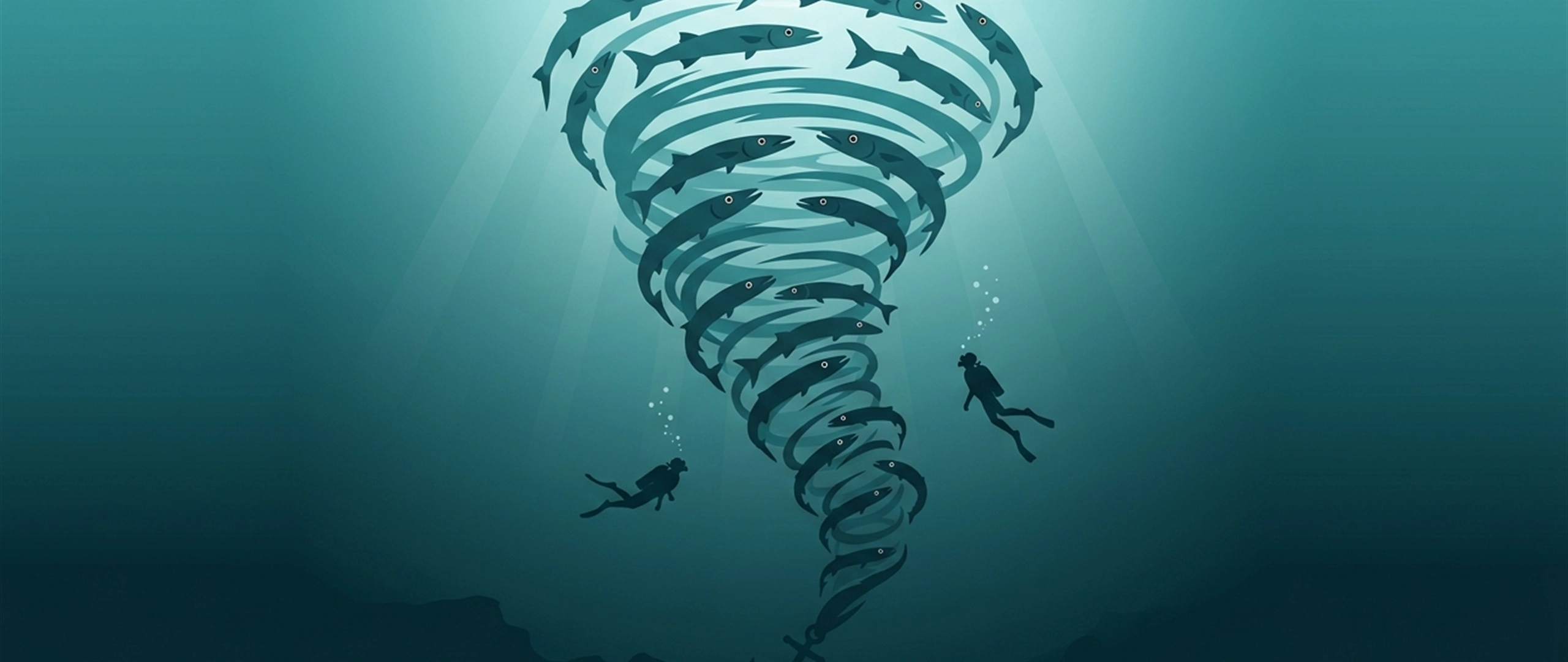
Barracuda Point
Everything you need to know about diving Barracuda Point at Sipadan.
More details →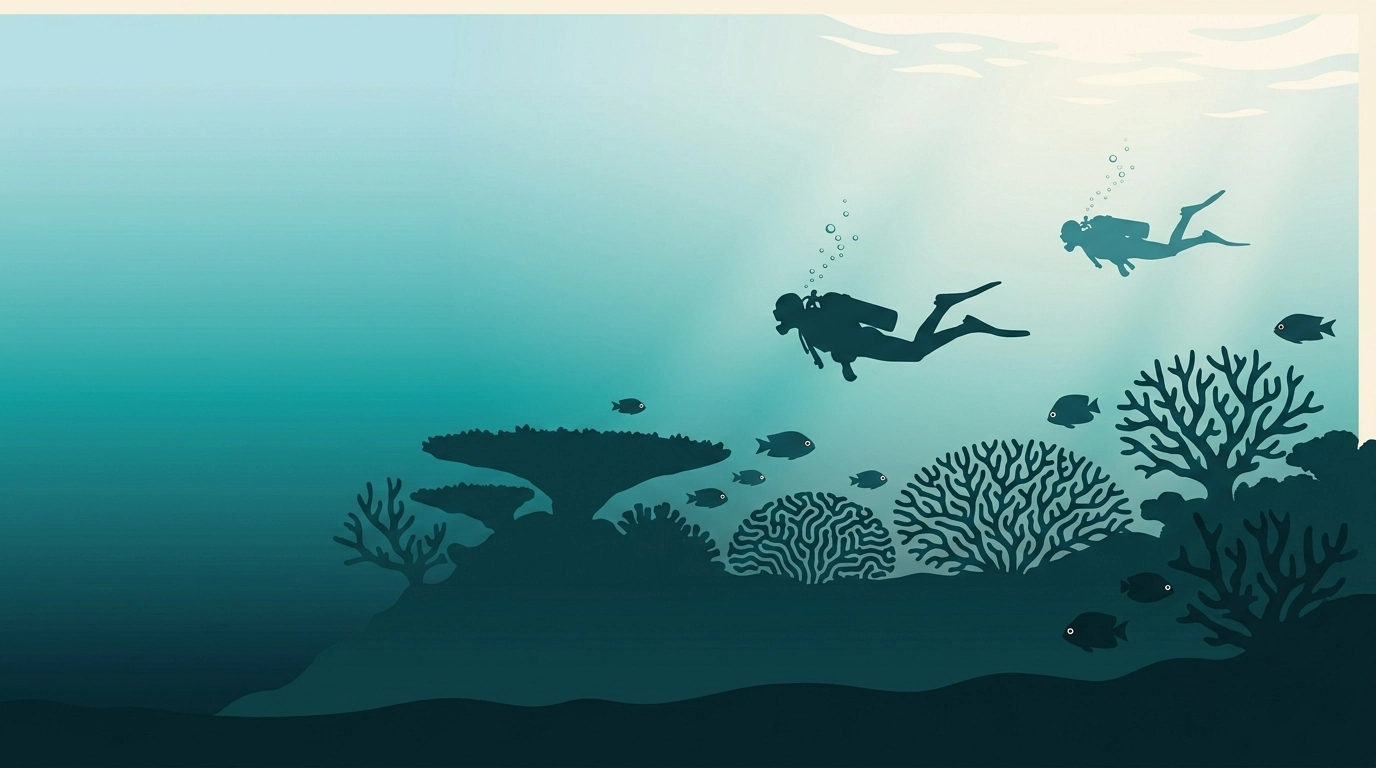
Coral Garden
A complete guide to diving Coral Garden at Sipadan Island.
More details →
Sipadan
Guide to diving Sipadan Island in Sabah.
More details →
A short history of diving at Sipadan
Learn how the island evolved from 1980s beach camps into a highly protected marine park.
More details →Plan your dives
Send your dates, the names of everyone coming and your certification levels. The team comes back to explain what can be arranged for your time in Sabah.