

Bottom-dwelling reef rays
Blue-spotted and marbled rays
Two very different rays live on the reefs of Sabah. You will find small bright ones in the shallows and heavy resting giants deep on the oceanic walls.
Highlights
- The two rays: One small and brightly coloured on the sand; the other large and heavy on the deep ledges.
- Where to look: Mabul and Kapalai for the smaller species; Sipadan for the giant ones.
- The diving: Gentle sand slopes and steep oceanic drop-offs.
- What you see: Animals resting under table corals or feeding on small crustaceans as the tide rises.
- Who it suits: Photographers looking for macro subjects or wide-angle cave shots.
- Getting there: A quick boat ride from Semporna to the islands gets you to the house reefs.
Overview
Divers meet 2 types of ray constantly in Sabah. They are easy to confuse by name yet completely different in person. The small electric-blue-spotted one is the animal you see shuffling under table corals as you approach. It favours the sand and the shallow rubble. You will find it on almost every dive around the coastal resorts. The big grey marbled ray is a much heavier animal that lies quietly on the deep sand ledges. It lifts off slowly when it has had enough of you. Both are fixtures of a trip to the Celebes Sea. If you dive the muck sites on your first few days the small bright ones are among the first animals you meet. Then you can take a boat out to the oceanic drop-off to look for the giants resting in the dark.
What it is
You are looking at two distinct animals. The bluespotted ribbontail ray (Taeniura lymma) is a small ray with a yellowish-brown disc. It is highly decorative and covered in bright neon-blue spots. The marbled ray (Taeniurops meyeni) is sometimes called the round ribbontail ray. Historical dive logs often group it in the wrong genus as Taeniura meyeni. Modern marine science places it correctly in Taeniurops. The marbled ray is a massive animal that can reach 1.8 metres in disc width. It is mostly grey or black on top with a heavy mottled pattern. The small spotted species is a staple of macro diving. The marbled species requires a wide-angle lens.
Where you see it in Sabah
Where you dive determines which of these 2 species you are likely to meet. The bluespotted ray is a resident of the shallow continental shelf environments. They are sighted on virtually every dive at Mabul and Kapalai alongside the critters of Semporna. They are also residents of Tun Sakaran Marine Park and the Tunku Abdul Rahman Park near Kota Kinabalu.
The massive marbled ray prefers the deeper and highly oxygenated oceanic environments. At Sipadan they rest motionless on deep sandy ledges. They seclude themselves within the limestone caves and overhangs that define the island's vertical drop-off. A visitor has a roughly 20 to 30 percent chance of encountering a marbled ray on a given day at Sipadan.
What it does
During the day the bluespotted ray keeps itself well hidden. Divers often find them completely buried in the sand. Only their eyes and spiracles protrude above the substrate. They also seek shelter beneath the protective canopies of table corals. As the tide rises they become active foragers. They sense electrical signals to hunt small crustaceans and worms in the shallow rubble.
The marbled ray is a heavy and slow-moving animal. Divers usually observe them resting in the dark spaces of the reef wall. They are not aggressive and prefer to sit still in the caves.
Photographing it
Capturing these animals requires different approaches. The bluespotted ray is a prime subject for macro and portrait shots. They are easily spooked. Photographers need a slow and low-angle approach to get close without sending the animal darting away.
You need a wide-angle setup to capture the marbled ray's sheer bulk. When photographing marbled rays in Sipadan's caves you must take exceptional care. You must not stir up the fine silt on the cave floor with your fins. Kicking up the silt ruins the visibility for the group and stresses the resting animal.
Good habits around them
Stay aware of the rays resting around you. Both rays have venomous stinging spines on their tails. They use these strictly for defence. The primary safety risk in Sabah occurs at muck diving sites like the Mabul house reef or the Kapalai house reef. Photographers with poor buoyancy control risk kneeling or stepping on a buried bluespotted ray in the sand. Keep good buoyancy and check the sand beneath you before moving in for a closer look.
Never touch the animals or encourage another diver to do so. Never feed them or provoke them for a photograph. A defensive reaction is different from aggression. Never corner a resting ray or hover directly above it. Give them space to swim away.
Conservation
The conservation statuses of the 2 species differ starkly. The bluespotted ray is a resilient species. It is classified as Least Concern on the IUCN Red List. They thrive across the shallow reef systems of Sabah.
The marbled ray is assessed as Vulnerable. The IUCN gave it this status in 2015 due to its slow reproductive rate and late maturity. The species has a high susceptibility to commercial trawling and blast fishing across its Indo-Pacific range. This makes the protected waters of Sipadan an important sanctuary.
Where to dive with them
You can build a trip that takes in both species easily. You stay at a resort on Mabul or Kapalai for the shallow macro diving. Then you take a boat to Sipadan for the deep walls.
Kapalai House Reef
Skill level: All levels | Max depth: 18 m The sand under the resort walkways holds countless bluespotted rays. You can dive here straight from the dive centre. Watch your fin placement when you settle to look at the macro life.
Sipadan Drop-Off
Skill level: Advanced The wall plunges deep into the Celebes Sea. Look into the limestone overhangs and small caves for resting marbled rays. Be sure to check the ledges below you as you drift along the wall.
You need a permit to dive the drop-off. Sabah Parks issues 254 Sipadan permits a day. You can secure yours by booking a Sipadan classic package well in advance. Read the Sipadan permits guide to understand how the allocations work. Choose the right time of year by checking the guide on when to dive Sabah.
Nearby places / alternatives
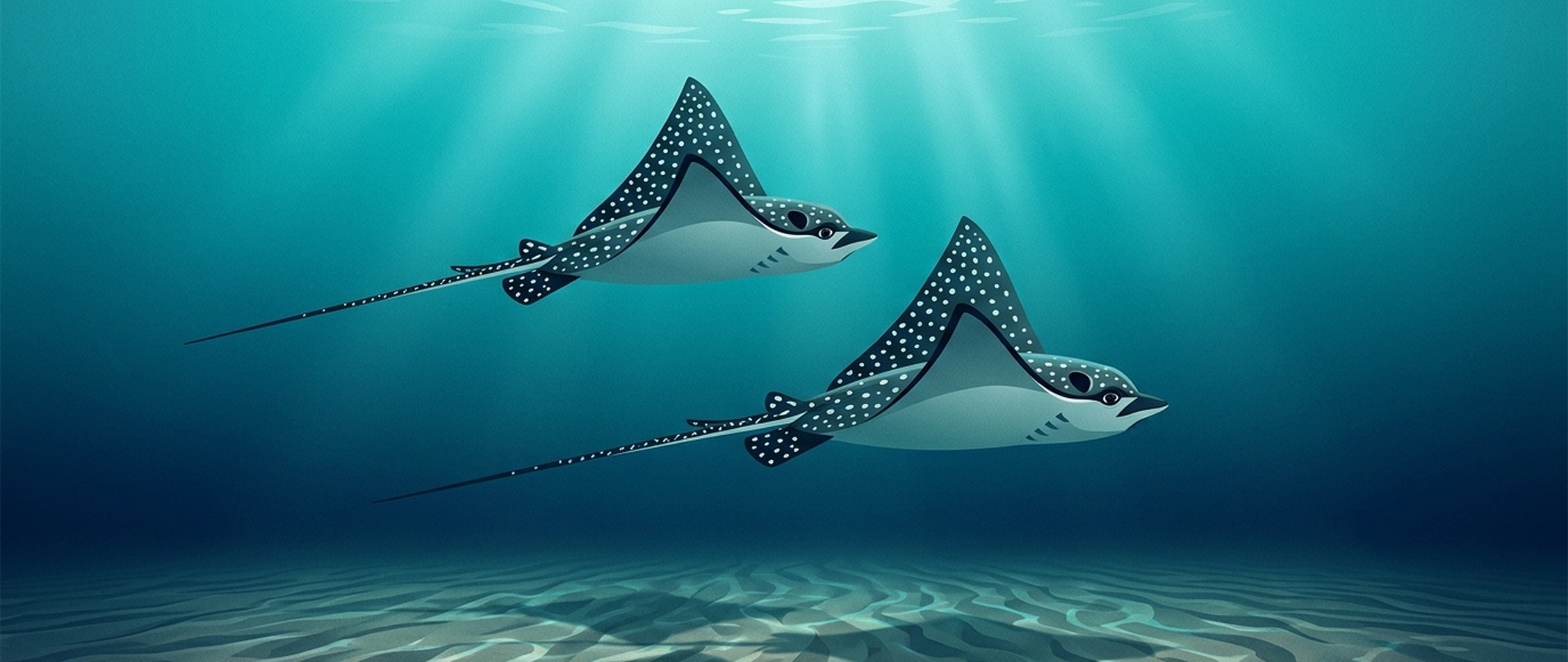
Spotted eagle ray
Learn where to find spotted eagle rays in Sabah.
More details →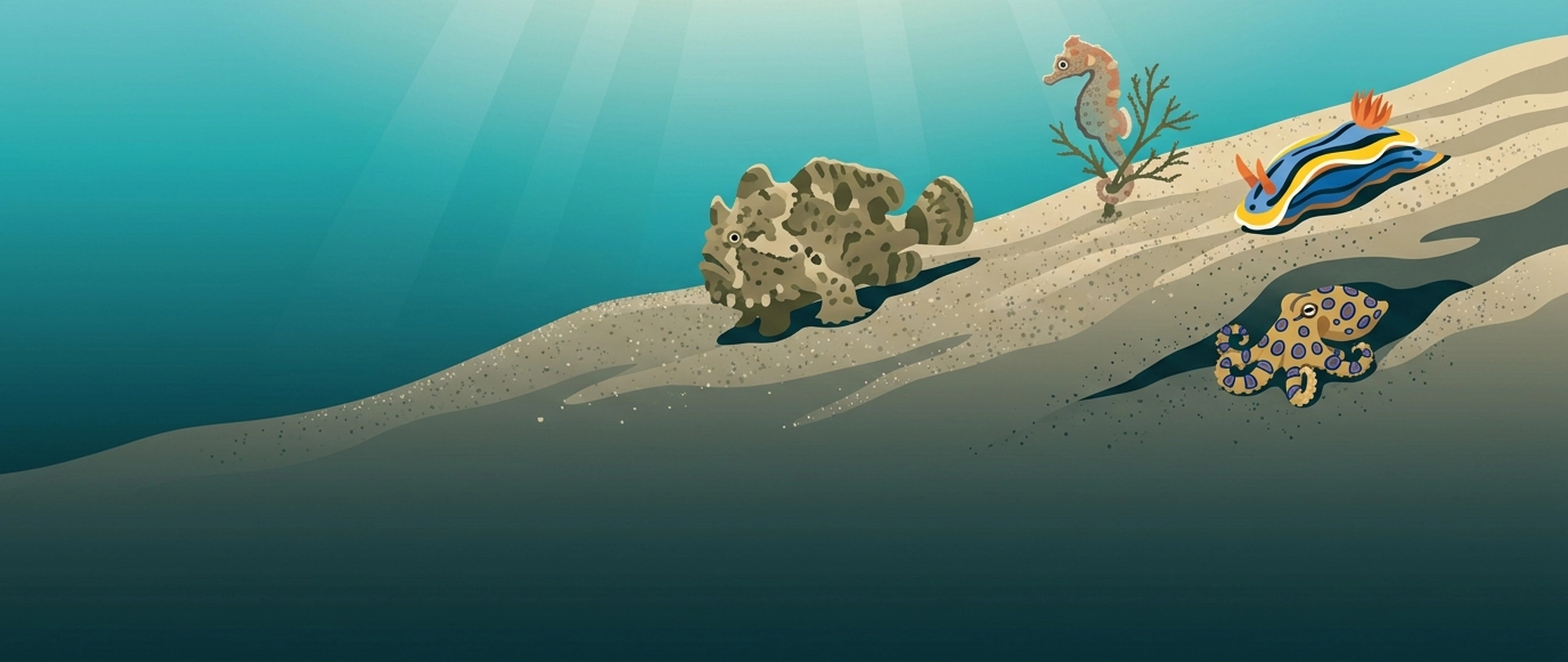
The critters of Semporna
Plan your macro diving week around Mabul, Kapalai and the Semporna mainland.
More details →
Kapalai
Stay at a water village built on a submerged sandbank off Mabul.
More details →
Mabul
Mabul is the main island base for Sipadan.
More details →Plan your dives
Send the team your preferred dates alongside the names and certification levels of everyone coming. The team comes back with what can be arranged across the different islands.