
Jetty diving in Sabah
Mabul house reefs
The slope of sand and rubble under Mabul's resorts holds the animals people fly here to photograph. Every night dive on the island takes place here.
Highlights
- Shallow sand and rubble slopes under the resort jetties
- Easy access straight down the steps at any time of day
- Resident frogfish, cuttlefish and blue-ringed octopus
- Every night dive on Mabul takes place on these reefs
- Calm conditions for macro photography and long bottom times
- Suitable for Open Water divers building their confidence
About Mabul house reefs
The water under and around Mabul's jetties looks like a barren patch of sand. You step off the walkway or roll out of a small boat into a shallow slope littered with broken coral and sunken wood. It takes a few minutes to tune your eyes to the seabed. When you do you realise this quiet stretch of sand holds the animals people fly all the way to Malaysia to see. You find crabs carrying anemones on their claws and small octopus hiding inside discarded shells.
Because these sites sit right in front of the resorts they are the easiest dives of your trip. You can jump in at almost any time of day for a slow hunt in shallow water. Night boat trips do not run so every night dive on the island is a jetty dive. The house reefs turn into a completely different environment after dark as the daytime fish hide and the nocturnal hunters come out to feed.
Skill level: All levels | Ave depth: 5 to 15 m | Max depth: 25 m | Current: Mild to none | Visibility: 5 to 15 m
The reefs off the jetties
Most resorts on Mabul maintain their own patch of reef right off their dive centre. They sink wooden frames, pyramids and crates to create complex hiding places on the bare sand. Over the years these artificial structures gather sponges and corals that attract resident macro life.
- Borneo Divers House Reef: The team at Borneo Divers Mabul Resort sank metal structures and old wrecks to build a micro-habitat. You dive here between 5 and 25 metres to look for harlequin shrimp, porcelain crabs and ghost pipefish (Solenostomus spp.).
- SWV Paradise: This sits just off the Sipadan Water Village bungalows. It offers a mix of natural reef and artificial structures between 5 and 20 metres. You look for ribbon eels, yellow-spotted burrfish and tobies with juvenile cuttlefish often found in the rubble.
- SMART Artificial Reef: Often called Froggys this site sits on the south side of Mabul in front of the resort. Wooden pyramids form a maze on the sand between 5 and 18 metres. It acts as a sanctuary for resident frogfish (Antennarius spp.) alongside juvenile barracuda and sweetlips.
Nearshore sites
Beyond the jetties the nearshore ring around the island offers more shallow muck sites.
- Awas Reef: Located off the south side this sandy slope runs from 5 down to 15 metres. You follow mooring blocks and an old sunken rope to look for flamboyant cuttlefish (Metasepia pfefferi) and black-finned snake eels.
- Froggy Lair: Sitting just off the edge of the island's local jetty this site is a sprawling expanse of sand littered with discarded old tyres. The tyres act as nurseries for giant and painted frogfish in 5 to 10 metres of water.
- Eel Garden: This site at the southern end drops from a rocky reef onto a sand flat at 25 metres. Massive colonies of garden eels sway in the mild current.
- Crocodile Avenue: A sandy slope on the northern side reaching down to 20 metres. You scan the weed patches for camouflaged crocodilefish (Cymbacephalus beauforti) and clinging seahorses.
- Seaventures House Reef: Located beneath the decommissioned oil rig offshore this artificial reef consists of steel pylons and sunken metal structures. You dive Seaventures between 12 and 18 metres to look for tiny frogfish and moray eels with pygmy seahorses (Hippocampus bargibanti) frequently found on the sea fans on the rig legs.
- Ray Point: Found on the southwestern side this slope features healthy corals and sponges down to 25 metres. Blue-spotted rays often rest on the sand between the coral blocks.
- Panglima Reef: A steep reef slope at the northern corner. You check the large barrel sponges and bubble corals for orangutan crabs and hairy squat lobsters.
- Stingray City: A gentle sandy slope on the southern side that acts as an aggregation point for resting rays.
How the dive is run
You enter the water straight down the steps of the dive centre or roll backwards from a speedboat near the jetty. The guide takes you down to the sand and sets a very slow pace. You spend most of your time hovering inches above the seabed as the guide points out tiny animals hiding in the rubble. Because the water is shallow you consume your air slowly. At shallow Froggy Lair, your bottom time can stretch beyond 70 minutes.
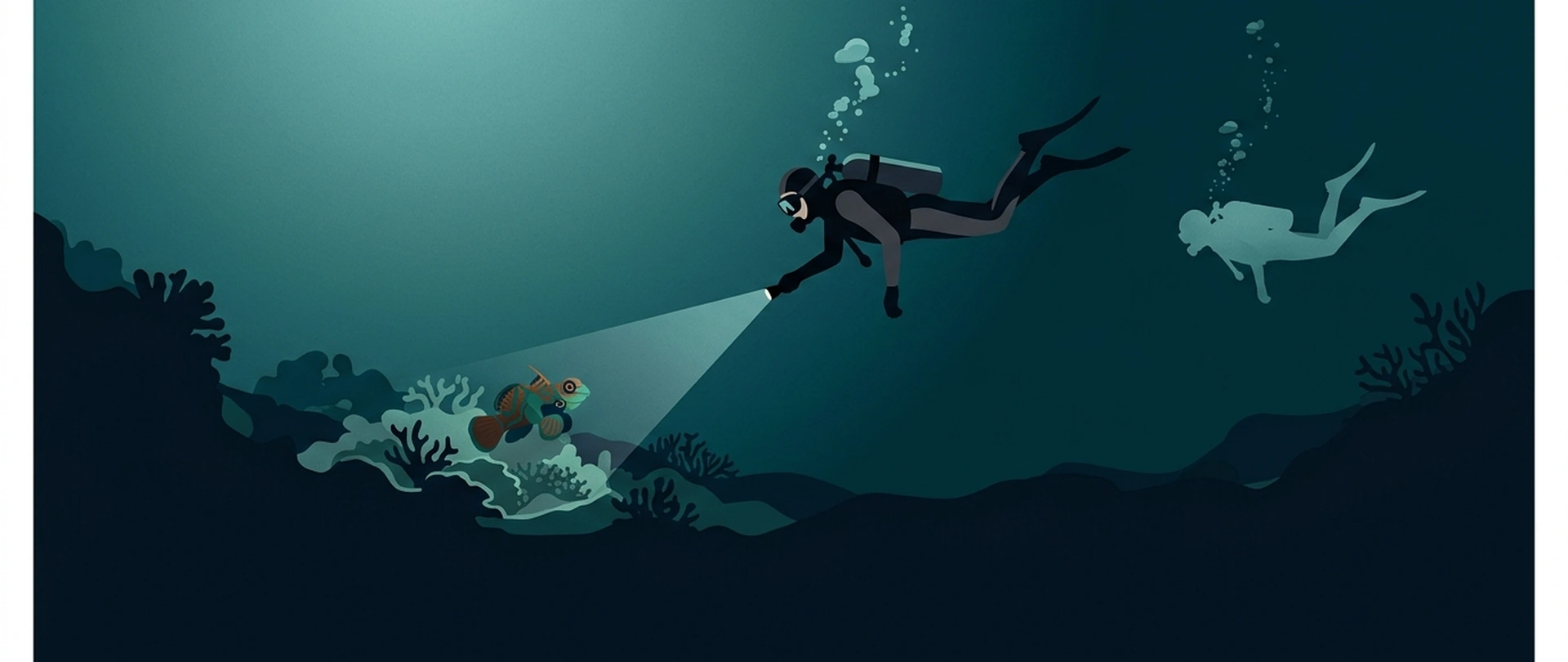
Night dives follow the same routine. You walk down the jetty after dinner and step into the dark water. The guides know where the resident animals sleep and they use their torches to find the small predators hunting on the sand. You can read more about night diving around Semporna to prepare.
What you look for
The sand and rubble zones hold an impressive cast of Semporna's critters. You look for resident giant, painted and clown frogfish sitting completely still beside sponges. Flamboyant cuttlefish are occasional finds patrolling the open sand flats. A blue-ringed octopus (Hapalochlaena spp.) is a lucky find hiding inside a broken shell or glass bottle. The reef sections hold nudibranchs, mantis shrimp and moray eels. You hunt for ornate ghost pipefish hiding next to crinoids on the sunken wrecks.
A night dive brings out a completely different crowd. With luck you watch Spanish dancers (Hexabranchus sanguineus) swimming in the open water and look for small squid hovering near the surface. Crabs and shrimp that hide deep inside the coral during the day sit out in the open to feed. Divers at Seaventures sometimes report bioluminescent ostracod displays after a full moon.
Photography
Most of these sites suit macro photography with wider compositions also possible around the Seaventures pylons. The water holds suspended silt that causes heavy backscatter if you use a wide-angle lens. You need a 60mm or 105mm macro lens to capture the tiny subjects. The barren sandy background on sites like Awas Reef is ideal for snoot lighting to isolate your subject in black space. Photographers use optical snoots to narrow the light beam and eliminate the background. You must avoid heavy exhalations below your subject because delicate sea slugs will dislodge easily. Be sure to approach slowly and manage your flashes so you do not blind the animals.
The level it asks for
These shallow house reefs suit Open Water divers well. The lack of current and the warm water make it very easy to relax and focus on your buoyancy. You need good fin control to dive here safely. A standard flutter kick will stir up the silt and ruin the visibility for everyone behind you. You must use a frog kick and hover above the sand without using your hands to steady yourself.
When it is best
You can dive Mabul all year round. The best visibility runs from March to October. Mid-February to mid-November offers good diving with slightly softer visibility at the ends of the season. The house reefs are at their best in the late afternoon when the light softens or right after dark when the nocturnal life emerges. Dusk is a critical time for macro hunters. You can dive Paradise 1 around 17:00 to look for resident mandarinfish (Synchiropus splendidus) performing their mating dance.
How to dive it
Any dive package staying on the island gives you access to the nearshore sites. If you stay at Mabul Water Bungalows or Borneo Divers you dive their respective house reefs straight off the jetty. You book a macro and muck package and the resort handles the daily schedule. If you plan to dive Sipadan you spend your Sipadan permit days on the oceanic drop-offs and dive the Mabul house reefs on your remaining days. Check the travel information to plan your journey.
Nearby places
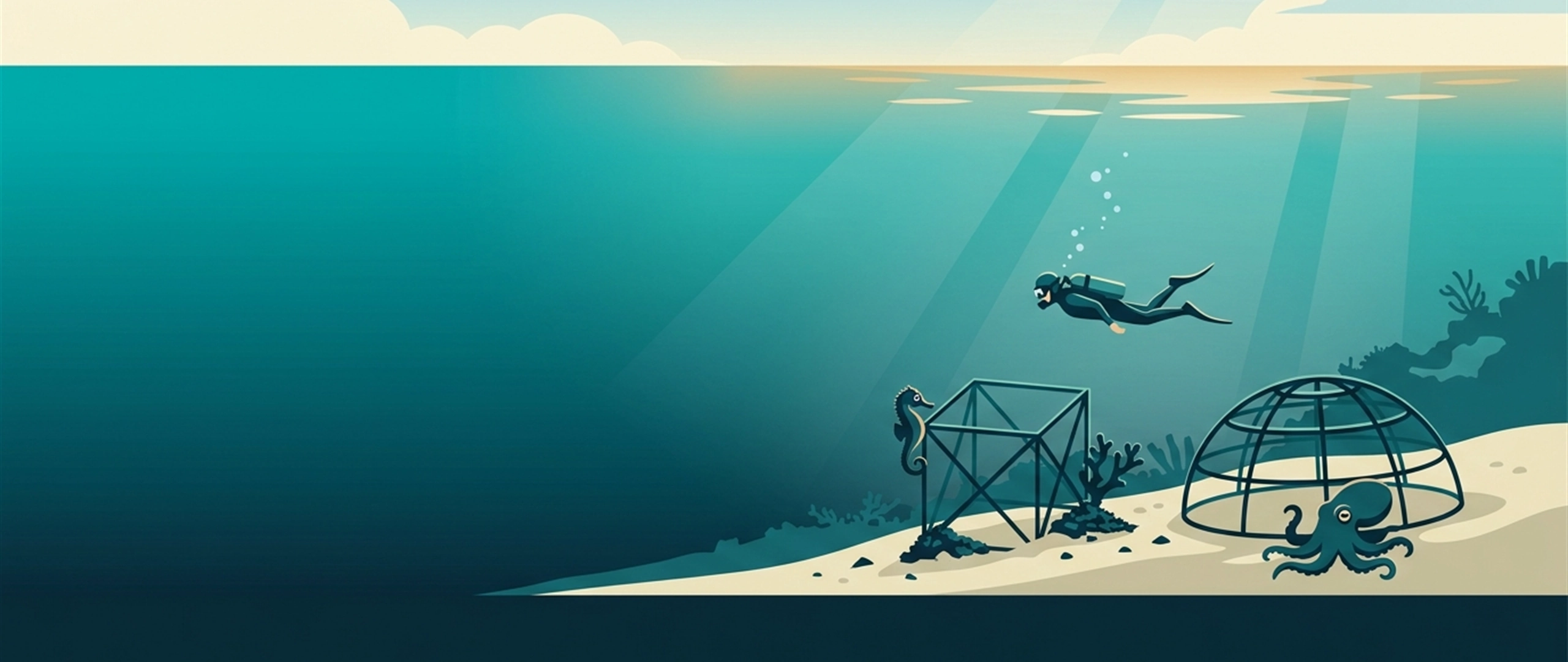
Paradise 1 and Paradise 2
Dive Paradise 1 and 2 off Mabul Island.
More details →
Froggy Lair
Dive Froggy Lair on Mabul Island.
More details →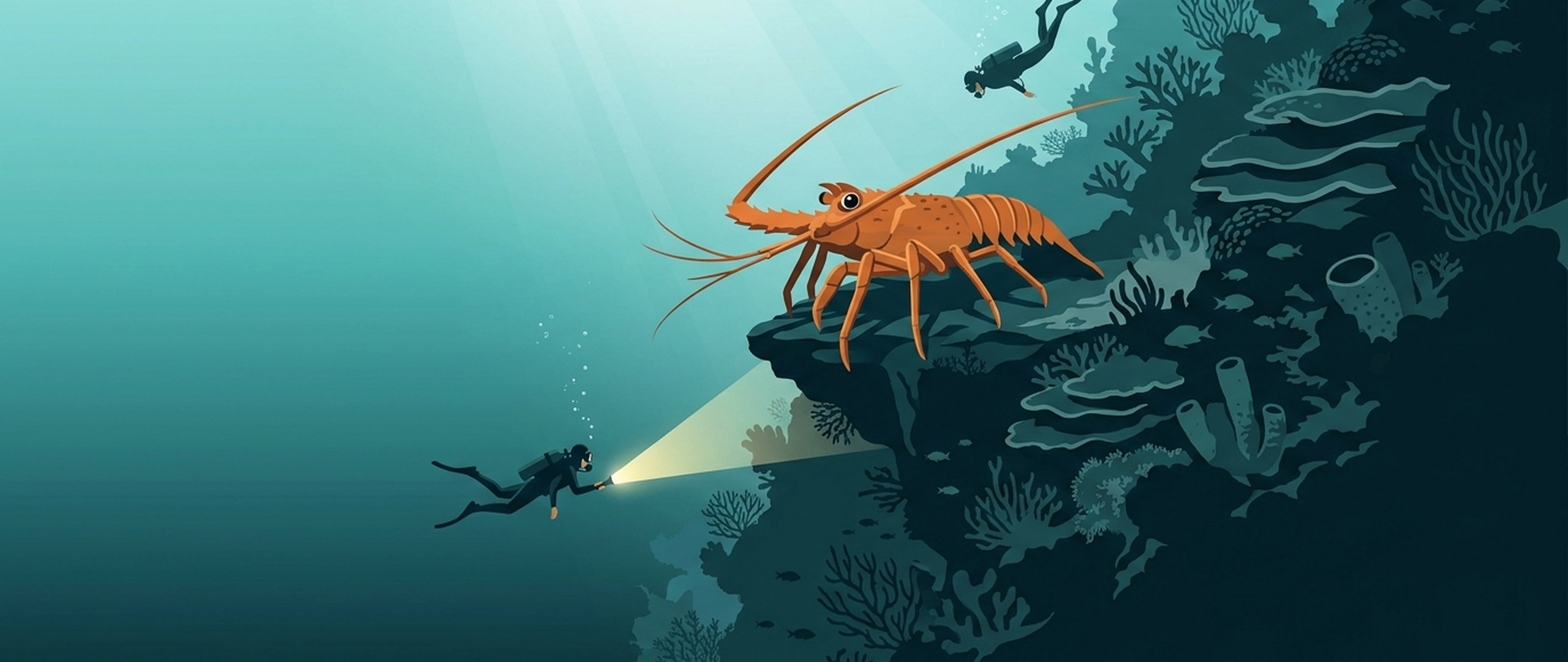
Lobster Wall
Dive Lobster Wall on Mabul's western reef.
More details →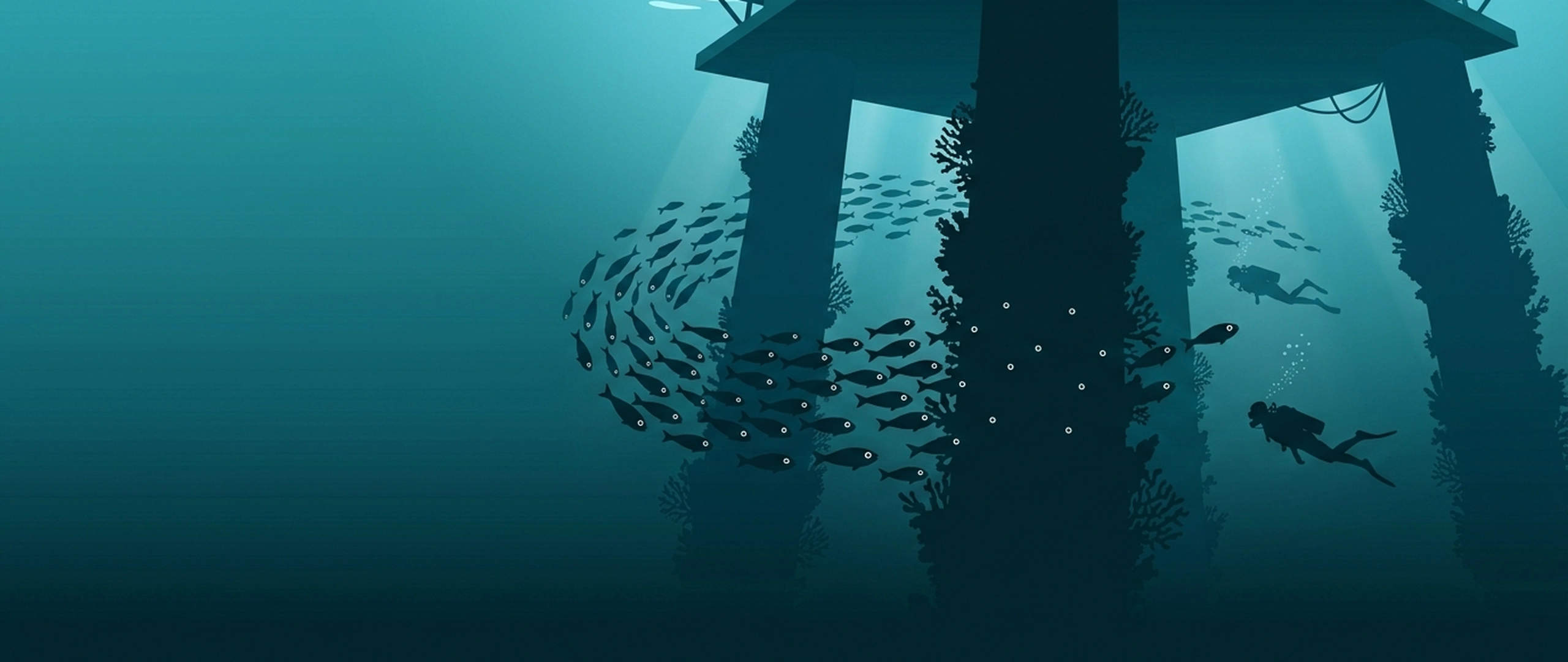
The Seaventures platform reef
Dive the artificial reef beneath the Seaventures Dive Rig off Mabul.
More details →
Mabul
Mabul is the main island base for Sipadan.
More details →Plan your dives
Send the team your travel dates, the names of everyone coming and your certification levels. The team comes back with a choice of resort packages that match your diving goals.