

Resident shark of Sabah's reefs
Whitetip reef shark
The slim shark you will likely see sleeping on the sand at Sipadan during the day. After dark they transform into active hunters across the Semporna reefs.
Highlights
- Found resting on Sipadan's ledges and sand patches on almost every dive.
- Recognisable by their slim build and the bright white tips on their fins.
- Transform into active reef hunters in the dark long after the boats have gone.
- Best photographed on the shallow plateaus using ambient light.
- Night dives from Mabul or Kapalai offer the best chance to watch them hunt.
- Sabah Parks issues 254 Sipadan permits a day for diving the primary sites.
Overview
For a lot of divers arriving in Sabah this is the first shark they meet. The whitetip reef shark is a resident across the region. You will usually find them fast asleep under a ledge or resting openly on the sand at Sipadan through the middle of the day. They are slim and completely unbothered by divers drifting past. They rest to save energy for the night. Once the sun drops they transform into active predators hunting the reef in the dark long after the boats have gone.
Because they are resident at Sipadan you can expect to see them on almost every dive. The island is only 15 minutes by boat from Mabul and Kapalai. A day's diving at Sipadan gives you a very high chance of spending time with them. They are calm subjects to watch and photograph if you know how to approach them.
What it is
The whitetip reef shark (Triaenodon obesus) is a slender marine predator built for the reef. You can identify it by its slim build, blunt snout and the bright white tips on its first dorsal fin and the upper lobe of its tail fin.
Unlike many pelagic sharks that must keep swimming to push oxygenated water over their gills the whitetip can pump water mechanically while remaining completely still. This evolutionary trait is why you find them sleeping solidly on the seabed during your daytime dives. They gather in small groups and return to the same resting spots on the reef for years. They breed and rest on Sipadan's reefs alongside the grey reef shark. The sharks' use of these reefs for breeding and resting helped earn Sipadan recognition as an Important Shark and Ray Area.
Where you see it in Sabah
Sipadan is the main destination for consistent encounters. The island rises 600 metres from the Celebes Sea floor on an extinct volcanic seamount. This topography creates steep walls and terraced ledges that provide perfect resting grounds for the sharks. Sites like Whitetip Avenue and The Drop-Off hold populations that sleep openly on the structural sponges and deep undercut crevices. At Turtle Patch they often rest in the shallows.
Outside Sipadan they live on the surrounding reefs of Mabul, Kapalai, Mataking and Pom Pom islands. They are also resident at Lankayan Island in the Sulu Sea. Sabah Parks regulates access to Sipadan strictly. Sabah Parks issues 254 Sipadan permits a day. You need an Advanced Open Water certification to dive the Sipadan sites since the rule changed in October 2022 but the sharks are also visible on the shallower Mabul reefs for newer divers.
When it is active
You can read about when to dive Sabah to plan your trip but diving operates all year. The best visibility runs from March to October. Sipadan is closed entirely every November to allow the marine ecosystem to rest but the Mabul and Kapalai sites stay open.
During the day the whitetip is largely inactive. Look for them lying on the sand or tucked inside deep coral caves. They occasionally rouse themselves to swim a short distance to a new resting spot.
Night is when their behaviour changes entirely. Night boat trips do not run so night diving consists of jetty and house-reef dives from the island resorts. On a night dive at Mabul or from the Seaventures Dive Rig you can watch them actively hunting under the lights. Their slender bodies allow them to wriggle into tight coral holes to extract sleeping fish. They hunt in packs and use their blunt snouts to force their way into the reef structure long after the daytime boats have gone.
Good habits around them
Etiquette is entirely about giving the animal space. When you spot a resting shark you should approach slowly and stay low in the water column. Do not hover directly above them or block their exit path to the open water. If a shark feels trapped it will abandon its resting spot and spend valuable energy swimming away.
Never touch or chase them. They are completely docile but they are still wild predators. A calm approach gives your entire group the best chance of enjoying the encounter without disturbing the shark. Maintain excellent spatial awareness so you do not accidentally touch the fragile corals while you watch them.
Photographing it
A sleeping whitetip is an excellent subject for photographers. They are used to divers at Sipadan and a slow approach often gives you time to frame a photograph.
Wide-angle lenses work best. The classic shot involves framing the shark on the sand with the steep reef wall and the sunlit surface in the background. Because they rest heavily on the shallow plateaus you can often shoot using ambient light. If you find one at 30 metres on Whitetip Avenue you will need capable dual strobes to illuminate the grey body against the deep blue water.
Be sure to perfect your buoyancy before framing the shot. The surrounding reefs are fragile and dragging equipment on the sand ruins the environment and kicks up silt that ruins your photograph.
Where to dive with them
You can dive with them from any of the island resorts in the Semporna region. Mabul Water Bungalows and Sipadan-Kapalai Dive Resort offer boat transfers to Sipadan in about 15 minutes. Mataking Island Resort is roughly 80 minutes away across the Alice Channel.
A guaranteed Sipadan permit comes with the right combination of resort, dive package such as the Sipadan Classic and minimum number of nights; the dates that can be guaranteed depend on your resort. The team steers you to the combination that fits your dates. A Sipadan day gives 3 dives from Mabul or Kapalai or aboard the Celebes Explorer and two from Mataking or Pom Pom.
Here are the main Sipadan sites for encounters:
Whitetip Avenue
Skill level: Confident AOW | Depth range: 16–40 m A steep wall beautifully decorated with large sea fans and patches of black coral. Whitetip reef sharks often rest on the terraced ledges or cruise the wall in small packs. To see them you need a disciplined deep profile before initiating a slow diagonal ascent. Grey reef sharks are highly active below 30 metres.
The Drop-Off
Skill level: Newly Qualified AOW | Depth range: 5–40 m A vertical wall dropping 600 metres straight down from the shallows. Whitetips rest on the structural sponges and ledges along the face. The current is usually a gentle drift and the navigation is straightforward.
Turtle Patch
Skill level: Newly Qualified AOW | Depth range: 5–12 m A sunlit reef plateau decorated with massive table corals. Whitetip sharks sleep openly on the sand patches between grazing green and hawksbill turtles. The shallow depth and gentle current make this a very relaxed dive.
Hanging Gardens
Skill level: Newly Qualified AOW | Depth range: 5–40 m A vertical drop heavily terraced with overhangs and deep undercut crevices. Whitetips often rest here as turtles pass along the wall. The wall is covered in pastel soft corals and enormous purple gorgonian sea fans.
Barracuda Point
Skill level: Confident AOW | Depth range: 5–40 m and deeper This is the signature dive on the northeast corner. The current sweeps divers toward the point where a vortex of chevron barracuda often forms. You will frequently see whitetip reef sharks resting on the ledges near the periphery of the barracuda school while grey reef sharks patrol the blue water.
South Point
Skill level: Confident AOW | Depth range: 20–40 m and deeper Anchoring the southernmost tip of Sipadan this site features a ledge at 20 metres ending in a vertical wall. While divers often look deep for scalloped hammerheads the shallow reef top is highly productive. Look for resting whitetip reef sharks with the chance of a passing manta ray.
Nearby places and alternatives
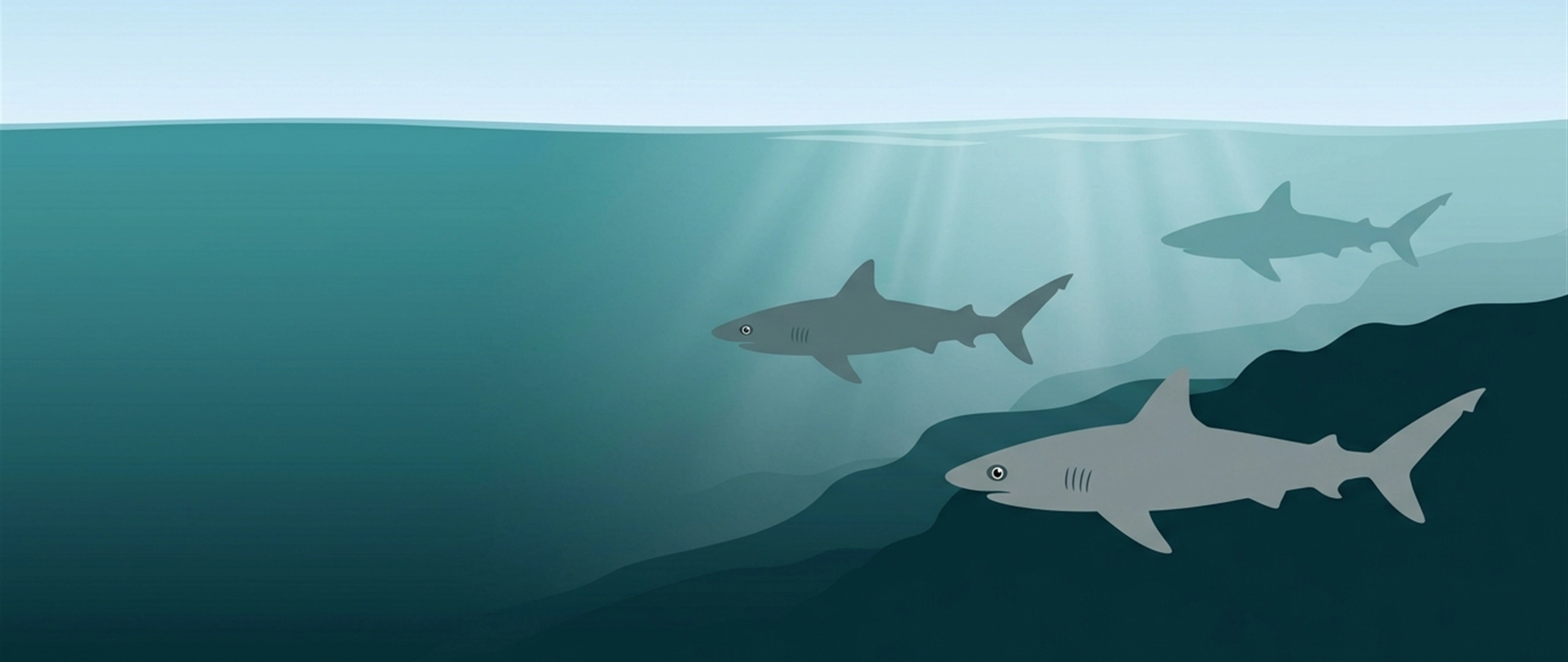
Grey reef shark
Learn where to dive with resident grey reef sharks in Sabah.
More details →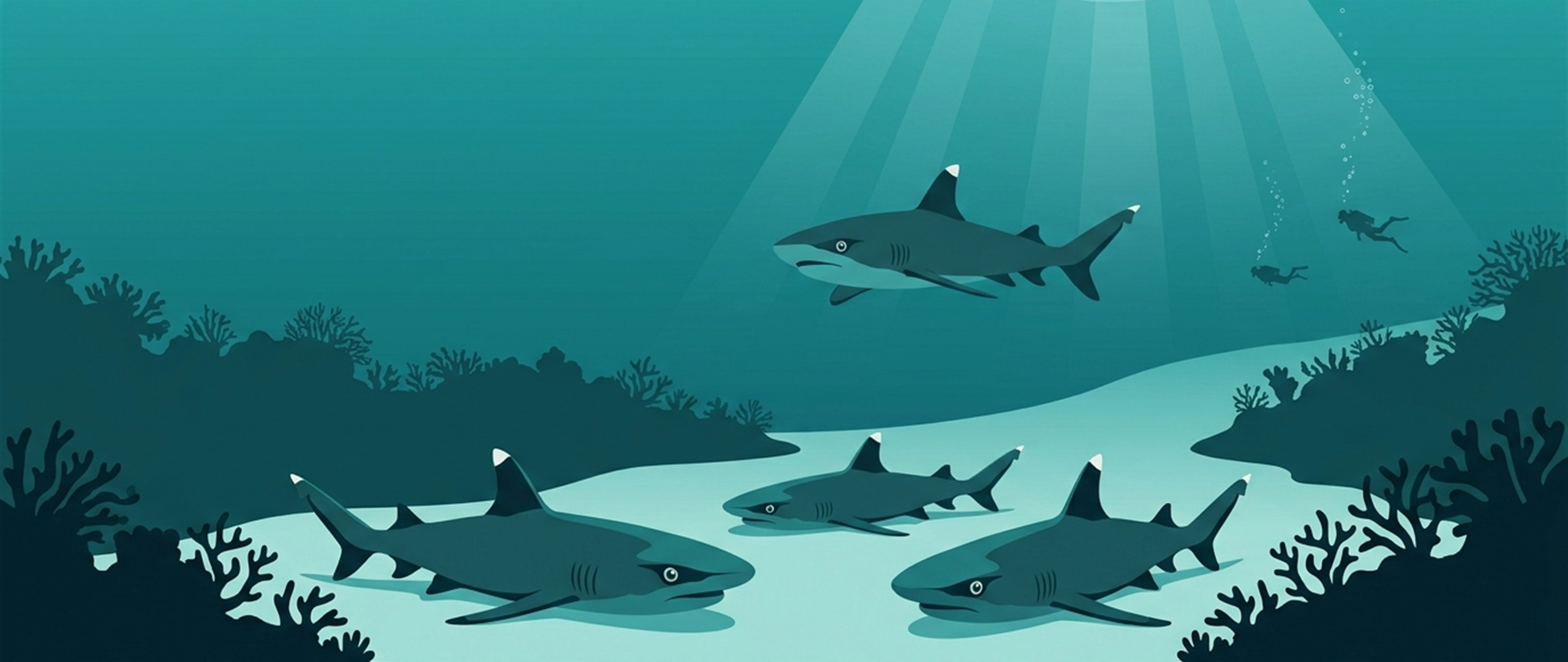
Whitetip Avenue
Dive Whitetip Avenue at Sipadan to see resting whitetip reef sharks and cruising grey reef sharks on a deep terraced wall.
More details →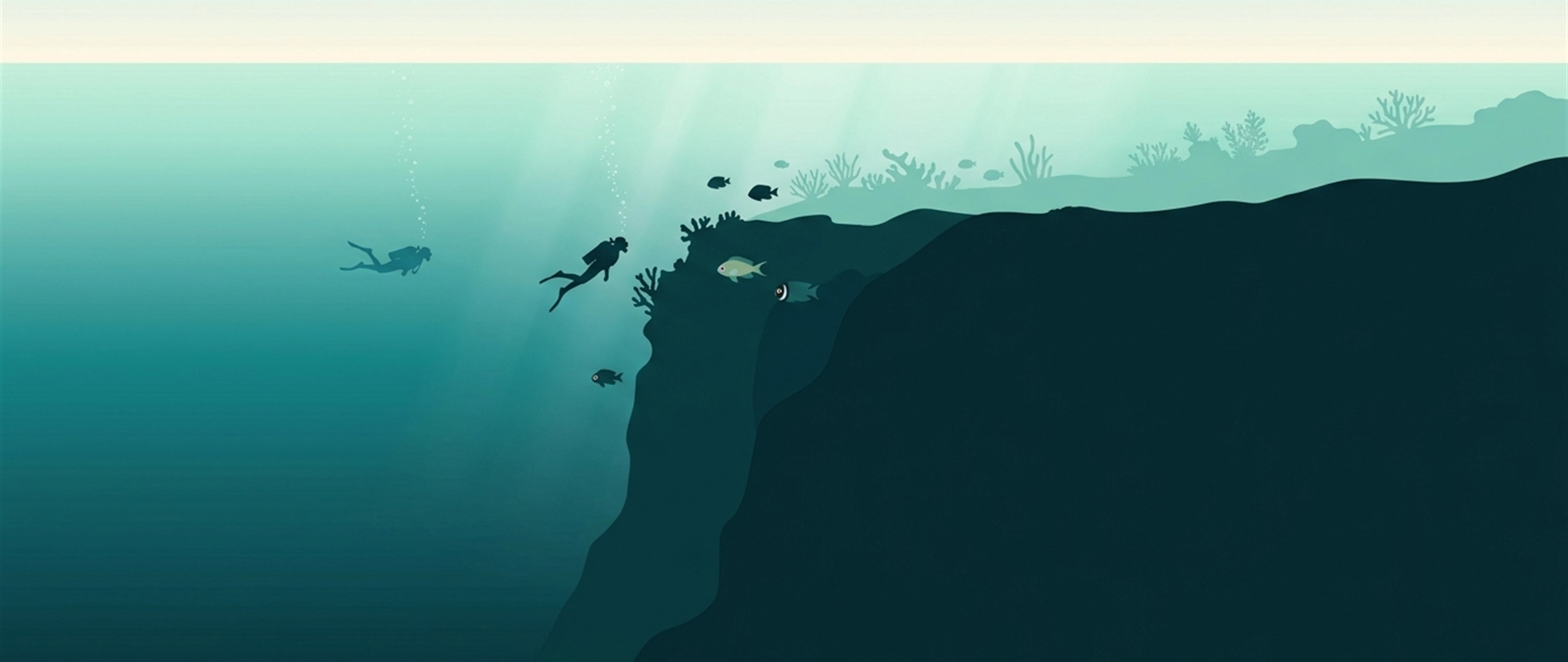
The Drop-Off
Dive The Drop-Off at Sipadan.
More details →
Sipadan
Guide to diving Sipadan Island in Sabah.
More details →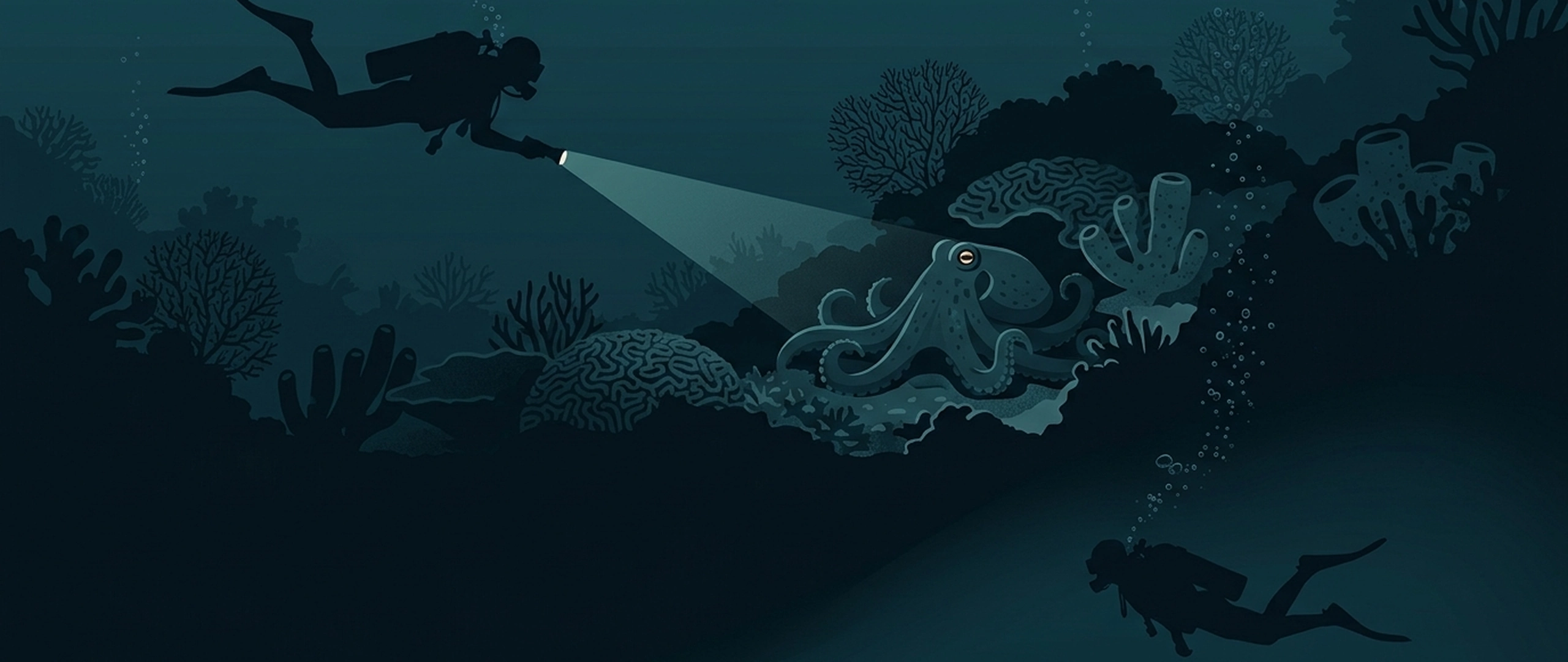
Night diving in the Semporna islands
Everything you need to know about night diving in the Semporna islands from dusk mandarinfish dives to the Seaventures rig.
More details →Plan your dives
Send your planned dates, the names of everyone coming and your current certification levels. The team comes back with what can be arranged and helps you secure the right dive package.