

Semporna after dark
Night diving in the Semporna islands
Semporna transforms completely after sunset. From the famous dusk mandarinfish dives to fluorescence diving under the Seaventures rig here is how night diving works across Mabul, Kapalai and the outer islands.
Highlights
- Night boat trips do not run.
- Night dives are jetty and house-reef dives from the island resorts.
- The dusk dive for mandarinfish is the daily fixture for underwater photographers.
- Sipadan is strictly daytime only so all night diving happens on the surrounding islands.
- You need an Advanced certification or a night adventure dive with an instructor.
- Sightings include Spanish dancers and sleeping parrotfish in their cocoons.
Overview
Every night dive in the Semporna islands is a jetty or house-reef dive from an island resort. That makes them some of the easiest night dives anywhere: you walk to the end of the boardwalk, step in and the reef under your room changes hands. The two things to know up front: the dusk dive for mandarinfish is the daily fixture. There is no night diving at Sipadan. The islands of Mabul and Kapalai are built for this. You can finish your dinner and drop straight onto a reef teeming with nocturnal life.
Why night diving here is easy
Night boat trips do not run; night dives are jetty and house-reef dives from the island resorts. This means you never endure a bumpy boat ride in the dark. The logistics are entirely straightforward. You gear up in a well-lit dive centre. You walk down a set of stairs. You enter calm water.
If you want to dive at night you must stay at an offshore resort. The resorts solved this by building their operations directly over the best macro reefs.
Sipadan is different. Sabah Parks issues 254 Sipadan permits a day. The park authority enforces a strict schedule. All boats must clear the island waters by the late afternoon. Nobody stays on the island. Sipadan is also closed to all visitors every November. The result is a split routine. You dive Sipadan from early morning until the afternoon. You explore your resort reef by night.
Paradise 1 & 2
Skill level: All levels These adjacent sites sit right off the resort structures on Mabul. The sandy bottom is scattered with artificial reef frames. It transforms completely after sunset. You can find it listed on the Mabul page.
The transition from Open Water
Semporna is a popular destination for divers looking to upgrade their skills. Many people arrive with a basic Open Water licence. They want to dive Sipadan. You must hold an Advanced Open Water certification or equivalent to dive at Sipadan. Sabah Parks enforces this strictly. You cannot enter the water there with a basic licence. You cannot use a freediving certificate either. Freediving is entirely prohibited in Sipadan waters.
Many visitors book a back-to-back package. They complete their Open Water and Advanced courses over 5 or 6 days. You can complete your Advanced course at your island resort. The night dive is a core component of this training. The calm house reefs provide an ideal classroom. The water is warm. There are no strong currents to battle. Your instructor will guide you through your first descent in the dark. You will learn how to navigate using a compass. You will practise communicating with a torch. You will earn the qualification you need for the deeper walls at Sipadan.
If you have not dived for 6 months a refresher is strongly recommended. Dive shops strongly recommend a review session on your first day. You will spend time on a shallow sand patch to practise mask clearing and regulator recovery. This builds your confidence before you face the open ocean.
The dusk dive
The transition begins just before sunset. The dusk dive is a daily ritual. It happens around 17:00 at Mabul's Paradise 1. It happens at 17:30 at Kapalai's Mandarin Valley.
You kneel on the sandy rubble. You wait for the light to fade. The mandarinfish (Synchiropus splendidus) often emerge from the hard coral at dusk. These small fish display bright colours. The males court the females. They rise together into the water column to spawn. You need to be in the water at the right time. They retreat into the reef the moment true darkness falls. Be sure to use a red focus light on your camera so you do not disturb their natural behaviour.
What comes out after dark
The reef changes character entirely once the sun sets. The daytime fish find crevices to sleep in. The night shift takes over.
Crustaceans are everywhere. Decorator crabs carry pieces of live sponge on their backs. Mantis shrimps leave their burrows. You can find harlequin shrimp moving over the rubble. Cephalopods are the main predators in the shallows. You will often see a hunting octopus navigating the reef. Bobtail squid hover just above the seabed. You can spot a blue-ringed octopus (Hapalochlaena spp.) on the night reef. The flamboyant cuttlefish (Metasepia pfefferi) can flash bright warning colours.
Fish behaviour changes dramatically. You can see sleeping parrotfish wrapped securely in their transparent mucus cocoons. Moray eels leave their dens to swim freely across the reef. Frogfish (Antennarius spp.) are often exposed on coral heads. Leaf scorpionfish sway gently in the water column. Massive basket stars unfurl their intricate arms into the current to catch passing plankton. You might even encounter a Spanish dancer (Hexabranchus sanguineus) swimming past.
The sandy muck patches hide ambush predators. The bobbit worm buries its long body entirely in the substrate. It exposes only its sensory antennae and massive jaws. It snaps at small fish passing overhead. This biodiversity is why photographers book the Macro & Muck package.
Fluorescence diving
A growing trend here is fluorescence diving. You use a specialised blue light torch. You wear a yellow barrier filter over your mask. This reveals proteins in the corals and anemones. They glow in bright neon greens and pinks.
It offers a completely different perspective on the reef structure. The sandy bottoms allow you to hover safely while you observe the glowing marine life. Fluorescence photography requires exceptional buoyancy control. You must move slowly because the yellow filters reduce your overall visibility. The shallow house reefs of Mabul provide the perfect laboratory environment for this niche activity.
Under the lights at Seaventures
The Seaventures Dive Rig offers a night dive unlike anything else. You step onto an industrial elevator. The lift lowers you directly from the platform deck into the ocean.
The heavy lighting from the steel superstructure shines straight down into the water. This acts as a permanent fish aggregating device. The lights attract dense swarms of plankton. The plankton brings in large predators. You can see giant groupers using the steel pillars for cover. Bigeye trevally (Caranx sexfasciatus) and barracuda are reported hunting at the edges of the light beams.
The platform creates a dark industrial atmosphere. It is a striking contrast to a natural coral reef. Divers also report excellent ostracod bioluminescence displays here in the days immediately after a full moon.
Seaventures Platform
Skill level: Advanced | Depth: 12–18 m The area directly beneath the rig is a maze of steel legs and sunken metal frames. Giant moray eels swim freely between the structures. You can read more about it on the Seaventures platform page.
Where you can night dive and how
Every resort operates under its own schedule. You need to plan your day around their meal times.
At Sipadan-Kapalai Dive Resort you dive straight from the dive centre pier. The night dive usually begins at 18:30. The resort sits entirely over the water. You reach the reef in seconds. You can explore more on the Kapalai page.
Mabul Water Bungalows and Sipadan Water Village run night dives from their own extensive wooden structures. You stride in and descend directly onto the Mabul reef.
Borneo Divers Mabul Resort requires divers to exit the water by 19:30. This ensures guests make it to the dining hall before service ends. The Seaventures rig enforces a strict 19:00 cut-off for its unlimited house reef diving.
Further out in the Celebes Sea you can dive the house reefs at Mataking and Pom Pom islands. Mataking operates night dives strictly between 19:00 and 21:00. Pom Pom runs guided night dives to observe marine life right off its beach.
| Resort | Entry type | Guide policy | Schedule |
|---|---|---|---|
| Sipadan-Kapalai | Dive centre pier | Unguided buddy diving | 18:30 start |
| Mabul Water Bungalows | Stilt walkway | Unguided or guided | 21:00 exit |
| Borneo Divers Mabul | Resort jetty | Unguided buddy diving | 19:30 exit |
| Seaventures Dive Rig | Platform elevator | Unguided buddy diving | 19:00 cut-off |
| Mataking Island | Dive platform | Unguided buddy diving | 21:00 exit |
| Pom Pom Island | Beach | Guided dives | Scheduled locally |
Managing air and buoyancy
Many newly certified divers worry about their air consumption. They fear holding their group back. Night diving actually helps improve your breathing rate. The environment forces you to slow down. You can only see what your torch illuminates. You stop swimming long distances. You spend minutes hovering over a single patch of sand to watch a crab. This relaxed pace naturally reduces your air consumption.
Good buoyancy control remains essential. The dive sites around Mabul and Kapalai feature sandy bottoms. A careless fin kick stirs up a cloud of silt immediately. This ruins visibility for everyone else. Keep your body horizontal. Ensure your fins remain elevated away from the seabed. Local divers use the term "underwater bulldozer" for people who crash into the reef. Practise your hovering skills during the day before you attempt a night dive. You want to avoid hitting the coral in the dark.
Before your first night dive
Safety rules are strict across the islands. Most resorts require an Advanced certification for unguided night diving. Open Water divers can participate if they book a specific night adventure dive with an instructor. Some operators allow Open Water divers to join a guided night group provided they complete a daylight check dive on the same reef first.
You must dive with a buddy. You need a primary torch. You need a backup torch. The resorts rent these out if you do not own them. Seaventures mandates the use of a personal dive computer for every person in the water.
Good habits with a torch
Your torch is your primary communication tool. You must use it responsibly.
Never shine a bright light directly into an animal's eyes. This applies to turtles and sleeping fish. A sudden strong beam can blind them temporarily. They might panic and collide with the reef. Aim your beam slightly to the side of the subject.
Never touch any creature you find in the dark. Many nocturnal animals are highly venomous. The blue-ringed octopus is a good example. Observe everything closely without making physical contact.
Use slow deliberate hand movements. Cover your torch beam against your chest to signal an emergency. Shine it on your own hand signals to communicate with your buddy.
When to go
You can go diving all year. The best visibility runs from March to October. Mid-February to mid-November is good diving with softer visibility at the ends. Mid-November to mid-February is a mix of cloud, rain and sun.
The water temperature stays between 26 °C and 30 °C year-round. Night dives are usually capped at 60 minutes.
Nearby places / alternatives

Mabul
Mabul is the main island base for Sipadan.
More details →
Kapalai
Stay at a water village built on a submerged sandbank off Mabul.
More details →
Seaventures Dive Rig
A converted oil platform off Mabul offering direct lift access to its house reef.
More details →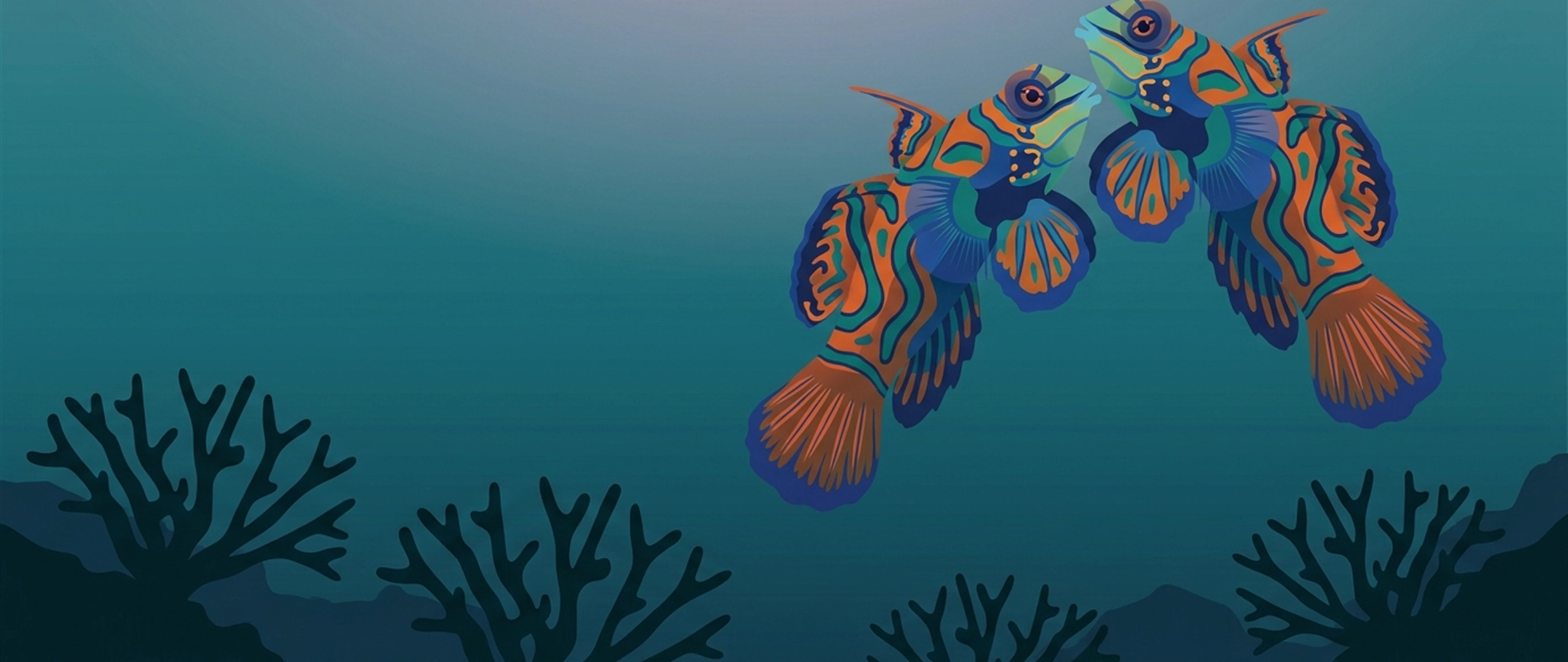
Mandarinfish
Learn where to find mandarinfish in Sabah.
More details →
Macro & Muck
A week on Mabul or Kapalai spent diving the shallow reefs for frogfish, blue-ringed octopus and mandarinfish.
More details →Send your preferred dates, the names of everyone coming and certification levels. The team will come back with a detailed itinerary and explain what can be arranged for your trip.