

Marine life behaviour
Cleaning stations
A cleaning station is a spot on the reef where small fish and shrimps remove parasites from larger animals. Finding one offers the best 5 minutes of any dive.
Highlights
- Watch cleaner wrasse and shrimps groom large reef predators.
- Green turtles and groupers queue for their turn on a good day.
- Observe the specific open-gill posture animals adopt while being cleaned.
- Visit dedicated shallow cleaning sites at Kapalai and Sipadan.
- Capture wide-angle photographs in the clear morning light.
- Stay at Kapalai or Mabul, where the best-known stations are a short boat ride away.
Overview
A cleaning station is a spot on the reef where small fish and shrimps make a living picking parasites and dead skin off bigger animals. A grouper or a passing barracuda holds still there with its gills flared and a turtle settles on the coral to let them work. Once you know where they are they become the best 5 minutes of any dive. You watch a queue of marine life waiting patiently for their turn. The one thing to know up front is to settle a few metres back and wait because a diver who swims in closes the station down immediately.
What a cleaning station is
These sites operate like biological health clinics for the marine environment. Small species set up permanent territories on prominent coral blocks or sand patches. Cleaner wrasse and cleaner shrimps perform the grooming. The process removes harmful parasites and necrotic tissue from the clients. The cleaners get a reliable food source in return. You can identify an active station by looking for small blue-striped wrasse darting around a specific coral head. The activity continues throughout the day but the morning is often the busiest period. The Ligitan Reefs around Kapalai offer excellent conditions for this behaviour to thrive. The area was heavily degraded in the past by blast fishing but local conservationists engineered the current environment by placing artificial reefs on the sandy plateaus to stimulate biomass. The artificial reefs create the complex topography needed for cleaning stations to form. The environment experiences only mild surge which helps the small cleaners maintain their stations.
Who does the cleaning
Small wrasse and specialised shrimps handle the delicate work. They rely on the complex structures of the reef to hide from predators when they are not working. The artificial interventions at Kapalai include sunken wooden boats and metal frames that successfully gather marine life. These structures provide a safe haven for the cleaners to establish their territories. You can watch them darting out to inspect large animals that approach their block. At the Kapalai house reef the artificial structures also shelter blue-ringed octopuses (Hapalochlaena spp.) and ornate ghost pipefish (Solenostomus spp.) alongside the cleaning stations. The cleaners are highly adapted to their roles and rarely leave their chosen coral block. They advertise their services with specific swimming patterns to attract the attention of passing predators.
Who queues up
The client list includes almost every large animal in the Celebes Sea. You will often see green turtles (Chelonia mydas) measuring over 1.5 metres resting on the coral blocks. Hawksbill turtles (Eretmochelys imbricata) also use the stations. Large groupers and Napoleon wrasse hover at steep angles to signal they are ready. Jacks and passing barracuda slow down to use the service. The posture is the biggest clue to what is happening. The client animal adopts a frozen position with its mouth wide open and its gills flared. The cleaner wrasse then swim directly inside the mouth and through the delicate gill filaments. The predators never eat the cleaners because the service is too valuable to lose. At Sipadan you might even see massive bumphead parrotfish (Bolbometopon muricatum) weighing upwards of 40 kg pausing over the shallow reef. The clients often wait in a holding pattern above the station until the cleaners finish with the current customer.
Where to find them in the Semporna islands
Almost every healthy reef has small cleaning stations but a few specific sites are famous for continuous activity. The shallow profiles of Kapalai and the protected hard-coral plateaus of Sipadan hold the most reliable spots.
Cleaning Station
Skill level: Open Water | Depth range: 5–20 m This site sits roughly 100 metres to the left of the main dive-centre jetty at the Sipadan-Kapalai Dive Resort. The seabed features a shallow sloping reef that transitions into patches of sand and coral rubble. The area is decorated with mock electricity pylons and small sunken huts intentionally placed by operators to attract marine life. The current is typically mild which makes the site an ideal right-shoulder drift dive. Green and hawksbill turtles rest on the coral blocks while cleaner wrasse remove parasites. The surrounding sandy holes hold jawfish while colourful nudibranchs and well-camouflaged stonefish populate the rubble patches.
Coral Gardens
Skill level: Advanced Open Water | Depth range: 10–23 m Located on the northeast edge of Sipadan this site features an expansive shallow hard-coral plateau. The current is gentle and makes for a very relaxing drift. Dozens of turtles use the shallows as dedicated cleaning stations. You can also look for dense clouds of anthias and bumphead parrotfish. You need an Advanced Open Water certification to dive here. Sabah Parks issues 254 Sipadan permits a day and the island closes entirely every November.
Turtle Patch
Skill level: Advanced Open Water | Depth range: 5–12 m This sunlit shallow reef plateau sits on the southeast corner of Sipadan. The site is highly decorated with massive overlapping table corals. Resting and grazing green and hawksbill turtles are a highlight here. Resident whitetip reef sharks (Triaenodon obesus) rest on the sand patches while noisy parrotfish shoals move through the corals. The shallow depth and gentle current make this a very forgiving dive.
How to watch one
Approaching a cleaning station requires excellent buoyancy control and patience. You need to approach low and slow. The best technique is to settle back and stay still. Do not move directly over the cleaning blocks. The clients are highly alert and any sudden movement will frighten the turtles away. If you hover quietly you can let the animals come and go naturally. You must exercise precise buoyancy control and use frog-kicking techniques to avoid creating silt-outs. Kicking up the fine sediment ruins the visibility for the entire group. Operators enforce a strict no-gloves policy to protect the reef. Keep checking your air and depth gauges while you wait. The stations at Kapalai are located on sandy slopes so maintaining neutral buoyancy is critical to avoid crashing into the fine substrate.
Photographing it
Underwater photographers value these spots for the chance to shoot large animals holding completely still. You need to wait for the client to settle into its trance-like posture before you raise your camera. Maintain a respectful distance at all times. Mid-morning offers the best ambient light for wide-angle turtle portraits as the sunlight penetrates the shallow reef. You must be careful with artificial lighting because a sudden burst of strobe flashes often ends the cleaning session. Switch to natural light or use red focus lights if the animals look nervous. At Turtle Patch the turtles are highly habituated and allow very close wide-angle approaches without strobes. If you are shooting macro subjects like the cleaner shrimps you will need a steady hand and a long focal length to capture the action without pushing your dome port into the coral block.
Why they matter
These stations are vital for reef health. The constant removal of parasites stops diseases from spreading through the fish populations. The stations also act as natural gathering points that support local biodiversity. The environment relies on clean water to function. The Sipadan-Kapalai Dive Resort uses hydroponic wastewater treatment facilities with live plants to strip harmful nitrogen from sewage before any water reaches the ocean. This safeguard prevents algae blooms from smothering the shallow reefs where the cleaning stations sit. You can reach these sites easily if you stay at Kapalai or take a boat from the nearby Mabul resorts. The health of these stations serves as a direct indicator of the broader reef ecosystem and its recovery from historical damage.
Nearby places to explore

Kapalai house reef
Dive the Kapalai house reef directly from your water chalet.
More details →
Mandarin Valley
Dive Mandarin Valley at Kapalai to watch mandarinfish mate at dusk.
More details →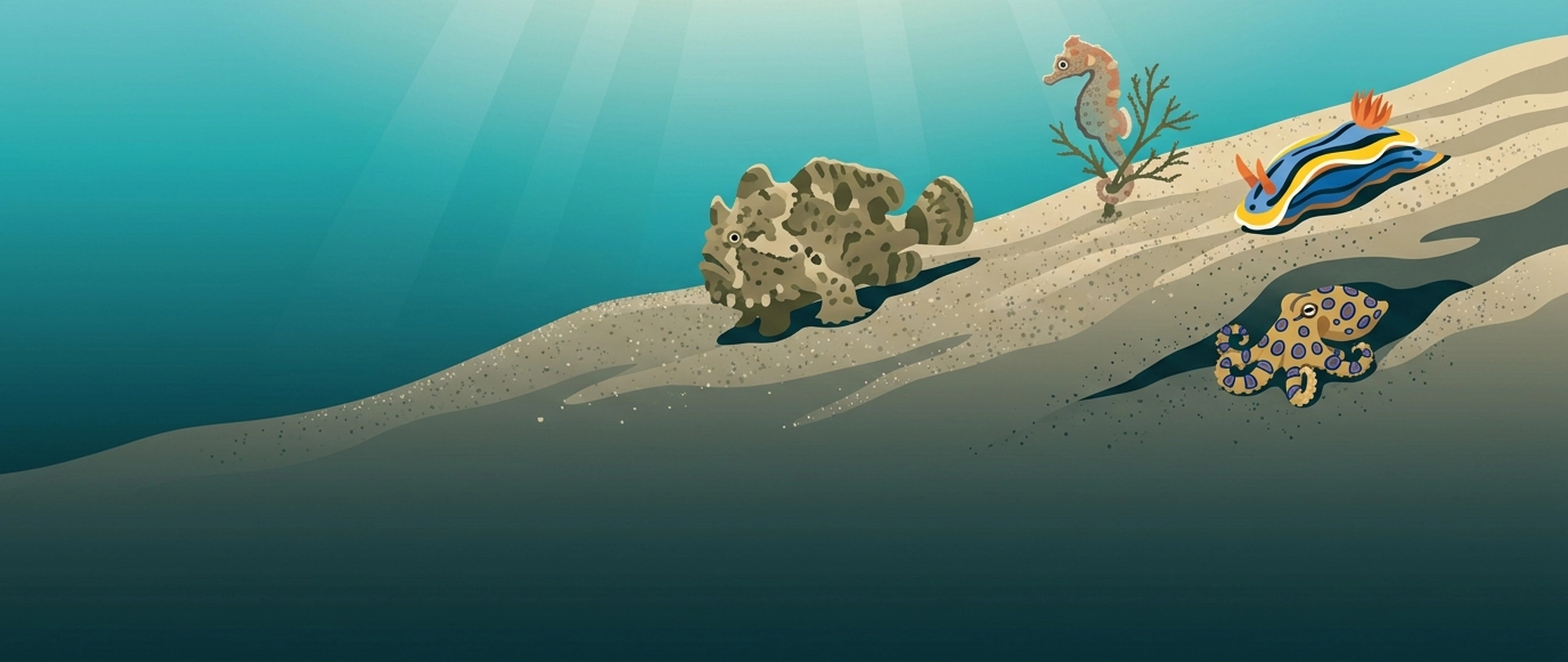
The critters of Semporna
Plan your macro diving week around Mabul, Kapalai and the Semporna mainland.
More details →
Kapalai
Stay at a water village built on a submerged sandbank off Mabul.
More details →
Sipadan
Guide to diving Sipadan Island in Sabah.
More details →
Mabul
Mabul is the main island base for Sipadan.
More details →
Underwater Photography
Photograph Sipadan's wide-angle pelagics and Mabul's macro critters in one week.
More details →
Macro & Muck
A week on Mabul or Kapalai spent diving the shallow reefs for frogfish, blue-ringed octopus and mandarinfish.
More details →Plan your Kapalai week
Send your preferred dates along with the names of everyone coming and their current dive certification. The team comes back with what can be arranged for your itinerary.