

Muck diving's most wanted cephalopod
Flamboyant cuttlefish
A cuttlefish the size of a matchbox that walks across the sand on its arms rather than swimming. It runs waves of yellow, purple and white along its body as it goes.
Highlights
- Walks on its arms across the sand instead of swimming
- Runs pulsing waves of yellow, purple and white along its body
- Found frequently on the sand slopes of Mabul and Kapalai
- Sighted regularly in the shallow muck diving sites off the Semporna mainland
- Best photographed low to the sand during hunting strikes
- Suits Open Water divers taking their time on shallow sites
Overview
You spot them first as a small lump of dark rubble on the sand. Then the rubble raises two arms and begins to walk. A cuttlefish the size of a matchbox steps across the seabed on its tentacles rather than swimming. It is the one animal on the muck that stops every diver on the dive.
They are found frequently on the sand slopes around Mabul and Kapalai. You also see them in the shallow coastal runoff sites near the Semporna mainland. When they sit still they look like a piece of dead coral. When they move they put on a display. They run pulsing waves of yellow, purple and white along their bodies.
Divers spend entire hour-long dives just watching them hunt. They stalk tiny crustaceans across the volcanic sand. The colours flash brightest when they strike. This is shallow diving with very little current. You can take your time and watch the behaviour unfold.
What it is
The flamboyant cuttlefish carries the scientific name Metasepia pfefferi. It is a small cephalopod. Most specimens you see on the reef are the size of a matchbox. They have a broad body and short arms.
Their flesh is reported to be toxic. The bright pulsing colours warn predators to keep away. You must observe them only. Do not provoke them to force a colour display. They display their colours naturally when they hunt or when they feel threatened by a clumsy approach.
They are short-lived animals. They lay their eggs in protective structures on the seabed. You often find their eggs hidden inside discarded glass jars or coconut shells resting on the volcanic sand. The females lay the eggs one by one and push them deep into the crevices.
Where you find it in Sabah
They live on sandy seabeds and open muck sites. Mabul Island is the primary destination for finding them in clear water. You see them occasionally to frequently on the slopes of Awas Reef and Froggy Lair. They also patrol the open sand flats at Mid Reef near Kapalai.
The Semporna mainland muck sites hold a regular population. These include the coastal runoff sites near the Semporna Straits and the fringes of Bum Bum Island. The environment here is completely different from offshore diving. The seabed holds discarded bottles and sunken timber. These coastal sites suit slow dives spent looking closely at the seabed. They feature dense silt and discarded human refuse.
The cuttlefish adapt well to this human refuse. They use the debris for shelter. Guides often locate them resting near an old tyre or inside a discarded glass jar. In the softer visibility here you search close to the sand with your guide.
You have an excellent chance of seeing them on almost every macro and muck dive trip in season. They are active during the day. You do not need to dive deep to find them. They prefer shallow coastal surge zones. The dive guides play a big part in finding them. The animals blend into the sand so well that you often need a local spotter to point them out. On the Semporna mainland sites the guides search the substrate carefully. For fragile subjects like the cuttlefish they signal you to approach the animal where it rests. Follow the guide's signals as you approach.
What it does
They are famous for the way they walk across the sand. The animal uses its lower arms to step across the sand. It relies on its camouflage until it spots prey. The skin mimics the dark rubble.
The hunting behaviour is what divers want to watch. They stalk small crustaceans slowly. When they get close they stop and change colour. The skin pulses with yellow and purple waves. They shoot out hidden feeding tentacles to grab the prey. The strike is extremely fast. The prey is pulled back into the beak in a fraction of a second.
Where to dive with them
The sites around Mabul and Kapalai offer the most reliable encounters. You will need a dedicated dive package to access them.
Awas Reef
Skill level: Open Water | Ave depth: 9m | Max depth: 15m This site sits off the southern side of Mabul. It is a barren sandy slope littered with small structures. The cuttlefish are frequent visitors here. The generally gentle current makes it easy to hold your position and watch them walk.
Froggy Lair
Skill level: Open Water | Depth: 5–10m The site sits off the northeast edge of Mabul. The seabed is a sprawling silty expanse littered with discarded tyres. It is a classic muck site. The cuttlefish make your way the rubble alongside large frogfish populations.
Paradise 1 & 2
Skill level: Open Water | Depth: 5–15m at Paradise 1 and 5–21m at Paradise 2 These two adjacent sites feature flat sandy bottoms punctuated by scattered sunken wooden boats. You find the cuttlefish patrolling the sand between the staghorn coral gardens. You also come here to see the mandarinfish mating ritual at dusk. Check out Paradise 1 & 2 for more details.
The Jetty / Kapalai House Reef
Skill level: Open Water | Depth: 5–18m This shallow sloping reef sits directly under the dive centre pier. Sunken wooden boats and metal frames provide a thriving haven for macro species. The cuttlefish hide in the man-made crevices of the artificial structures along the Kapalai House Reef.
Photographing it
This is an animal for macro lenses. Standard 60mm or 105mm macro setups work best for underwater photography. You need a narrow depth of field to isolate the subject from the messy sand background.
The shot people want is the feeding strike when the colours flash. You need to approach low and slow. Hover above the sand well away from the animal and let it get used to you. If you loom over it from above it will stop hunting. You have to wait for the animal to initiate the strike.
The Semporna mainland sites feature dark silt. The dark silt creates ideal conditions for snoot underwater photography. A narrow beam of light isolates the cuttlefish against a black background. This technique removes the distracting silt from the final image.
Good habits around them
Keep your buoyancy steady above the seabed. The fine volcanic silt on these sites kicks up easily. If you use a standard flutter kick you will blind the site in seconds. You must use frog-kicking techniques to keep the silt on the bottom.
Do not touch them or manipulate them. Pointing sticks must never be used on living substrate. You must wait for the animal to display its colours naturally.
Conservation
The habitats they rely on are sensitive to damage. The artificial reefs around Mabul and Kapalai provide vital shelter for them to hunt and lay eggs. Local operators enforce strict no-gloves policies to protect the structures. Mabul also hosts two active sea turtle hatcheries. The community relies on responsible divers to keep the area healthy.
When to dive
You can dive Sabah all year. The best visibility runs from March to October. The period from mid-February to mid-November offers good diving with softer visibility at the ends of the season. The months from mid-November to mid-February bring a mix of cloud, rain and sun.
The cuttlefish live on the sand year-round. Remember that Sipadan Island is closed every November by order of Sabah Parks. The muck sites at Mabul and Kapalai stay open all year.
Nearby places
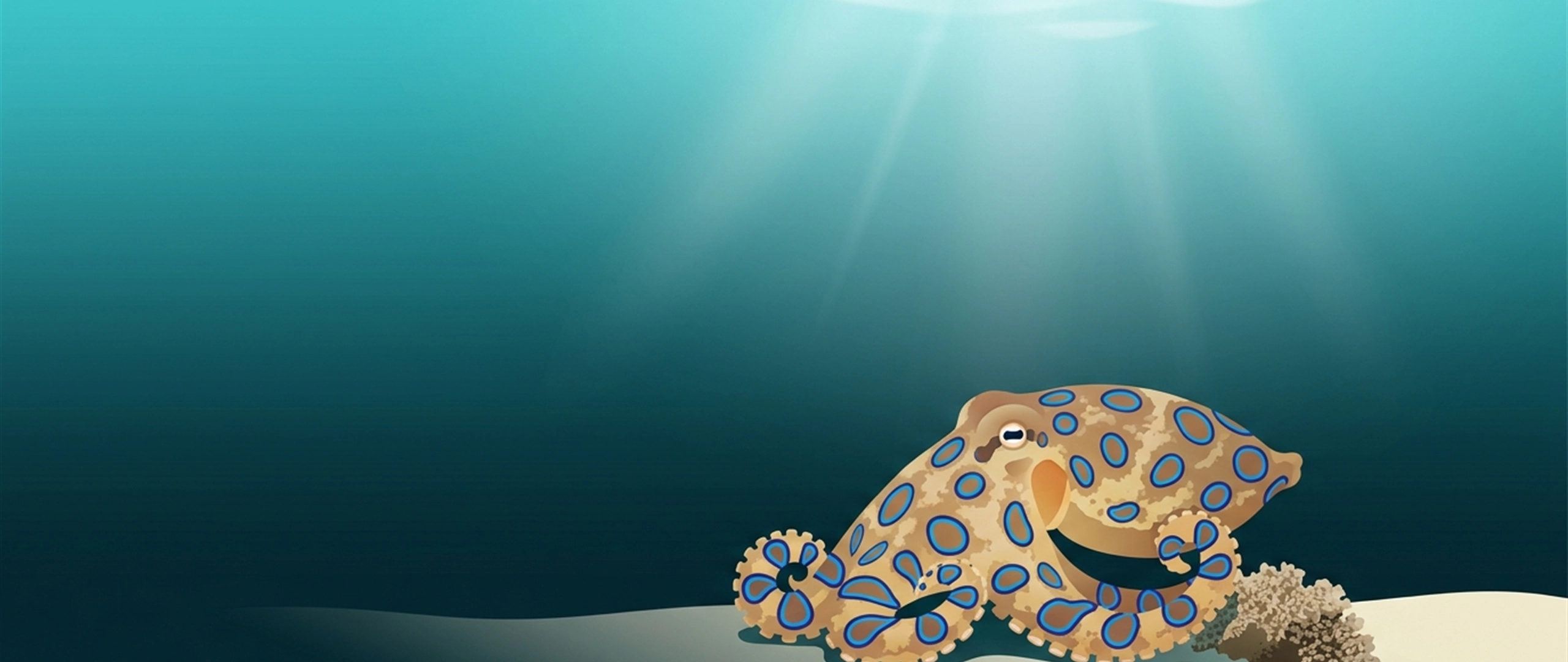
Blue-ringed octopus
Learn how to find and photograph the blue-ringed octopus around Mabul and Semporna.
More details →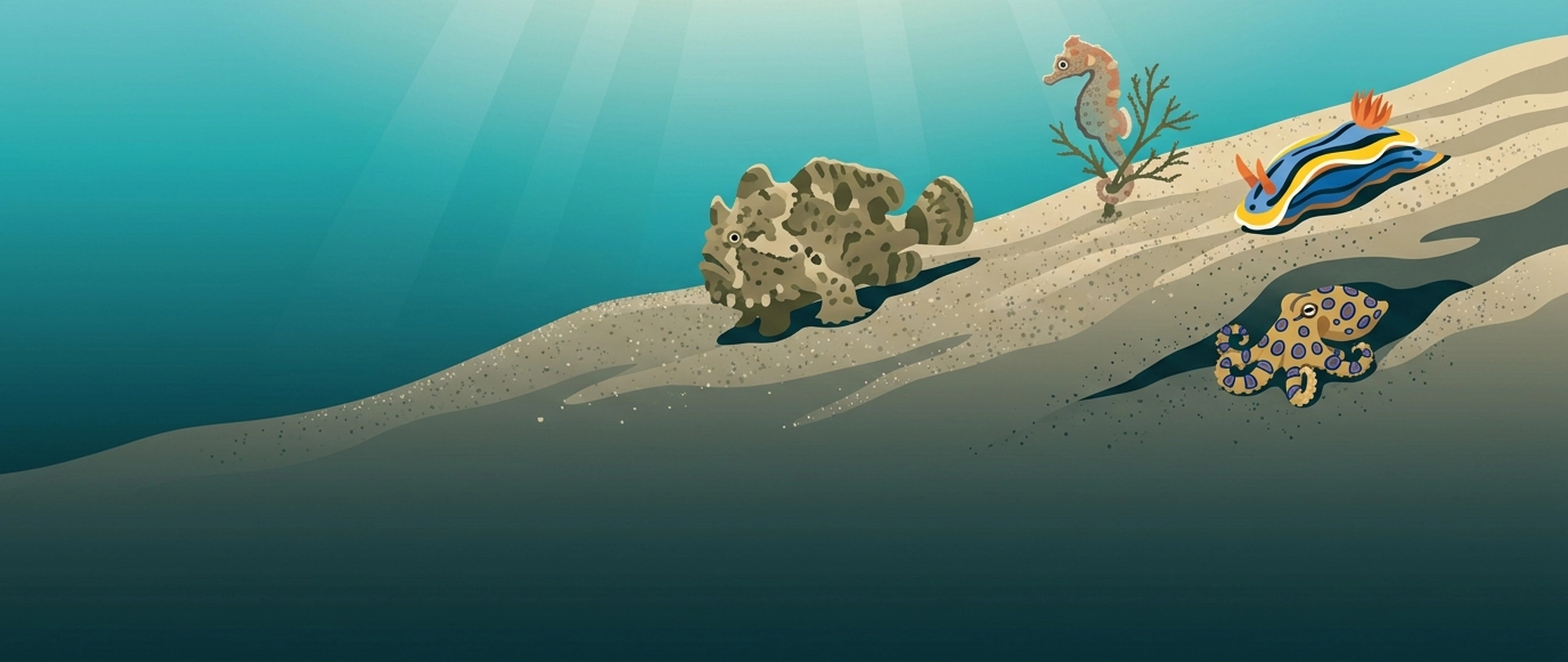
The critters of Semporna
Plan your macro diving week around Mabul, Kapalai and the Semporna mainland.
More details →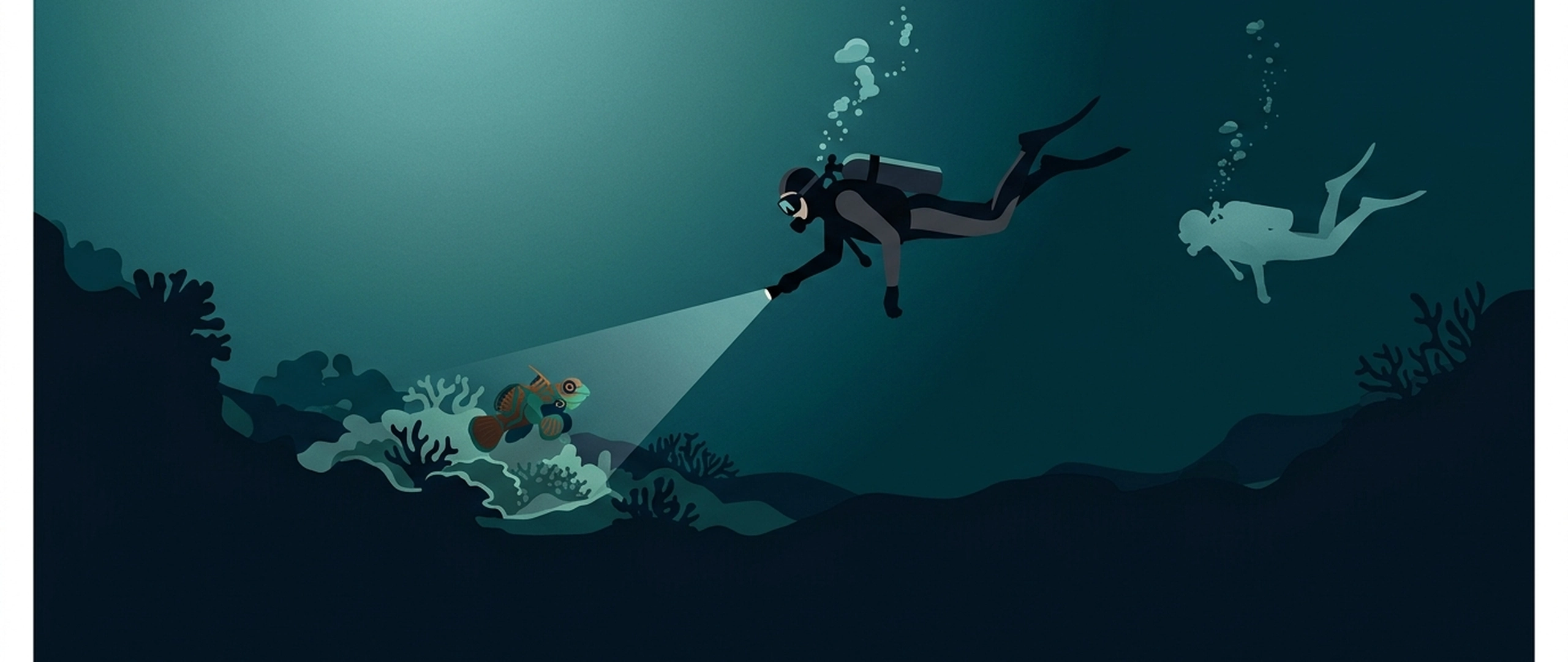
Mabul house reefs
The waters under Mabul's resort jetties hold some of the best macro diving in Sabah.
More details →
Mabul
Mabul is the main island base for Sipadan.
More details →
Macro & Muck
A week on Mabul or Kapalai spent diving the shallow reefs for frogfish, blue-ringed octopus and mandarinfish.
More details →Send your dates, the names of everyone coming and your certification levels. The team will check availability across the resorts and come back with a plan that gets you to the best critter sites.