

Converted oil platform off Mabul
The Seaventures platform reef
An artificial reef beneath a decommissioned jack-up rig accessed by a hydraulic lift. Expect sunken wrecks, dense macro life and a night dive illuminated by the platform's lights.
Highlights
- Stationed in the Celebes Sea just off Mabul
- Entry to the water via a mechanised hydraulic lift
- Sunken boats and structural debris at 12 to 18 m
- Resident frogfish, flamboyant cuttlefish and blue-ringed octopuses
- Suits macro photographers and night divers
- Dived exclusively by staying at the Seaventures Dive Rig
About The Seaventures platform reef
Right off the coast of Mabul sits an artificial reef that has grown around the six steel legs of a converted oil platform. You reach the water not from a beach or a boat but via a heavy-duty hydraulic lift that lowers you fully geared directly to the sea. The seabed lies between 12 and 18 m down and is scattered with sunken boats and metal frames. This debris provides a habitat for marine life and creates some of the most productive macro and muck diving in Sabah. The site transforms completely after dark. A night dive under the platform's industrial lights draws in hunting predators and has no equivalent anywhere else in the islands.
Skill level: All levels | Ave depth: 14 m | Max depth: 18 m | Current: Mild to none | Visibility: 5 to 15 m
The rig and its reef
The Seaventures Dive Rig is a decommissioned jack-up platform originally built in Panama for the offshore oil industry. It was officially decommissioned in 1985 and later retrofitted in Labuan before being towed to its current position in the Celebes Sea in 1997. The structure's six massive steel pilings rest directly on the seabed and act as a vertical artificial reef. The operators have systematically augmented the zone underneath by deliberately sinking decommissioned boats, metal frames and swim-through cages at 12 to 18 m. The sunken structures shelter juvenile fish from the current. The reef is rich in small marine life for you to explore.
How the dive is run
You gear up at dedicated stations on the main deck of the platform. Check conditions with the standby divemaster and log your name on the dive deck whiteboard before stepping onto the wooden lift. The mechanised elevator features low side-rails and lowers you roughly 15 to 24 m to the surface. You step off the platform and descend directly onto the wreckage below. The lift entirely eliminates the need for shore entries and serves as a highly stable extraction point at the end of your dive regardless of mild surface chop. You must dive with a buddy at all times. Solo travellers are paired with divers of equivalent experience by the dive instructors prior to water entry. You make your way around the six main structural pillars and explore the sunken debris field directly beneath the rig. Dive durations are generally capped at 60 minutes. You must use a personal dive computer and the house rules mandate that all dives stay strictly within no-decompression limits.
What you look for
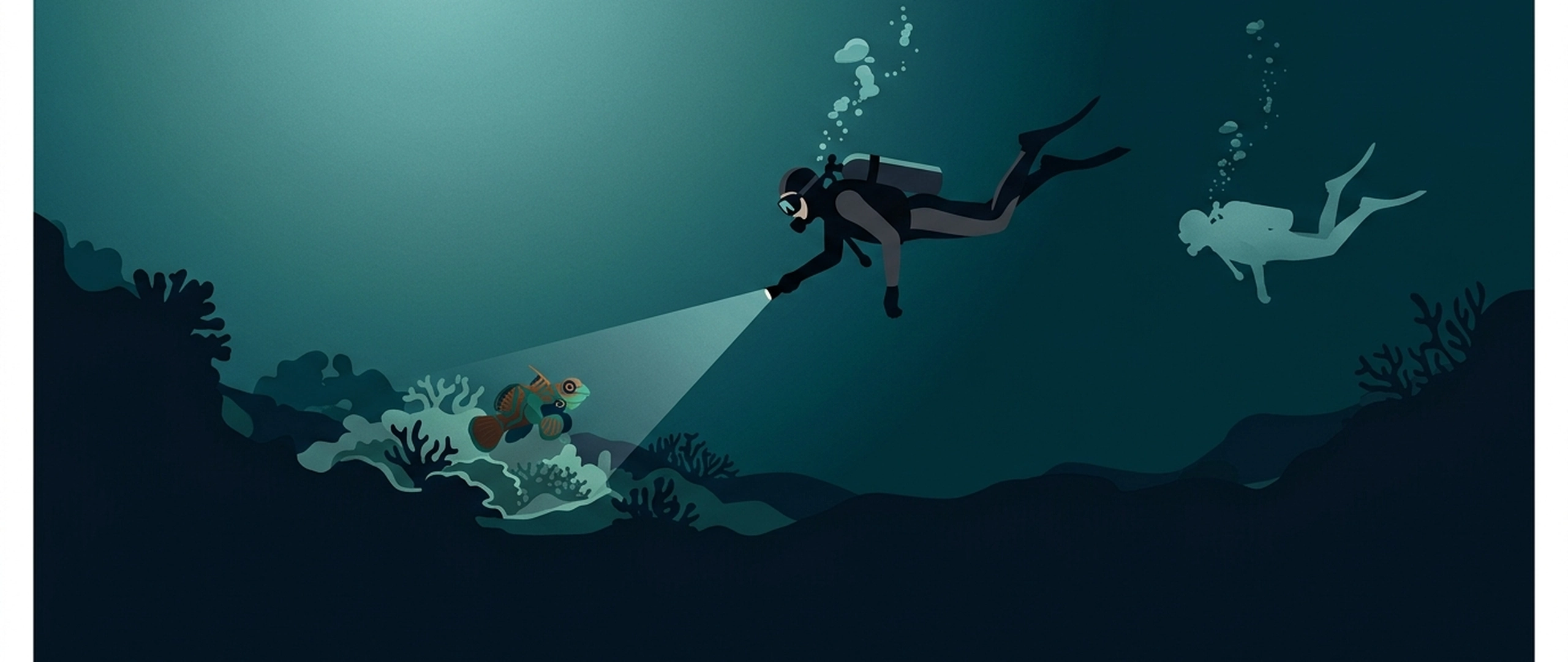
During the day the sandy rubble and sunken debris host resident macro life. You look for resident flamboyant cuttlefish (Metasepia pfefferi) and blue-ringed octopuses (Hapalochlaena spp.) hunting around the metal frames. Look closely at the encrusted structures for resident frogfish (Antennarius spp.), ornate ghost pipefish (Solenostomus spp.), crocodilefish (Cymbacephalus beauforti) and pygmy seahorses (Hippocampus bargibanti). The environment changes dramatically at night. The rig's lights spill into the water and draw fish beneath the platform. The light attracts dense swarms of phototactic zooplankton. Smaller fish feed on the plankton and attract larger hunters. Giant groupers often hunt from the dark recesses of the steel pilings and concrete blocks while trevally and barracuda are also reported feeding under the lights. Giant moray eels are often seen leaving their daytime dens to swim freely between the structural legs. Lionfish often gather around the edges of the light beams to hunt smaller reef fish. Beyond the reach of the platform lights the reef structure becomes dominated by arthropods. You can look for sponge crabs and decorator crabs foraging on the artificial structures and basket stars filtering food from the mild currents. A few days after the full moon, divers often report bioluminescent mating displays of resident ostracods flashing blue in the dark when they extinguish their torches.
Photography
This is predominantly a macro site during the day. The sunken boats and steel pilings provide a dark background that makes strobe lighting highly effective. You want a macro lens to capture the tiny subjects living on the encrusting sponges and a tripod-like stability to compose your shots. Wide-angle photography works best when looking up towards the surface to capture the massive steel legs descending from the hull. Night photography requires a steady hand and a good focus light to photograph groupers when they hunt through the beams of the platform lights. The site is also ideal for fluorescence diving. The calm conditions provide an excellent environment to capture coral fluorescence. Photographers use high-intensity blue excitation torches emitting light in the 400 to 500 nm range paired with yellow barrier filters over their masks and lenses. This blocks the reflected blue light and reveals photoproteins within the marine tissues glowing intensely in neon greens, electric oranges and vivid reds against the pitch-black water.
The level it asks for
The site is sheltered and shallow enough for all certifications. The sheltered setting makes it an excellent environment for novice divers to practise their buoyancy around the wrecks. The resort offers a distinctive PADI Rig Diver specialty course that teaches you buoyancy control, compass navigation around the six structural pillars, lift entry and how to care for the reef beneath a rig. Night dives are open to certified advanced or night divers and call for care as you find your way around the metal structures in the dark. The operators enforce a strict safety policy requiring you to dive conservatively. Repeated 15 m dives on the house reef rapidly accumulate tissue nitrogen so you need to monitor your dive computer closely to protect your bottom time for the three daily boat dives the resort runs to nearby reefs. Guests without personal computers must rent them from the dive centre to enter the water.
When it is best
Diving runs all year in Sabah. The best visibility spans from March to October. The period from mid-February to mid-November offers good diving with softer visibility at the ends. Mid-November to mid-February brings a mix of cloud, rain and sun. The house reef is available from early morning until the early evening. Unescorted house reef diving operates under a strict 19:00 cut-off time. Dusk is the ideal time to enter the water to watch the transition as the diurnal fish retreat and the nocturnal predators arrive. Between 17:30 and 18:00, the rubble zones around Mabul offer the chance to watch mandarinfish (Synchiropus splendidus) emerge from branching hard corals for their mating ritual before true darkness falls.
How to dive it
The house reef is accessed exclusively by staying at the Seaventures Dive Rig. This means mainland operators cannot bring divers out to the platform for night dives. You must book an overnight package at the rig to experience the night dive under the industrial lights. The team steers you toward the right package based on your certification and how long you want to stay. A longer stay on a dive package gives you access to the rig's daily boat runs to nearby Mabul house reefs and Sipadan. Sabah Parks issues 254 Sipadan permits a day and the island is closed every November. Check the travel information for help planning your transfers and understanding the local boat rules.
Nearby sites and alternatives
Mabul house reefs
The waters under Mabul's resort jetties hold some of the best macro diving in Sabah.
More details →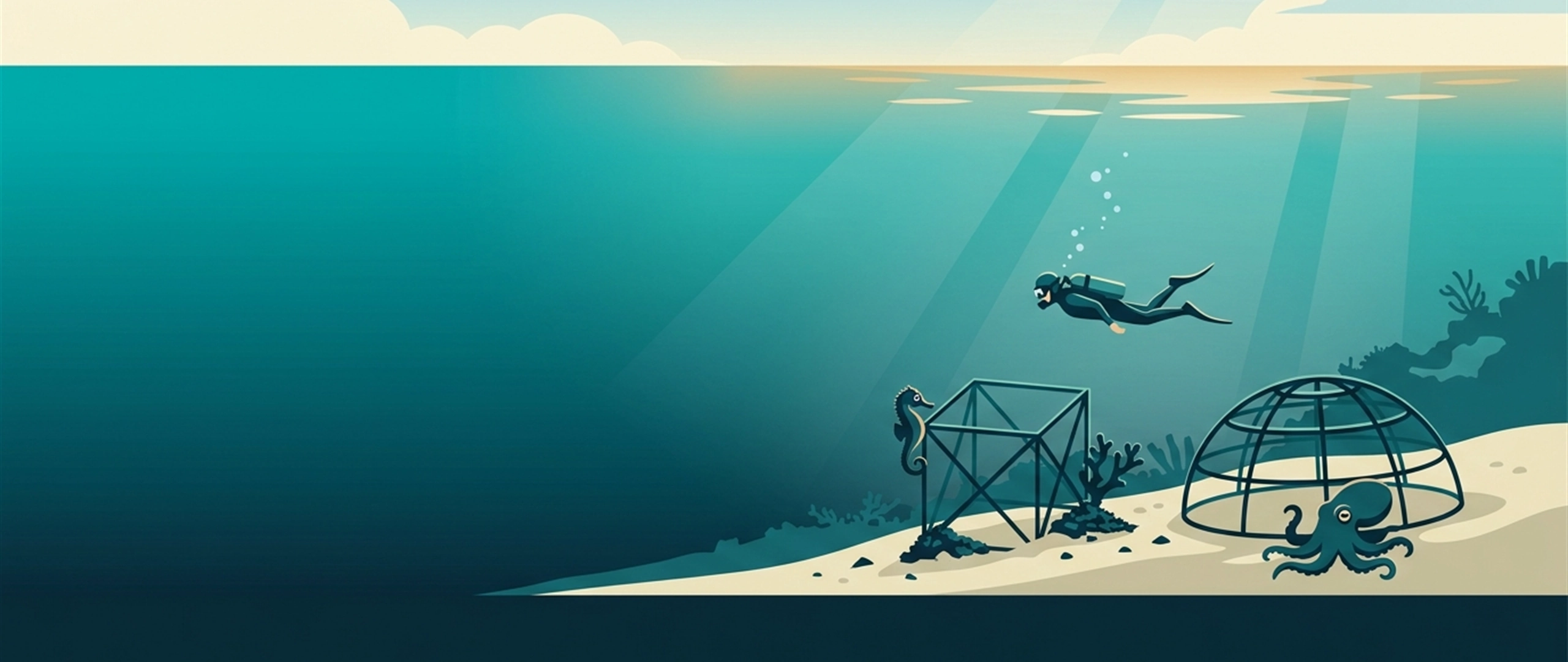
Paradise 1 and Paradise 2
Dive Paradise 1 and 2 off Mabul Island.
More details →
Froggy Lair
Dive Froggy Lair on Mabul Island.
More details →
Seaventures Dive Rig
A converted oil platform off Mabul offering direct lift access to its house reef.
More details →
Mabul
Mabul is the main island base for Sipadan.
More details →Plan your dives
Send your preferred dates, the names of everyone coming and your current certification levels. The team comes back with a plan that fits your experience and what can be arranged for a macro and muck itinerary.