
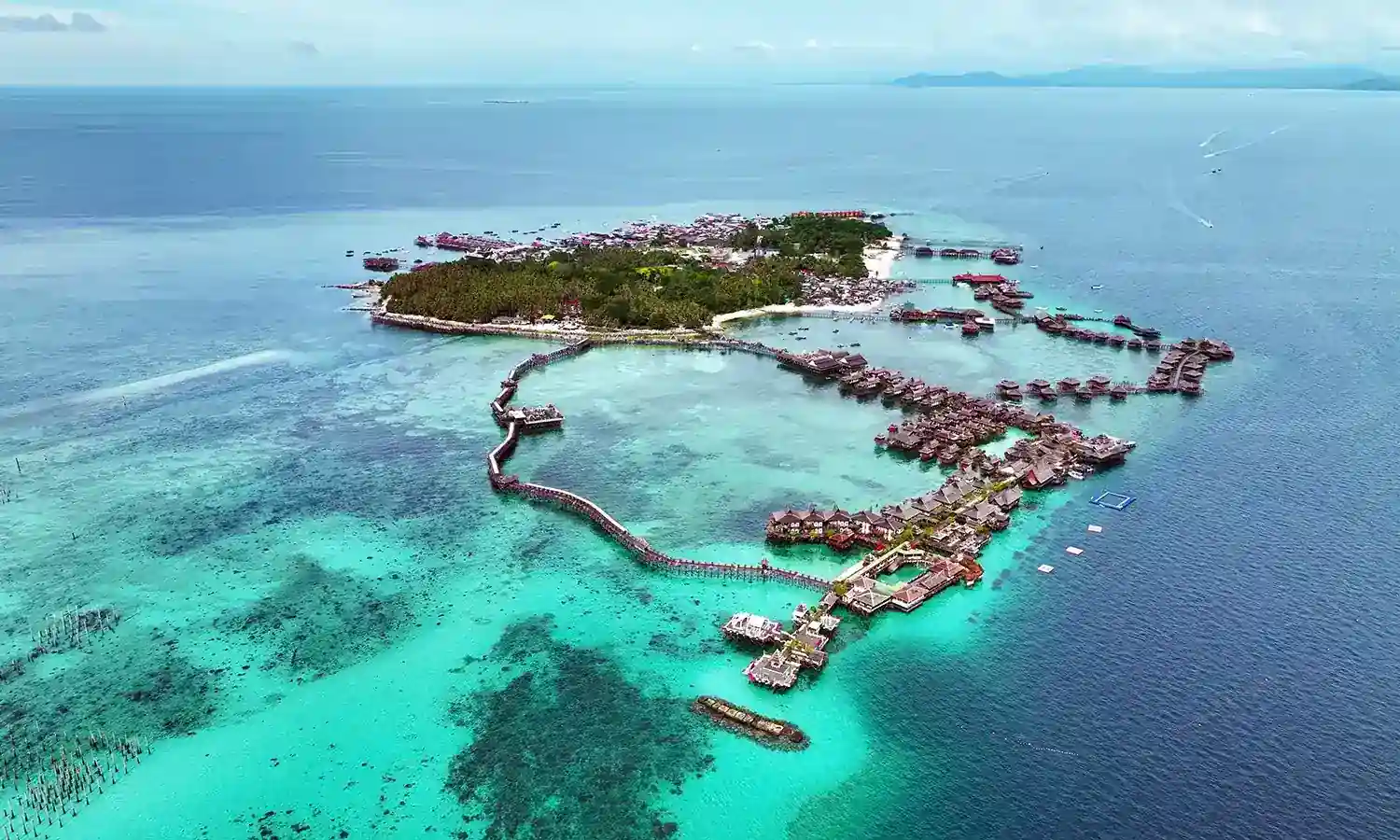
Mabul muck and macro dive
Froggy Lair
A shallow muck site off Mabul Island named for the frogfish that sit on its artificial debris. It is a slow dive over a silty seabed that rewards patience.
Highlights
- Located on the northeast periphery of Mabul Island off the local jetty.
- Depths of 5 to 10 metres allow bottom times exceeding 70 minutes.
- Resident giant, painted and clown frogfish hide among discarded tires.
- A strict macro-photography environment over a silty seabed.
- Suits Open Water divers with excellent fin discipline.
- Reached by short boat rides from all Mabul and Kapalai resorts.
Froggy Lair is a shallow muck dive off Mabul named for the frogfish that sit on its sponges and rubble. It is one of the densest patches of small strange animals on the island. You dive it slowly with a guide who knows where they were yesterday. The seabed is a silty expanse littered with natural reef crevices and artificial debris. It is not a place for sweeping coral vistas. You come here to stare at a single discarded tire or a piece of rubble to find the tiny creatures that have made it their home. The shallow depth means you can spend over an hour hunting for critters of Semporna across the sand.
Skill level: Open Water | Ave depth: 8m | Max depth: 10m | Current: Gentle drift | Visibility: 5m
The muck
The site sits on the northeast periphery of Mabul Island just off the edge of the local jetty. It is the quintessential Mabul muck dive. The seabed is a sprawling sandy expanse covered in fine volcanic silt. It is heavily littered with natural reef crevices alongside artificial debris like discarded old tyres. These tyres act as highly effective artificial nurseries and hiding spots for benthic creatures. The environment looks barren at first glance until you realise the debris is alive. This is classic diving in Mabul where the substrate itself is the attraction. The shallow sandy slope filters out larger pelagic species. The sand shelters tiny invertebrates. The creatures use the debris for shelter and camouflage. Mabul represents classic offshore macro diving. The island sits on the edge of the continental shelf about 45 minutes by speedboat from Semporna. The topography features shallow reef profiles and patches of healthy seagrass. The mainland's muck sites have denser silt and more discarded debris. Mabul is known for larger, easily recognised macro life. You often find the major targets of Southeast Asian muck diving here. Froggy Lair sits firmly in this offshore category.
What you look for
The signature resident species are the site's namesake. You look for giant, painted and clown frogfish (Antennarius spp.) in myriad colours. They hold territories for weeks on the tyres and the rubble. You can find them in colours ranging from bright yellow to deep red. The sandy stretches are a frequent habitat for ornate ghost pipefish (Solenostomus paradoxus) and flamboyant cuttlefish (Metasepia pfefferi). The cuttlefish patrol the open sand and display their warning colours when hunting. You often find colourful nudibranchs scattered across the site. The highly sought-after blue-ringed octopus (Hapalochlaena spp.) is spotted occasionally moving across the rubble. They frequently shelter in empty shells across the sand. The sheer density of life makes it a highlight of any macro and muck itinerary. You often spot different species sharing the same piece of discarded debris. The blue-ringed octopus is lethally venomous. You must maintain strict neutral buoyancy when observing them near the silt. The cuttlefish inhabit the open sand flats. You approach them low and slow. They display their best warning colours during hunting strikes. You must never provoke them. The frogfish rely on camouflage. The rare green variant is documented in the Semporna Straits. Photographers focus tightly on the eye and the luring apparatus they use to hunt.
How the dive is run
You reach the site by a very short boat ride from the Mabul resorts. The depth ranges strictly from 5 to 10 metres. This acts as a great equaliser for newer divers and permits exceptionally long dive times. Bottom times routinely exceed 70 minutes here. The site experiences a gentle drift. Visibility is modest because of the particles suspended in the water; that richness is what feeds the animals you come for. It frequently averages only 5 metres. This forces a slow and deliberate visual search. Guides are mandatory here because the local divemasters memorise the locations of the resident frogfish. They cross the silt to search the spots where frogfish have been seen recently. The guide spots the camouflaged life and points it out so you can take your time. Be sure to match their pace so you do not miss the tiny details. The divemaster often finds a subject and signals you to approach it where it sits.
Photography
This is a strict macro environment. The suspended silt makes wide-angle shooting impossible without catastrophic backscatter. You must shoot through the muck close to the lens port. Macro lenses of 60mm or 105mm are essential to capture the fine details of the subjects. Frogfish make excellent subjects because they often sit completely still on the tyres. You can take your time to compose tight facial portraits or focus on their luring apparatus. The challenge is isolating the subject against the silty background. A snoot helps you pick out a single subject. You isolate a subject with a narrow beam of light against a black background. This minimises ambient light scattering and highlights the textures of the nudibranchs or the ornate ghost pipefish. You establish your buoyancy without using the reef as a stabilisation point.
The level it asks for
The site is highly accessible for Open Water divers due to the shallow depth. The real skill it asks for is absolute buoyancy control. You must establish neutral buoyancy without touching the reef or the rubble. The primary hazard is the fine volcanic silt on the seabed. You must employ strict frog-kicking techniques. A standard flutter kick will instantly blind the site with suspended silt and bury the micro-habitats of the bottom-dwelling subjects. Pointing sticks are strictly prohibited on living substrate. You hover above the sand and let the guide find the subjects. Take your time, even if you spend the dive exploring just 10 metres of sand.
When it is best
You can dive Mabul all year. The water stays between 26 and 30 degrees Celsius year-round. The best visibility in the region runs from March to October. The period from mid-February to mid-November offers good diving with softer visibility at the ends of the season. The months from mid-November to mid-February bring a mix of cloud, rain and sun. Keep in mind that while Mabul remains open all year diving in Sipadan is not possible in November because the island closes for a month. Froggy Lair is best dived during the day when the ambient light helps you spot the macro life in the low visibility. The site is shallow enough to avoid strong tidal currents. You can read the guide to night diving Semporna if you want to explore the reef after dark.
How to dive it
Every dive operator on Mabul and Kapalai runs boats to Froggy Lair. It is only a few minutes away from the jetties of Sipadan-Mabul Resort, Mabul Water Bungalows, Sipadan Water Village and Borneo Divers Mabul Resort. Guests staying on the Seaventures Dive Rig also reach it by a very short boat ride. You dive it as part of a standard daily boat package. You can combine Sipadan diving with Mabul's macro sites during your stay. You can return to Froggy Lair to look for different creatures on the same tyres. The boat drops you directly over the site and you descend immediately to the sand. You can read more about the logistics in the travel information guide.
Nearby places
Plan your dives
Send your dates, the names of everyone coming and your certification levels. The team comes back with what can be arranged for your time on Mabul.
FAQ
How deep is Froggy Lair?
Do I need an advanced certification to dive here?
Can I use a wide-angle lens?
Are the frogfish always there?
Make a Booking for Mabul
Sources referenced on this page: sipadan.com; mabul.com; Semporna Macro Critters; Undercurrent.