

Semporna and Mabul macro highlight
Frogfish
A fish that has given up swimming for sitting. Mabul and Semporna offer some of the most reliable sites in the world to find them.
Highlights
- Resident species across the shallow muck sites of Mabul and the Semporna mainland.
- Giant, painted and clown varieties found hiding in artificial reef structures.
- Very slow-moving animals that stay in the same territory for weeks.
- Shallow depths from 5 to 18 metres make these encounters ideal for long bottom times.
- Mabul resorts arrange daily guided boat trips to the best habitats.
Overview
A fish that has given up swimming for sitting. You will find it walking on modified fins across the seabed. It wears the colour of whatever sponge or rock it has chosen to live on. Instead of chasing a meal it fishes for anything that comes close using a lure on its forehead. Mabul is one of the best places in the world to find them. The shallow sandy slopes hold resident populations of these strange animals. Depths between 5 and 18 metres give you plenty of time to hover and watch their behaviour. Your guide knows where to look because these animals are highly territorial. They stay on the same tyre or block of coral rubble for weeks. You can expect a gentle dive focused on a tiny patch of sand. Divemasters from the local resorts check the reef daily to track their movements. If you want to spend an hour observing a single animal then this is the subject to ask for.
What it is
The frogfish (Antennarius spp.) is a master of camouflage that blends into the muck. Its body is covered in textures mimicking the algae or sponges around it. You can find giant, painted and clown varieties in many colours across the Semporna reefs. They rely entirely on staying hidden from predators and prey alike. A modified dorsal fin acts as a fishing rod tipped with a fleshy lure. The fish dangles this lure to attract smaller animals. Their pectoral fins have evolved into leg-like appendages used to walk slowly across the seabed instead of swimming.
Where you find it in Sabah
Mabul provides an excellent mix of shallow sand and artificial structures. The resorts have intentionally sunk boats and built wooden pyramids to encourage marine life to settle. These structures create distinct ecological zones. The mainland sites near Semporna town also hide rare variants in the thick coastal silt. The mainland's silty seabed shelters tiny animals among seagrass and discarded objects. You come here to look closely through the silt for an exceptional variety of rare sea slugs. This is dirty muck diving in the truest sense. The substrate features discarded tyres, glass bottles and submerged timber. The animals use discarded objects for shelter and camouflage. Specialist mainland guides focus on the tiny animals at sites close to Semporna harbour. The furthest dive sites sit approximately 30 minutes away by boat. Adding Night diving Semporna to your itinerary reveals even more nocturnal activity.
What it does
They hold territories for weeks. The guides memorise their locations so they know where the animal was sitting yesterday. Your chance of seeing one is very high on a guided dive. They exhibit distinct colour bursts as they mature. A juvenile painted frogfish starts life in a tiny crybaby stage before developing the striking patterns of adulthood.
The hunting technique is absorbing to watch. The animal sits completely still while flicking its lure. This luring apparatus manipulates the prey's nervous system into coming closer. When a target is in range the strike is extremely fast. The fish opens its mouth to create a vacuum that sucks the prey inside instantly. You might also see yawning behaviour if you wait patiently.
They share these habitats with other fascinating bottom-dwellers. The highly venomous blue-ringed octopus (Hapalochlaena spp.) frequently shelters in empty shells or discarded bottles on the sand nearby. The flamboyant cuttlefish (Metasepia pfefferi) patrols open sand across the region during daylight. These animals share the same preferences for shallow rubble and sandy slopes.
Photographing it
Froggy Lair suits close-up macro photography. Suspended silt catches the light from your strobes and can fill the image with bright specks. Work close to your subject to keep less silty water between it and the lens port. A 60mm or 105mm macro lens is essential to capture the details.
Focus tightly on the eye and the luring apparatus to get the shot people want. The animal is very forgiving because it barely moves while hunting. Photographers should wait for yawning behaviour to capture the full size of the mouth. The rare green jewel cryptic frogfish (Histiophryne cryptacanthus) hides deep in the rubble near the mainland. Finding it requires immense patience and a strong focus light. On the mainland muck sites the guides scour the substrate to locate specific rocks containing these small subjects. For frogfish, guides signal you to approach the animal where it rests. Arranging a dedicated Underwater Photography day gives you the time you need to compose your images.
Good habits around them
Careful fin movements keep Mabul's muck sites clear for you and the divers around you. The substrate consists of fine volcanic silt and unconsolidated coral rubble. A standard flutter kick will blind the site with suspended silt. This ruins the visibility for other photographers and buries the micro-habitats of bottom-dwelling subjects. Use gentle frog kicks to keep the water clear.
Stay neutrally buoyant and leave the animals and reef untouched. Settle your buoyancy before you move in for a closer look without resting on the reef. Pointing sticks or reef hooks are strictly prohibited on living substrate. Do not crowd the animal. Your exhalations can easily dislodge delicate marine life if you get too close.
Conservation
Mabul's artificial reefs have encouraged a rich variety of marine life to settle. The structures give bottom-dwelling animals places to shelter and thrive. Protecting these habitats from destructive fishing practices remains a priority for local environmental organisations. Blast fishing damages the seabed and the habitats these animals depend on. Groups like Stop Fish Bombing have deployed acoustic monitoring devices to detect and report these threats.
Where to dive with them
Almost every dive centre on Mabul visits the prime muck sites.
Froggy Lair
Skill level: Open Water | Depth: 5–10m The quintessential Mabul muck dive sits on the northeast edge of the island. The seabed here is littered with discarded old tyres acting as highly effective artificial nurseries. You will search through the silt to find giant, painted and clown varieties hiding in the crevices. Look slowly and carefully through the silt for their camouflaged outlines. Be sure to manage your fin control carefully because the silt rises easily.
Seaventures House Reef
Skill level: Open Water | Depth: 12–18m This site lies directly beneath a towering decommissioned oil rig. The underwater environment is a surreal artificial reef consisting of massive steel rig pylons and sunken metal structures. You can find specimens smaller than a human fingernail living among the degrading debris. Be sure to watch for overhead environments when inspecting the sharp metal edges.
Froggys (SMART Artificial Reef)
Skill level: Open Water | Depth: 5–18m Constructed from wooden frames, pyramids and rockpiles forming a complex maze on the sand. This sanctuary sits on the south side of Mabul directly in front of the resort. It provides a reliable habitat for resident populations to hunt and hide. Be sure to stay close to your guide as the maze layout can become disorienting.
You can reach these sites via a short boat ride from Kapalai or Mabul. The Mabul House Reef offers unlimited macro hunting for guests staying nearby. The Kapalai House Reef and Paradise 1 & 2 also support a massive variety of benthic life.
Nearby places and alternatives

Froggy Lair
Dive Froggy Lair on Mabul Island.
More details →
Pygmy seahorse
A guide to finding and photographing the tiny pygmy seahorse in Sabah.
More details →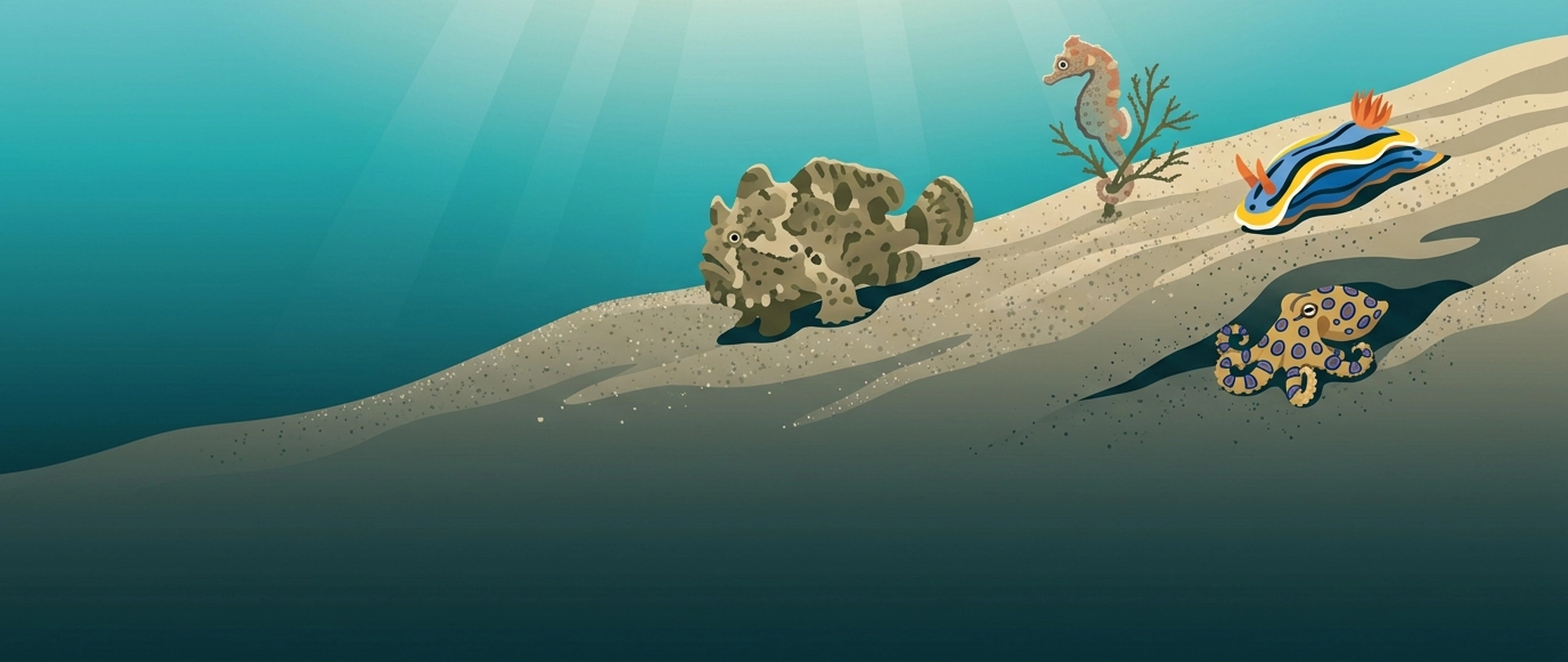
The critters of Semporna
Plan your macro diving week around Mabul, Kapalai and the Semporna mainland.
More details →
Ghost pipefish
Find ghost pipefish in Sabah's dive sites.
More details →
Macro & Muck
A week on Mabul or Kapalai spent diving the shallow reefs for frogfish, blue-ringed octopus and mandarinfish.
More details →Plan your macro week
Send the team your dates along with the names of everyone coming and their certification levels. The team will come back with what can be arranged to match your macro goals.