
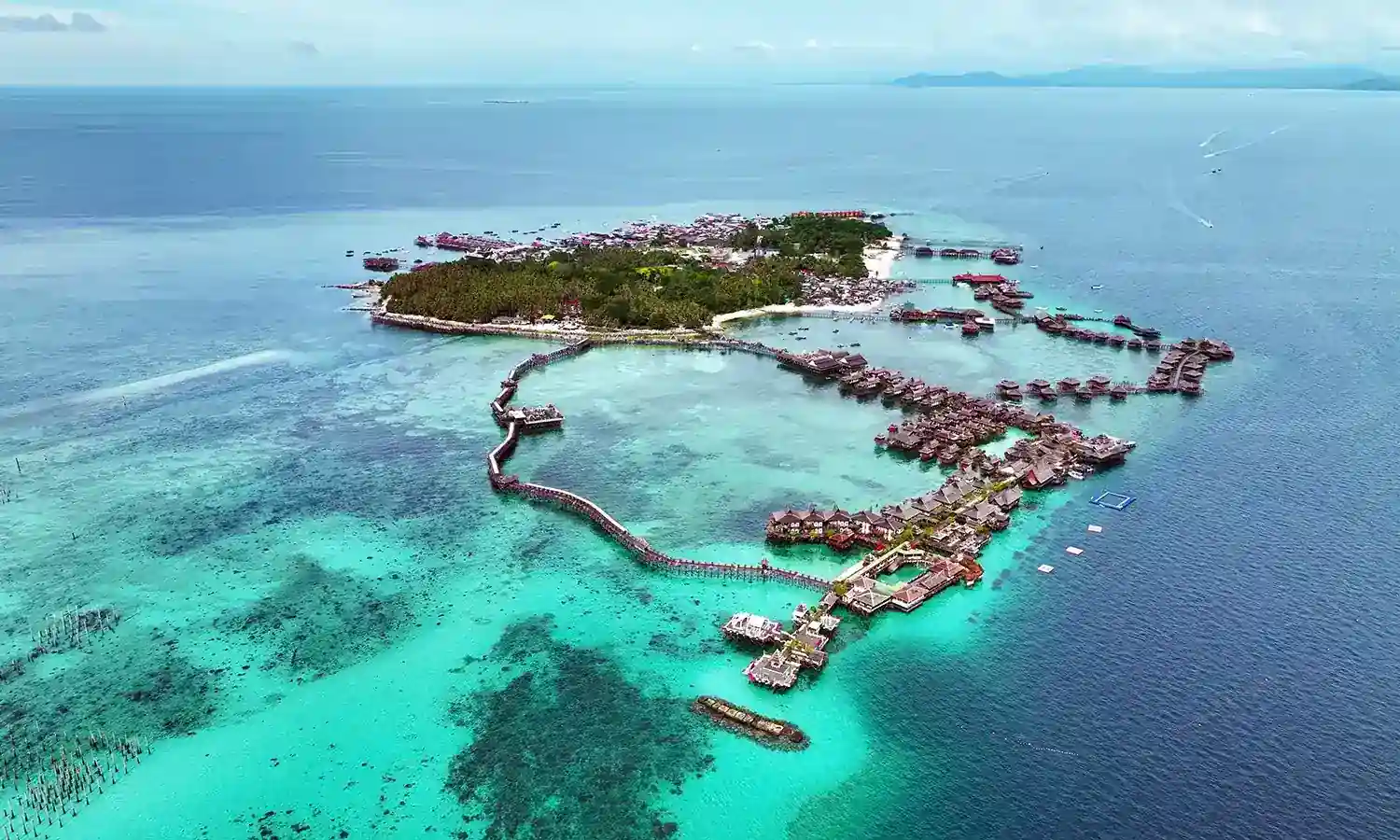
Cryptic marine life in Sabah
Ghost pipefish
A fish shaped like a drifting piece of weed or a crinoid arm. Sabah's reefs hold two kinds of ghost pipefish for divers who know how to look.
Highlights
- They are regular residents across the muck and macro sites of Mabul and Kapalai.
- Two distinct species rely on different camouflage adaptations to stay hidden.
- You will find them hovering head-down near feather stars or dead seagrass.
- Finding them relies almost entirely on the trained eyes of local guides.
- They are prime subjects for super-macro photography using diopters and snoots.
Ghost pipefish are shaped like a drifting piece of weed or a crinoid arm. They hang head-down beside the thing they are imitating and move only when the current moves. Sabah's reefs hold two kinds of ghost pipefish for divers who know how to look.
These fish rely entirely on disguise rather than speed. They are resident across the reefs of Mabul and Kapalai. A divemaster who knows their habits will point them out on almost every macro dive. If you want to photograph them you need to understand the micro-habitats they choose. This guide explains how to identify both species, where they live on the reef and how to dive with them safely.
What they are
Ghost pipefish belong to the family Solenostomidae and their shapes help them disappear against the seabed. Two distinct species live in these waters according to the World Register of Marine Species. Solenostomus paradoxus is the ornate ghost pipefish. Solenostomus cyanopterus is the robust ghost pipefish. Chinese dive communities frequently refer to them as 鬼龙 or ghost dragons.
You will almost always find them hovering in pairs. Their reproductive cycle sets them apart from true pipefishes and seahorses. Male seahorses carry the young. In ghost pipefish the female handles the incubation. A female has enlarged pelvic fins fused together to form a specialised brood pouch. If you use a macro lens to look closely you can often see the tiny developing embryos visible inside the translucent pouch.
Where you find them in Sabah
These fish serve as a primary target for visiting underwater photographers. The silty and rubble-strewn environments of Mabul Island offer a very high likelihood of an encounter. Sites like Paradise 1 and Paradise 2 feature the specific sandy slopes, coral rubble and scattered reef patches the fish prefer. The Kapalai House Reef is another highly reliable location. You will likely see them if you spend a few days diving in Mabul.
Further north in the Sulu Sea they are common residents at the Jawfish Lair off Lankayan Island. The coarser sandy bottom here provides a different type of habitat compared to the silty slopes of Mabul. Recent exploratory dives have also recorded them on the reefs of Tabawan Island in Darvel Bay.
The reality of their camouflage dictates a simple rule for muck diving: guides find them while divers swim past them. Their disguise is so convincing you can look straight at a fish and mistake it for a dead leaf. A trained local guide is essential to spot them.
What they do on the reef
Each species chooses a hiding place that matches its disguise. The ornate ghost pipefish associates tightly with crinoids and gorgonian sea fans. Frilly growths on its skin mimic the branches of its host. Look for them on slopes at depths of 5 to 25 metres. Here a mild current provides a continuous flow of nutrients and zooplankton without overwhelming their weak swimming capabilities. They suck tiny crustaceans out of the water column to feed.
The robust ghost pipefish prefers coastal reefs and weedy areas. It has a broader and smoother body. Its shape mimics decaying seagrass blades or fallen leaves trapped in the surge. Once in position they sway erratically. Their swaying imitates loose weed moving in the ocean swell. They hang head-down and drift back and forth.
Photographing ghost pipefish
These fish are difficult subjects because of their swaying movements. You need a macro lens like a 60mm or 100mm paired with high strobe recycle speeds to freeze their constant motion. Achieving a black background is highly desirable but exceptionally challenging due to their physical proximity to highly reflective reef substrates. You can use a snoot to narrow your strobe beam and isolate the subject from the distracting sand.
Super-macro diopters like the Nauticam SMC or FIT +10 are frequently employed by professional shooters. These tools help capture the microscopic developing embryos visible within a pregnant female's brood pouch. You must prepare your camera settings before you make your approach. Maintain a respectful distance so you do not startle the fish into the water column. Take time to study their movement pattern. You need to anticipate the brief pause at the end of their sway to capture a sharp frame. Read about underwater photography for more techniques.
Good habits around them
Keep the fish safe as you work for your photograph. The rule to never move the animal is absolute. Harassing a ghost pipefish out of its crinoid host for a cleaner background causes severe physiological stress and exposes the fish to immediate predation.
You must never prod, unearth or handle anything on the reef. The skill in macro diving is to stay neutrally buoyant and work patiently with your lighting. Leave the subject as you found it. Hover slightly off the bottom. Use a muck stick to stabilise yourself in the sand away from the coral structure. Your goal is to document the animal in its wild state. Review the advice on night diving in Semporna to master buoyancy control in dark environments.
Conservation
Ghost pipefish populations fluctuate naturally across the reefs. Their survival relies entirely on the abundance of their hosts and the health of their micro-habitats. Careless fin placement and unethical photography practices easily damage the crinoids and gorgonians they need. Divers must respect the strict no-touch policies enforced across the Semporna region to protect these fragile benthic ecosystems.
Packages that reach the critter sites
To dive with ghost pipefish you need a resort base that gives you access to the prime muck diving hubs. Mabul and Kapalai are the central destinations for the Critters of Semporna. A dedicated macro & muck package puts you on the right boats with guides trained to spot cryptic marine life.
The team arranges specific itineraries for photographers. These trips focus on sites known for their wealth of small marine life. The team ensures the divemaster understands your photographic goals. Tell the team what you want to see so they can pair you with the best local expertise.
Where to dive with them
Paradise 1 & 2 (Mabul)
Skill level: All levels These adjoining sites feature the sandy slopes and coral rubble where macro life thrives. Guides inspect the crinoids and gorgonian fans to locate the ornate species. You will also look for robust ghost pipefish among the seagrass patches. Be sure to watch your fin placement on the silty bottom to avoid reducing visibility for your group. Mabul House Reef offers similar environments.
Kapalai House Reef
Skill level: All levels | Depth: 5–18m The shallow reef under the resort walkways provides excellent habitat for both species. The lack of current makes it an ideal place to observe their swaying behaviour. Photographers spend hours here focusing on macro subjects. You can often dive this site multiple times a day. See the guide to diving in Kapalai for logistics.
Jawfish Lair (Lankayan)
Skill level: All levels This site is famous for jawfish but it also holds a moderate population of ghost pipefish. The sandy plains provide the right environment for them to hide among the scattered coral heads. You need a sharp eye to spot them against the coarse sand.
Nearby places / alternatives
Plan your macro week
Send your dates, the names of everyone coming and your certification levels. The team comes back with a plan that puts you on the right reefs for macro photography.
FAQ
Do I need an advanced certification to see them?
What is the best time of year to find them?
Are they the same as seahorses?
Will my guide find one for me?
Can I touch the crinoids to get a better look?
Make a Booking for a macro week
Sources referenced on this page: Semporna Macro Critters / Sea Slug Forum / FishBase / World Register of Marine Species.